How to Become a Junior Data Analyst in Media

Introduction
Have you ever scrolled through the news and wondered how media companies decide what stories to show you? In 2026, the answer is data. Lots of it.
The media industry is racing to adopt artificial intelligence and data analysis. According to the Stanford HAI 2026 AI Index Report, generative AI reached 53% of the population within three years, faster than the PC or the internet. That shift is creating big opportunities for anyone ready to work with numbers and news.
But here is the challenge. Many junior data analysts struggle to find clear career paths in media. You might hear terms like data science vs data analytics and feel confused about which direction to go. Or you may wonder how data science internships in newsrooms compare to roles as a business intelligence analyst. Some people even worry about data brokers and how they fit into the picture.
The media world needs people who can bridge the gap between raw data and trustworthy storytelling.

That is why this guide exists. We will walk you through key roles like data journalist and audience analyst, the skills you actually need, and practical steps to break into the field. You will also learn how to apply your analytical thinking beyond the office.
As you build your data skills, remember that critical thinking extends to the news you read. You can practice evaluating sources at Read News With Judgment.
For more context on how data skills help you spot bias, check out our guide on data analyst skills for smarter news consumption and spotting misinformation. It will sharpen the same instincts media companies are hiring for.
The Landscape of Data & AI in Modern Media
The media world in 2026 looks very different from just a few years ago. Data and AI are now the engines behind almost everything you see. According to the 2026 AI Index Report from Stanford HAI, generative AI reached 53% of the global population within three years, faster than the PC or the internet. That kind of speed means newsrooms had to adapt quickly.

Media companies use data to personalize your news feed, segment audiences for advertisers, and optimize every headline. In fact, a Reuters Digital Media Report found that 71% of social media images in 2026 are AI-generated. That is a huge number for any junior data analyst to think about. Behind those images are models trained on audience data, and someone has to make sense of all that information.
AI tools also automate fact-checking, translation, and even content generation. For example, many newsrooms now use AI to translate breaking news into multiple languages instantly. Others rely on machine learning to flag false claims before they go viral. This is where skills like data science vs data analytics really matter. A junior data analyst might focus on cleaning the data, while a more experienced team member builds the prediction model. Some people start through data science internships in media companies, where they learn on the job working alongside both journalists and business intelligence analysts.
All this activity has created strong demand for data-savvy professionals. If you want to build a career at this intersection, check out how data science jobs in journalism transform newsrooms and media trust. It will show you the real roles that exist today.
As you explore these opportunities, remember that critical thinking about data goes hand in hand with critical thinking about media. Use tools like Read News With Judgment to sharpen that skill every day. A junior data analyst who understands both the numbers and the news is exactly what modern media needs.
Key Roles for Junior Data Analysts in Media
So, what does a junior data analyst actually do inside a newsroom or media company in 2026? The answer depends on where you land. Different teams need different skills, which means you have real choices when you start your career.
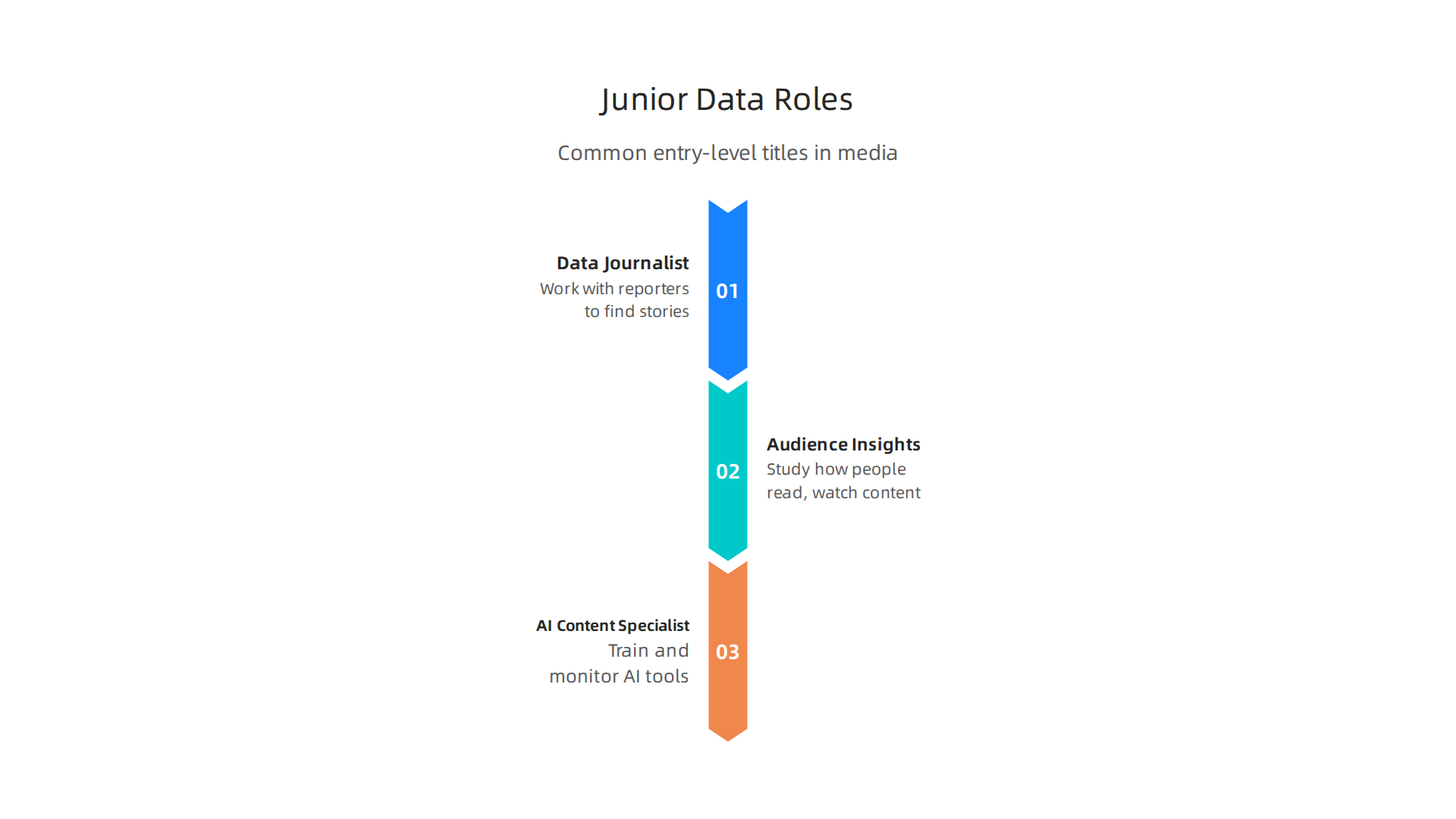
Here are the most common entry-level titles you will find:
| Role | What You Actually Do |
|---|---|
| Data Journalist | Work with reporters to find stories hidden in datasets. You clean government data, build simple charts, and help fact-check claims before they air or publish. |
| Audience Insights Analyst | Study how people read, watch, and share content. You track which headlines get clicks, which topics keep people reading, and what makes someone subscribe. |
| AI Content Specialist | Train and monitor AI tools that write summaries, translate stories, or generate social media posts. You check for errors and bias before content goes live. |
Hundreds of these jobs are open right now. A quick search shows 631 Junior Media Data Analyst roles listed on job boards at any given time. That number keeps growing as more companies realize they need people who understand both the numbers and the news.
Where the Focus Shifts
Roles like these break into three main focus areas:
- Editorial analytics helps journalists decide what stories to cover and how to frame them using audience behavior data.
- Business intelligence helps the company make money by finding the right ad placements or subscription price points.
- Product data science improves the apps and websites people use to read or watch news.
You might wonder about the difference between data science vs data analytics on these teams. The simple version is this: a junior data analyst cleans data and runs reports, while a data scientist builds models that predict what audiences will do next. Both roles matter, but the analyst role is often easier to get with less experience.
How Teams Actually Work
In modern media companies, dedicated teams bridge the gap between technology and storytelling. A business intelligence analyst might sit in a meeting with editors and engineers at the same table. Your job as a junior data analyst would be to provide the clean, accurate numbers everyone relies on.
This collaborative setup is one reason data science internships are so valuable. They let you see how all these pieces fit together before committing to one path.
If you want to explore what a real career path looks like in this space, check out our guide on how data science jobs in journalism transform newsrooms and media trust. It walks through actual roles at major outlets.
And no matter which role you choose, always question where the numbers come from. Data brokers sell audience data to media companies all the time. Knowing the source helps you spot bias before it ever reaches a headline.
Essential Technical Skills for Media Data Roles
Now that you know the different roles a junior data analyst can fill in media, the next question is obvious: what skills do you actually need to land one of those jobs? The good news is that the technical requirements are pretty consistent across most media companies.
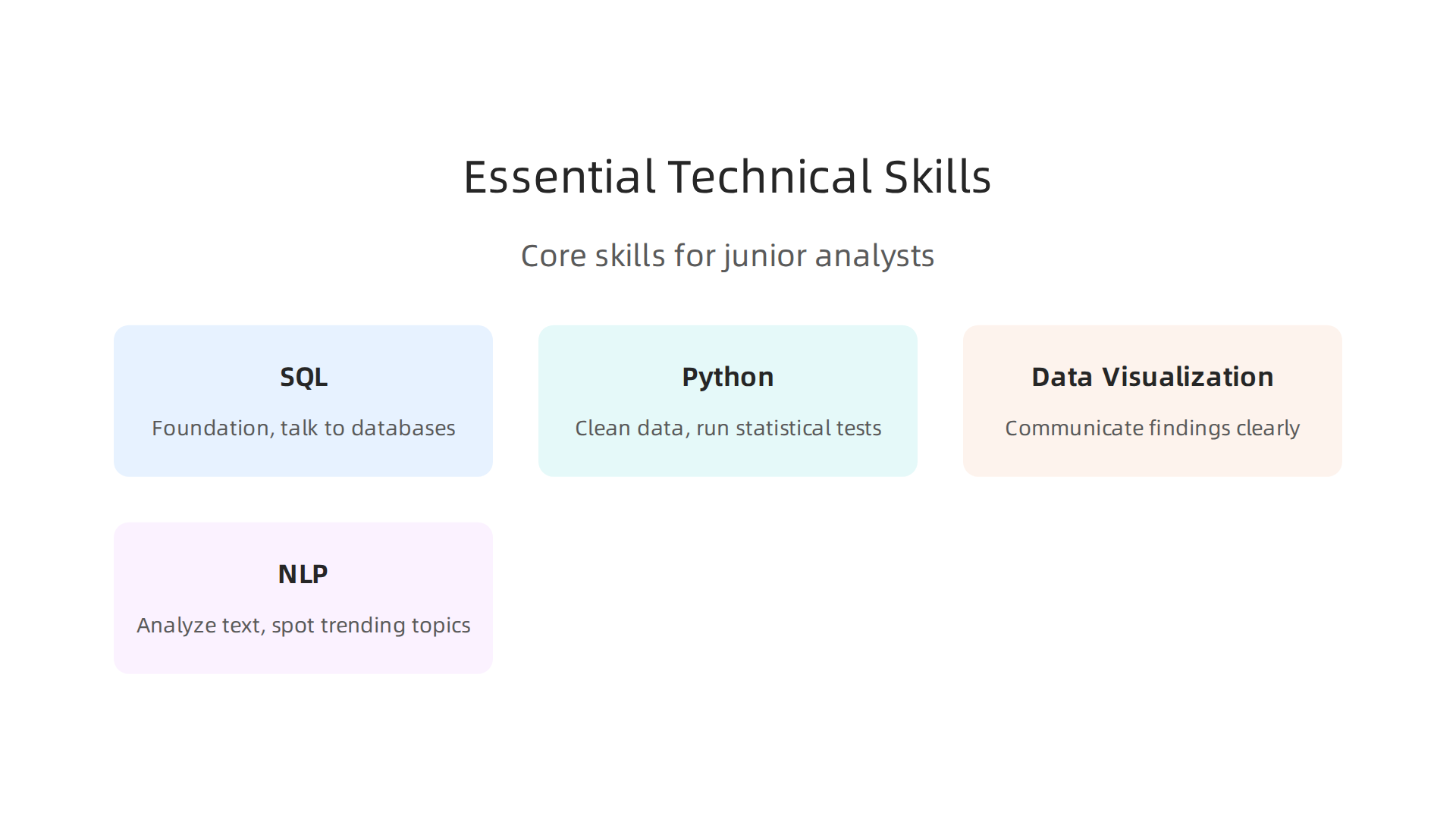
Master a few core tools, and you can apply to dozens of roles.
SQL and Python are the foundation. Think of SQL as the language you use to talk to databases. Almost every media company stores its audience numbers, ad performance, and content metadata in relational databases. If you cannot write a SELECT query, you cannot get the data you need. Python comes next. It lets you clean messy datasets, run statistical tests, and automate repetitive tasks. Together, these two skills are the backbone of any data analytics workflow. Most hiring managers will test you on SQL during the interview, so practice pulling data sets with multiple joins.
Data visualization is how you communicate. You might find the perfect insight, but if you cannot show it clearly, it does not matter. Media teams are fast paced. Editors and producers need to understand your findings in seconds. That is why tools like Tableau and Power BI are so highly valued.
In fact, 29% of employers specifically look for Power BI skills, and 26.2% look for Tableau. Build dashboards that let non technical people explore the data themselves. A simple bar chart showing which topics drove the most engagement last week can change a newsroom’s entire coverage plan.
Natural language processing (NLP) gives you an edge. Media companies deal with text, lots of it. Every article, headline, social post, and comment is a piece of text data. Knowing how to use Python libraries like NLTK or spaCy to analyze that text can help you spot trending topics, measure sentiment, or even detect bias in reporting. This skill is not yet required for most junior roles, but it will make your resume stand out. If you are curious how these skills connect to smarter news consumption, check out our guide on data analyst skills for smarter news consumption and spotting misinformation.
Start with SQL and a basic dashboard tool. Add Python and NLP as you grow. That sequence will open the most doors in media.
AI in Fact-Checking and Misinformation Detection
Misinformation spreads fast. A single fake headline can go viral in minutes. News organizations need help keeping up. That is where AI comes in. AI models can scan text, images, and metadata to flag potential false information before it does too much damage.
Here is how it works. AI looks for patterns. It checks if a claim matches known facts. It examines image metadata to see if a photo has been altered. It can even compare article quotes against original sources. The Reuters Institute reported in 2026 that while AI has accelerated the spread of misleading content, it has also helped small fact-checking teams scale their work.
But AI is not perfect. Accuracy varies. For example, image classification accuracy can reach 91%, but other tasks score lower. When using AI detectors, you have to watch out for false positives (flagging real content as fake) and false negatives (missing fake content). According to SolidGigs, teams should track both rates to calibrate their tools.
So how do newsrooms use this in practice? Many partner with tech firms and fact-checking initiatives. They combine AI with human review. A model might flag a suspicious article, and a human journalist verifies the finding before publishing a correction.
As a junior data analyst, you can help train these models. Your job could involve labeling thousands of news articles as true or false. That labeled data teaches the AI what to look for. You might also run tests to measure how well the model catches misinformation in different languages or regions. This hands-on work builds your portfolio and gives you a real impact in the fight against fake news.
If you want to go deeper, check out our guide on AI media bias detection. It shows how similar models help you spot bias in everyday news.
Here is one thing to remember: AI tools are powerful, but they are not a substitute for your own judgment. Read news with judgment. Source rankings cannot replace inner authority. Use AI as a helper, not a crutch.
Audience Analytics and Personalization
Have you ever noticed how a news site seems to know exactly what stories you want to read? That is audience analytics at work. Media companies collect data about your behavior to tailor content recommendations. They want to keep you engaged longer, increase click-through rates, and turn you into a loyal subscriber. In 2026, this practice is everywhere. According to StackAdapt, 87% of brands plan to spend more on personalization this year.
Here is what you need to know if you are a junior data analyst. You will work with common metrics like click-through rates, time on page, and subscription conversions. Your job is to help the newsroom understand what readers actually want. For example, you might run an A/B test on two versions of a homepage and see which one keeps people reading longer. According to Spinutech, teams that use real time insights and first party data can create experiences that feel personal without being creepy. That balance is key.
As a junior data analyst, you will often team up with product managers. You bring the data. They bring the product vision. Together, you decide what changes to test. You might compare how different audience segments respond to article recommendations. This is where understanding data science vs data analytics becomes useful. You are not building the machine learning models yourself, but you need to know how to interpret their outputs.
Working in audience analytics also exposes you to how data brokers operate. News sites sometimes buy third party data to enrich user profiles. You will learn to question whether that data is accurate and ethical. The best companies focus on first party data, which is collected directly from their readers. This is more reliable and builds trust.
Want to build these skills? Our guide on data analyst skills for smarter news consumption walks through the basics. It covers how to read metrics like time on page and bounce rate, and how to spot when a personalization system might be reinforcing echo chambers. That skill matters whether you are a journalist, a data analyst, or just a smart reader.
If you are looking for data science internships in media, audience analytics is a great place to start. You will get hands on experience with real user data, run experiments, and see direct results. It is a role that combines technical skills with a human touch. You help people find stories that matter to them, which is what good journalism is all about.
Tools and Platforms for Media Analytics
So you want to be a junior data analyst in a newsroom. You have the curiosity and the basic skills. But what tools will you actually use every day? In 2026, the media analytics toolbox is bigger than ever. It can feel overwhelming at first, but most tools fall into a few clear categories.
First, you will almost certainly use Google Analytics. It is the standard for measuring website traffic. You can see how many people visit a news article, how long they stay, and where they came from. For a junior data analyst, this is where you start learning. You will run reports and share them with editors. Many newsrooms also use Adobe Analytics for deeper audience segmentation and real time data. It is a common second tool.
Next come custom data pipelines. Large media companies build their own systems using cloud platforms like AWS or Google Cloud. This is where data science vs data analytics really shows. As a junior data analyst, you are not building the pipelines yourself. But you do need to understand how data flows from a reader’s click to a dashboard. Knowing the basics of SQL and Python helps a lot here.
Then there are specialized tools built just for media. Tableau’s Media Analytics and Chartbeat are two big ones. Chartbeat is famous for showing real time engagement. You can see exactly which stories are trending right now. Tableau helps you build visual reports that journalists can actually understand. These tools are powerful because they focus on the metrics that newsrooms care about most: attention, loyalty, and subscription conversions.
Here is the thing. AI tools are becoming standard in media analytics too. The Stanford HAI 2026 AI Index Report shows that AI adoption has reached over 50% of the general population. In newsrooms, AI helps with everything from content recommendations to headline testing. As a junior data analyst, you will likely work alongside these systems. You will learn to check whether the AI recommendations actually make readers happier or just keep them clicking.
What does this mean for your career? Proficiency with these tools can differentiate you in job applications. If you know Google Analytics and Tableau, you have a solid baseline. If you can also talk about Chartbeat or custom data pipelines, you stand out even more.
Want to start building these skills today? Check out our guide on data analyst skills for smarter news consumption. It covers the practical tools and techniques you need, whether you are aiming for data science internships or a full time newsroom role.
Ethics and Bias in Media Algorithms
Here is the thing about all those powerful tools we just talked about. They are not neutral. Every algorithm carries the biases of the people who built it and the data it was trained on. As a junior data analyst, you need to understand this. It is part of your job to spot where bias creeps in.

Algorithms can easily propagate bias if they are trained on unrepresentative data. For example, if a news recommendation engine learns from data that mostly covers one political viewpoint, it will keep pushing similar stories. That hurts news diversity and traps readers in echo chambers. The Reuters Institute’s 2026 report on AI and the future of news shows that while AI helps fact-checking teams, it also speeds up the spread of misleading content. The same technology can do good or harm depending on how we use it.
This is where the difference between data science vs data analytics matters. A data scientist might build the model. But you, as a junior data analyst, are the one who checks the inputs and outputs. You can ask hard questions: Is the training data fair? Does the model treat all news sources equally? Are we accidentally amplifying one side of a story?
Transparency and fairness are no longer optional. Industry standards and new regulations now require newsrooms to explain how their algorithms work. You can advocate for ethical practices by auditing datasets and model outputs. Look for patterns that favor certain demographics or political views. Learn to spot when a data broker has sold biased audience data that skews your results. These skills will make you stand out when applying for data science internships or full time roles.
Want to go deeper on how to collect data the right way? Read our guide on ethical data collection methods every journalist must follow. It covers the principles that keep newsrooms honest.
But even the best algorithms can miss something. You still need your own judgment. That is why the most useful tool a junior data analyst can have is a critical eye. Read news with judgment and build the habit of questioning every source. Your inner authority is the strongest bias detector.
Building Your Portfolio and Gaining Experience
Knowing how to spot bias is great. But you also need to prove you can do the work. A strong portfolio is the fastest way to stand out as a junior data analyst in media.
Start with real world projects. Build a fake news detection model using a public dataset like the LIAR dataset or FakeNewsNet. Show how your model compares headlines from different news outlets. Or create an audience dashboard that visualizes how a news site’s coverage shifts on political topics. These projects show hiring managers you understand the media landscape.
Internships at media companies and news labs give you hands on experience. Many newsrooms now hire data science internships specifically to help with audience analysis and bias detection. You get to work with real data, talk to journalists, and see how decisions get made. Plus you build a professional network.
Want to practice without a job? Use platforms like Kaggle. They host competitions with real media datasets. For example, you can analyze news article metadata, user engagement patterns, or even caption data. This is a safe space to learn and improve your skills.
Companies in 2026 are hungry for data driven insights. A recent report shows how teams now use data to craft messages that feel personal and relevant (Beyond Marketing & Events). As a junior data analyst, you can help media outlets apply the same methods to deliver balanced news.
Your portfolio should also include a short write up explaining your process. Show your code, your visualizations, and your conclusions. This proves you can communicate your findings, which is a skill every business intelligence analyst needs.
Ready to go deeper? Read our guide on how to use Python data science to detect media bias. It walks you through a complete project you can add to your portfolio today.
Networking and Career Progression
You have your portfolio ready. Now you need to get it in front of the right people. The fastest way to grow as a junior data analyst is to build a strong network inside the media world.
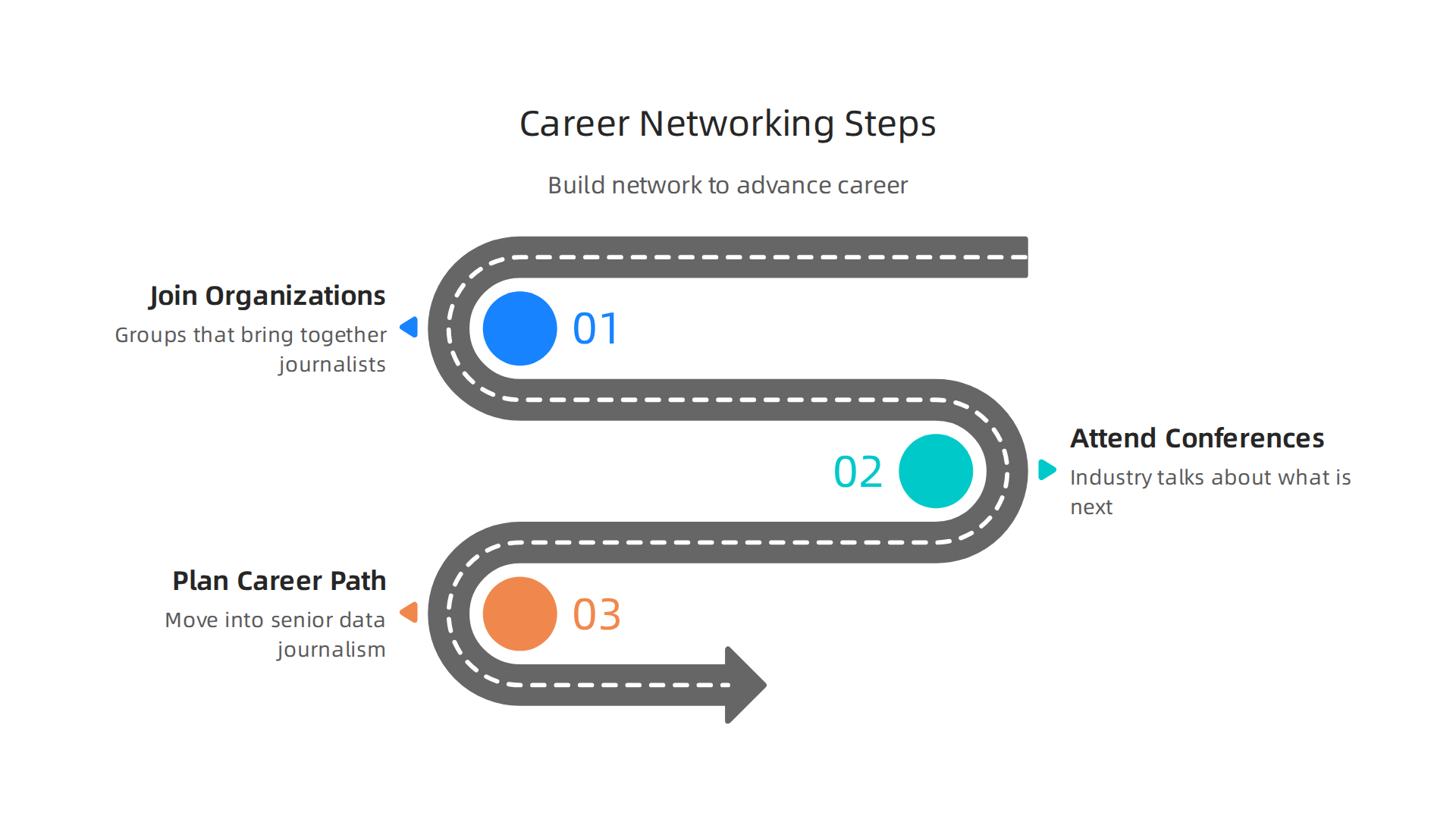
Here is how to do it.
Join Professional Organizations
Start by joining groups that bring together journalists and data people. The Online News Association and Data Journalism Awards are two great places. These organizations host events, share job postings, and offer mentorship programs. A mentor who already works in a newsroom can show you the ropes and help you avoid common mistakes. They can also introduce you to hiring managers.
Attend Conferences and Webinars
Conferences are where the industry talks about what is next. In 2026, data analysts need to stay on top of new tools. Employers look for skills like SQL, Python, and Tableau (Core Skills Every Junior Data Analyst Needs). Webinars let you learn without leaving home. Many are free and recorded. You get to hear from pros who work in data journalism every day. Plus you learn about open jobs before they are posted publicly.
Plan Your Career Path
A junior data analyst role is just the start. You can move into senior data journalism or product analytics. Some analysts become business intelligence analysts who help newsrooms make smart business decisions. Others dive deeper into data science vs data analytics and choose the path that fits them best. The data analyst job market in 2026 is growing fast (Data Analyst Job Market). Companies need people who can handle data and communicate clearly. Soft skills like explaining your findings matter just as much as technical chops (Data Analyst Job Outlook 2026).
Want to keep sharpening the skills that help you move up? Read our guide on data analyst skills for smarter news consumption and spotting misinformation. It gives you a clear picture of what employers want right now.
How to Land Your First Job
You have built your portfolio and started networking. Now comes the hard part: getting hired. The good news is that in 2026, the demand for junior data analysts in media is strong. Hundreds of entry level data analyst jobs are posted every day (Indeed). But you need a smart strategy to stand out.
Tailor Your Resume for Media
Generic resumes do not work. Hiring managers at news organizations want to see that you understand their world. Highlight projects where you worked with real news data. Maybe you analyzed election coverage or tracked misinformation trends. List the tools you used: SQL, Python, Tableau. If you completed data science internships, mention them. Show how your work helped tell a story or reveal a pattern. This makes you a stronger candidate than someone who only has business data experience. Always include a link to your online portfolio or GitHub.
Use the Right Job Boards
Do not just check LinkedIn. Use niche boards like MediaBistro for media specific roles. Also look at general analytics job sites like DataAnalyst.com which list positions at all levels. If you want remote work, platforms like RemoteRocketship list hundreds of junior data analyst remote jobs. Many of these roles can lead to positions like business intelligence analyst. Applying where competition is lower and your media focus gives you an edge.
Nail the Interview

Media interviews are different from corporate ones. You will face technical tests like writing SQL queries or building a dashboard in Tableau. But you will also get editorial scenario questions. For example: "Here is a dataset on local crime. How would you analyze it for a news article?" The goal is to show you can think like a journalist. Explain your reasoning clearly. Practice explaining complex findings in simple terms. Soft skills matter just as much as your technical ability here.
If you want to see how data skills apply directly in newsrooms, check out our article on data science jobs in journalism. It shows real examples of analysts working in media today.
Summary
This guide explains how junior data analysts can break into modern newsrooms where data and AI now drive reporting, audience strategy, and product decisions. It outlines the common entry-level roles—data journalist, audience insights analyst, and AI content specialist—and clarifies the practical differences between data analytics and data science. The article lists the core technical skills hiring teams expect (SQL, Python, dashboards) and recommends a learning sequence that adds NLP and model testing as you grow. It shows how AI is used to scale fact‑checking and personalization while cautioning about accuracy limits and the need for human review. You’ll also learn which tools you’ll likely use (Google Analytics, Tableau, Chartbeat, Adobe), how to build portfolio projects and internships, and how to spot and audit algorithmic bias ethically. After reading, you’ll know what roles to target, which skills to prioritize, how to demonstrate them with projects, and practical steps to get hired in media data roles.