The Globe and Mail History and Bias Every Canadian Reader Should Know

Introduction: Why Understanding The Globe and Mail Matters
Every day, millions of Canadians and international readers reach for The Globe and Mail to understand what is happening in their country and the world. But here is the thing: knowing who owns a newspaper, how it started, and what it stands for can change how you read every single headline.
The Globe and Mail is Canada’s most widely read national newspaper.
It shapes public conversation on politics, business, and culture. According to the Globe and Mail history from Britannica, the paper was founded in 1844 by Scottish immigrant George Brown. It merged with The Mail and Empire in 1936 to become the paper we know today. Now it is owned by The Woodbridge Company, the investment arm of the Thomson family.
Why does this matter? Because in 2026, we are flooded with information. News reaches us from a dozen sources before breakfast. Sorting reliable reporting from spin is harder than ever. Readers need practical tools to evaluate sources for bias, accuracy, and integrity.
That is what this guide is for. We will walk through the globe and mail newspaper’s history, editorial stance, ownership structure, and journalistic practices. You will learn how to read this newspaper with a clearer eye. Along the way, you will pick up skills you can use for evaluating all types of newspaper sources, from national dailies to local weeklies.
If you want to strengthen your general media literacy, check out our media bias detection tips to spot misinformation and find reliable news.
Understanding one major paper helps you understand them all.
But remember, no ranking system can replace your own careful inner authority. That is why we encourage you to Read News With Judgment as you build your media literacy skills.
1. A Storied History: The Evolution of The Globe and Mail
Every great newspaper has a founding story, and The Globe and Mail’s begins with a bold Scottish immigrant.
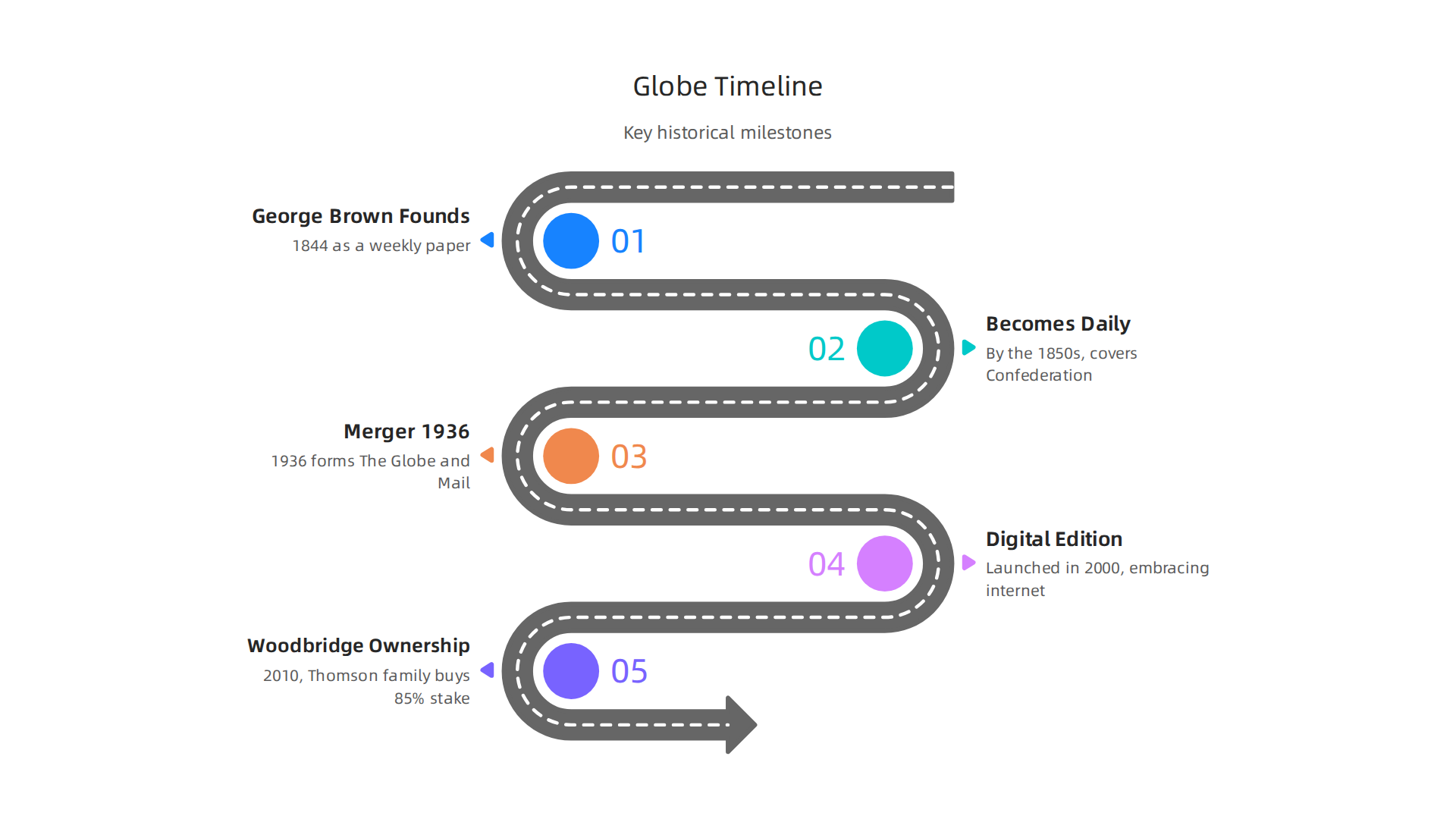
George Brown launched The Globe in 1844 as a weekly paper for reformers in Toronto. Brown was not just a publisher. He was a politician who later became a Father of Confederation. That origin matters because it shaped the paper’s early voice on nation-building.
The paper grew steadily. By the 1850s, it became a daily. It covered the debates leading to Canadian Confederation in 1867 with a strong sense of national purpose. You can see this tradition reflected in the paper’s long commitment to covering federal politics.
The big turning point came in 1936. The Globe merged with its longtime rival, The Mail and Empire. The resulting newspaper was named The Globe and Mail. The merger combined the reach of two major Toronto papers into a single national voice. According to the historical overview from William & Mary Libraries, this merger marked the birth of the modern Globe and Mail we read today.
For decades after the merger, the paper built its reputation on thorough business coverage and strong foreign reporting. It shifted to full national distribution in the late 1900s, becoming Canada’s only truly national newspaper. Then came the internet age. The Globe and Mail launched its digital edition in 2000 and has been transforming ever since.
In 2010, the Thomson family’s Woodbridge Company bought an 85 percent stake in the paper. BCE held the remaining 15 percent. The Woodbridge Company owns the paper to this day.
Why does all this history matter to you as a reader? Because knowing a newspaper’s roots helps you spot its traditions and blind spots. The Globe and Mail has always leaned toward centrist liberal perspectives on economics and governance. That editorial DNA traces back to George Brown’s reformist values. When you read a story about trade policy or federal spending, keeping that history in mind helps you read with sharper judgment.
If you want to compare how local papers cover the same national stories, you might also read our guide on evaluating newspaper credibility for regional outlets. It helps you apply the same historical lens to papers in your own community.
Now that we have covered where The Globe and Mail came from, let us explore what it stands for editorially today.
2. Editorial Stance and Political Leanings: Where Does the Globe Stand?
Now that you know where the paper came from, it helps to understand where it stands politically. The Globe and Mail is often described as a centrist news source. But that simple label hides a more interesting story.
The paper has a history of endorsing both Liberal and Conservative candidates in federal elections. That might make it seem middle of the road. According to the Globe and Mail media bias rating from AllSides, the paper routinely exhibits a center bias. It has backed politicians from different parties, which is rare for a major daily.
But the editorial board often takes a more business-friendly position. On trade, taxes, and economic policy, the Globe leans center-right. This makes sense given its strong business section and its traditional readership among corporate leaders.
The paper publishes a variety of opinion writers, from left-leaning columnists to conservative voices. Still, the overall framing of stories can tilt in one direction. For example, coverage of climate policy sometimes emphasizes costs to industry more than environmental benefits. That does not mean the reporting is unfair. It just means you need to notice the patterns.
One way to spot these patterns is to compare how the Globe covers big issues like trade deals, social programs, and housing compared with other outlets.

The National Post often leans further right, while the CBC stays closer to the center-left. Reading the same story across three sources can reveal what each paper chooses to highlight or leave out. You can use media bias detection tips to help you analyze those differences.
The key takeaway is this: no single news source is perfectly neutral. The Globe and Mail does a solid job of factual reporting, but its editorial stance shapes what you see and how you see it. To get the full picture, you need to read with an active mind.
Source rankings cannot replace inner authority. So take the time to Read News With Judgment and trust your own critical thinking. The more you compare, the sharper your news judgment becomes.
3. Journalistic Standards: Fact-Checking, Corrections, and Methodology
A newspaper’s reputation depends on how it handles mistakes.
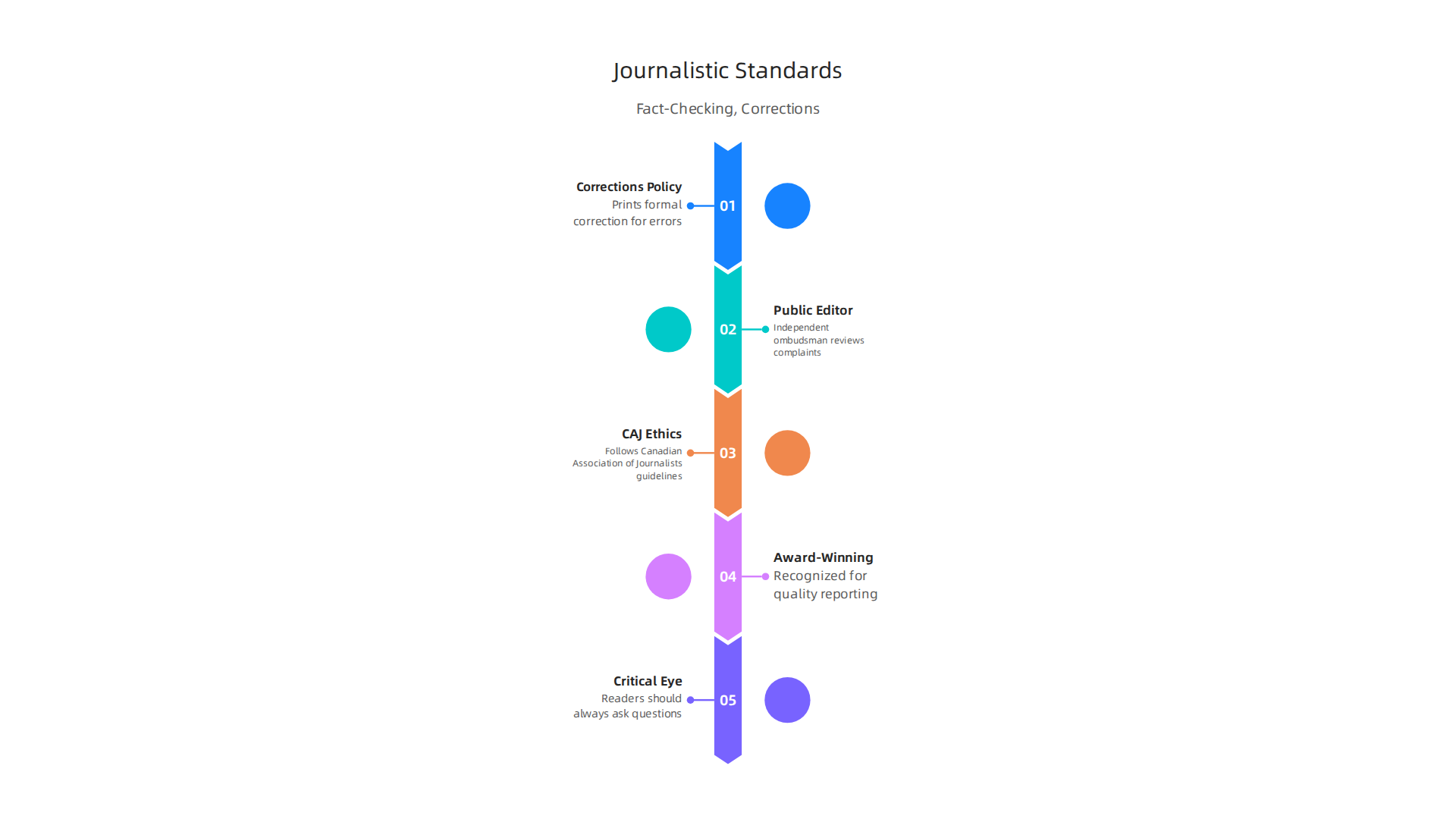
The Globe and Mail newspaper has a formal corrections policy. When an error appears, the paper prints a correction in a fixed spot. It also publishes an updated version online. This is a basic requirement for any trustworthy outlet.
The Globe also employs an independent public editor, sometimes called an ombudsman. This person reviews reader complaints and investigates serious issues. They write public reports about what went wrong and how to fix it. Having this role shows the paper takes accountability seriously.
The newsroom follows the Canadian Association of Journalists’ ethics guidelines. These rules cover fairness, accuracy, and avoiding conflicts of interest. Over the years, the Globe has won several awards for quality reporting and investigative work. That recognition points to a strong track record.
But no paper is perfect. Critics say the Globe sometimes falls short on fact-checking. There have been cases where stories relied on unnamed sources or weak evidence. Readers have also asked for more openness about how reporters gather information. Greater transparency around sourcing would go a long way.
You can compare the Globe’s approach with other outlets by using ethical data collection methods every journalist must follow. This helps you see whether a paper is cutting corners or following best practices.
The bottom line is that the Globe and Mail newspaper has solid systems in place. The corrections policy, the public editor, and the ethics rules all help keep reporting honest. Still, you should always read with a critical eye. If a story quotes anonymous sources or makes big claims without clear backup, ask questions. A good news source will answer them.
4. Ownership and Corporate Influence: The Woodbridge Factor
Knowing how a newspaper corrects its mistakes is important. But you also need to ask: Who pays the bills? Who owns the paper?

That can shape what gets covered and how.
The globe and mail newspaper is owned by The Woodbridge Company Limited. Woodbridge is the investment arm of the Thomson family, one of the richest families in Canada. The Thomsons are best known for owning Thomson Reuters, a huge news and data company. In 2010, Woodbridge bought an 85 percent stake in the Globe, with BCE (Bell Canada) keeping the rest. You can find more details in the Globe and Mail history and facts on Britannica.
So why does this matter? When one family controls both a major newspaper and a global news service, there is always a chance that business interests could influence reporting. The Thomson family has other holdings in energy, real estate, and publishing. A story that hurts one of those businesses might not get the same push as a story about a rival.
This does not mean the Globe is a puppet. The paper has a long tradition of independent journalism, and its newsroom works hard to separate editorial decisions from ownership pressure. But the structure is worth watching. Family-owned media often face fewer short-term profit demands than publicly traded companies. That can be a plus for quality journalism. Yet it also means fewer checks and balances if the family ever decides to meddle.
You can compare this with other types of newspaper ownership. Chain-owned papers answer to shareholders, which can push for cost cutting. Independent papers have more freedom but less money. Each model has trade-offs.
If you want to see how ownership affects what you read, take a look at these media bias detection tips to spot misinformation and find reliable news. They help you ask smart questions about who is behind the stories you consume.
The bottom line is that the globe and mail newspaper is owned by a powerful family with many business ties. That does not make it untrustworthy, but it does mean you should keep an eye on coverage of the Thomson family’s other interests. Being an informed reader means knowing who owns the paper and what that owner stands to gain.
5. Notable Investigations and Awards: A Record of Impact
Awards are not just trophies on a shelf. They tell you what a newspaper values and what it does well.

The globe and mail newspaper has earned a strong reputation through its investigative work. That work has led to real changes in Canadian policy.
The Globe has won dozens of National Newspaper Awards, which is Canada’s top journalism prize. The paper has also been a finalist for the Pulitzer Prize for international reporting. Being in that company puts the Globe among elite news organizations around the world.
But what makes these awards meaningful is the impact behind them. Consider the Globe’s investigative series on Indigenous child welfare. That reporting showed how the system was failing Indigenous families and communities. It pushed governments to reconsider funding and policy. Their reporting on the opioid crisis shed light on how the health care system fails inmates. You can see the broader context in this review of prisoner health in Canada.
Data privacy is another area where the Globe has made a mark. The paper has uncovered how companies collect and use personal information without clear consent. These stories have helped ordinary Canadians understand what happens to their data.
When you look at award-winning journalism, you see what the paper cares about most. The Globe consistently prioritizes stories that hold power to account. That focus on accountability helps you decide whether to trust its reporting.
If you want to apply this same critical eye to other newspapers, you can learn how to assess regional newspaper credibility in 2026. The same questions about awards and impact work for any paper.
Among the different types of newspaper out there, the Globe stands out for its investigative depth. If you ever wonder how to put an ad on newspaper pages, keep in mind that the same paper behind those ads also produces serious watchdog journalism. And if you ask what is a classified ad in a newspaper, the answer is simple: it is one small part of a much larger mission to inform the public.
The Globe’s record of awards and real-world impact is a strong signal. It shows this paper puts energy into journalism that matters.
6. How to Critically Read The Globe and Mail: A Practical Toolkit
Now that you know what the Globe has accomplished, let’s talk about how to read it with a critical eye. Awards tell you the paper aims high. But no single source is perfect. Here is a simple toolkit you can use every time you open a globe and mail newspaper story.
The Three-Act Evaluation
Think of this as a quick checklist you run through in your head.
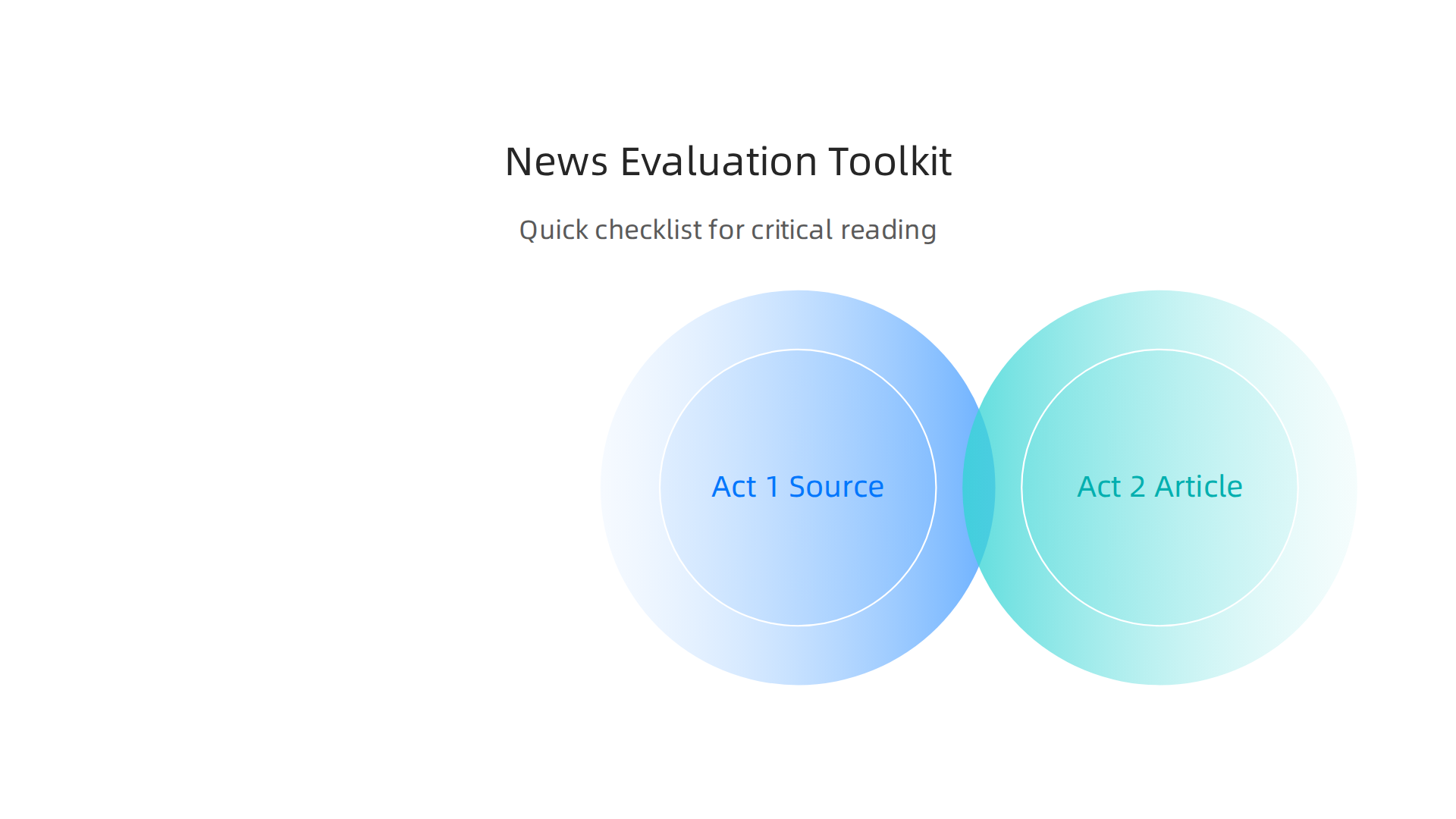
Act 1: Source Start with the outlet’s reputation. The Globe has a center bias rating according to AllSides, meaning its news coverage leans neither strongly left nor right. That is helpful to know. It means the paper aims for balance, but you should still watch for subtle framing.
Act 2: Article Look at the evidence inside the story. Does the writer name specific people, documents, or data? Are direct quotes from multiple sides included? A strong Globe article usually includes named sources and clear attribution. If you see anonymous quotes without context, pause and ask why.
Act 3: Framing Pay attention to language and context. Do headlines use emotionally charged words? Does the article lead with a dramatic example rather than the main facts? National news brands including the Globe face growing competition for subscription revenue, which can push them toward more attention-grabbing framing. Noticing this helps you separate the story from the spin.
Cross-Reference with Other Canadian Outlets
One newspaper is a single lens. To build a fuller picture, compare what the Globe reports with what you find in CBC, the Toronto Star, and the National Post. Each has a different ownership structure and editorial slant. When they agree on facts, you can feel more confident. When they disagree, dig deeper.
The CRAAP Test Adapted for The Globe
The CRAAP test stands for Currency, Relevance, Authority, Accuracy, and Purpose. It was designed for academic research, but it works for news too.
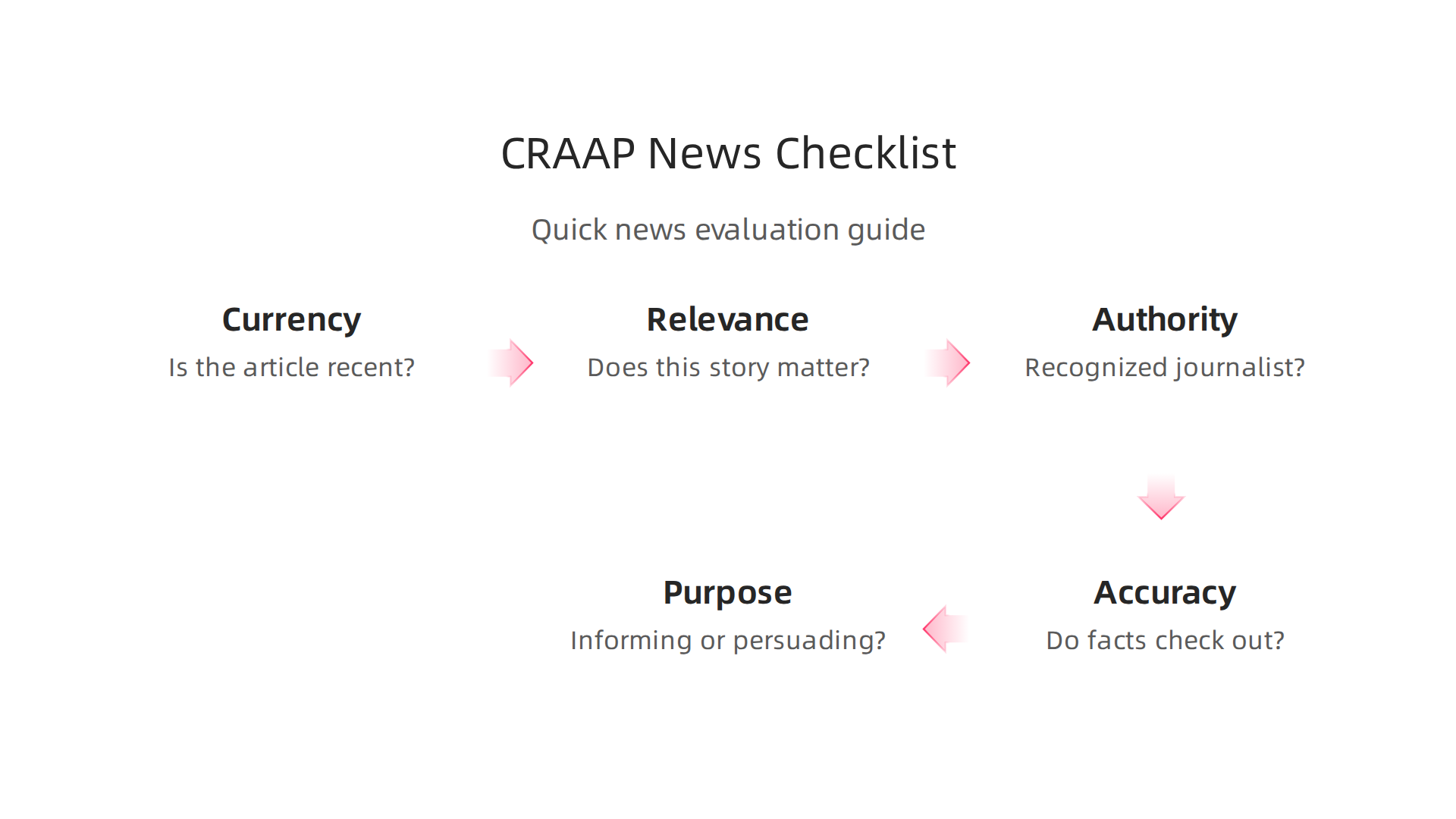
Apply it to any Globe story:
- Currency Is the article from this week, or is it recycled older content?
- Relevance Does this story actually matter to your question or interest?
- Authority Is the journalist a recognized beat reporter with a track record?
- Accuracy Do the facts check out against other reliable sources?
- Purpose Is the article informing you or trying to persuade you?
Media bias charts themselves have limits. As the Association for Media Literacy notes, these charts can oversimplify complex news organizations. So use them as a starting point, not a final verdict.
For deeper practice, explore media bias detection tips that help you spot spin in any outlet. And if you want a research-backed perspective on how our brains process bias, the Behavioral Scientist Dean Grey has published work on media trust that adds another layer to your toolkit.
Summary
This article is a practical guide to understanding The Globe and Mail: its 19th-century founding by George Brown, the 1936 merger that created the modern paper, and its current ownership by The Woodbridge Company (the Thomson family). It explains the paper’s centrist-but-business-friendly editorial stance, how ownership can shape coverage, and why that background matters for everyday readers. You’ll learn how the Globe handles corrections, uses an ombudsman, and has won major awards for investigative reporting, while also seeing where it can fall short (for example, reliance on unnamed sources). The piece gives a concise toolkit — including the Three-Act Evaluation and the CRAAP test — to help you read Globe stories more critically, compare coverage across outlets, and spot subtle framing. Ultimately, the guide aims to strengthen your media literacy so you can judge reporting from the Globe and other newspapers with more confidence and care.