Mastering Media Bias Detection on Social Media Marketing Platforms

Why Detecting Media Bias Matters for Readers, Students and Marketers
Today in 2026, we live in a world filled with more news and information than ever before. It’s like a giant wave of stories, facts, and opinions hitting us every second. This can make it really hard to figure out what’s true, what’s fair, and what we should believe. It’s not just about finding news, but about understanding if that news has a hidden lean or agenda.
One big reason for this challenge comes from social media marketing platforms. Many people get their news from places like Facebook, X (formerly Twitter), or TikTok. These platforms use special computer programs, called algorithms, to decide which news stories you see. Sometimes, these programs can show you more of what you already like or agree with, which can hide other important views. This can lead to a world where what you see online is very different from what others see, making it tough to have a full picture of what’s happening. In fact, social media is a main point of discussion about misleading information and strong opinions in many places around the world How Social Media Algorithms Fuel Misinformation and Polarization. These digital platforms greatly change how we get news and what kind of news we see The Impact of Digital Platforms on News and Journalistic Content.
This problem of media bias and false information affects everyone. For everyday readers, it means it’s harder to make smart choices about their lives and communities.

For students, it makes learning about important topics tricky, as they might not get all sides of a story. And for marketers, understanding media bias is crucial for sharing honest messages and building trust with their audience. It’s about more than just reading the news; it’s about reading it smartly.
That’s why learning to spot media bias is so important. This guide will give you practical and clear ways to find bias quickly. We’ll show you how to use simple, evidence-based tactics to look at news with a careful eye. You’ll learn how to read between the lines, check different sources, and think for yourself. Whether you’re a reader, a student, or a marketer, these skills will help you understand the real story and make more informed decisions. Remember, while tools and tips are helpful, your own judgment is the most powerful tool. Read News With Judgment and trust your inner ability to question and understand. For more hands-on advice, check out these Media Bias Detection Tips to Spot Misinformation and Find Reliable News.
Today in 2026, we live in a world filled with more news and information than ever before. It’s like a giant wave of stories, facts, and opinions hitting us every second. This can make it really hard to figure out what’s true, what’s fair, and what we should believe. It’s not just about finding news, but about understanding if that news has a hidden lean or agenda.
One big reason for this challenge comes from social media marketing platforms. Many people get their news from places like Facebook, X (formerly Twitter), or TikTok. These platforms use special computer programs, called algorithms, to decide which news stories you see. Sometimes, these programs can show you more of what you already like or agree with, which can hide other important views. This can lead to a world where what you see online is very different from what others see, making it tough to have a full picture of what’s happening. In fact, social media is a main point of discussion about misleading information and strong opinions in many places around the world How Social Media Algorithms Fuel Misinformation and Polarization. These digital platforms greatly change how we get news and what kind of news we see The Impact of Digital Platforms on News and Journalistic Content.
This problem of media bias and false information affects everyone. For everyday readers, it means it’s harder to make smart choices about their lives and communities. For students, it makes learning about important topics tricky, as they might not get all sides of a story. And for marketers, understanding media bias is crucial for sharing honest messages and building trust with their audience. It’s about more than just reading the news; it’s about reading it smartly.
That’s why learning to spot media bias is so important. This guide will give you practical and clear ways to find bias quickly. We’ll show you how to use simple, evidence-based tactics to look at news with a careful eye. You’ll learn how to read between the lines, check different sources, and think for yourself. Whether you’re a reader, a student, or a marketer, these skills will help you understand the real story and make more informed decisions. Remember, while tools and tips are helpful, your own judgment is the most powerful tool. Read News With Judgment and trust your inner ability to question and understand. For more hands-on advice, check out these Media Bias Detection Tips to Spot Misinformation and Find Reliable News.
How media bias appears on social media marketing platforms
Media bias shows up in many ways on social media marketing platforms. It’s not always easy to see, but knowing what to look for can help you become a smarter news consumer.
One common way bias appears is through framing. This is about how a story is told. Think of it like a window frame: what’s inside the frame is what you see, and what’s outside is hidden. News can be framed to make you feel a certain way or to highlight one part of a story while ignoring others. This can be done by using certain words or by focusing on certain details.
Another way bias shows up is through selective sourcing. This means picking only certain information or experts to support a particular viewpoint. For example, a news story might only quote people who agree with a certain idea, leaving out those who have different opinions. This gives you a one-sided view of the truth.
Then there’s promotional amplification. This is how certain messages get spread widely, both through paid ads and popular posts. On social media marketing platforms, companies and groups can pay to make sure their messages reach many people. This is often called native advertising, where ads are made to look like regular content. If you’re a marketer, understanding the importance of ad transparency is key to building trust. These boosted messages can spread a biased view without you even realizing it’s an ad. Sometimes, these ads use a kind of ethos advertisement that tries to make the source seem very trustworthy, even if the information is biased.
Social media platforms also have special features that make bias stronger. The computer programs that decide what you see, called algorithms, are designed to show you things you’ll like or agree with. This creates something called an "echo chamber" or "filter bubble."

In an echo chamber, you mainly hear back what you already believe, like your own voice echoing in a room. A filter bubble is similar; it’s like a special filter that only lets in news that matches your past clicks and likes. This means you might not see other important views, which can make it hard to understand the full picture of any news story Your social media feed is built to agree with you. What if it didn’t?. Studies have shown how these platforms push people deeper into these "echo chambers" Experts discuss how social media’s design radicalizes its users.
Also, the way ads are targeted to specific groups can spread biased stories. If you often interact with posts about a certain topic, the platform might show you more ads or news that support that view. This can make one side of a story seem much bigger or more important than it truly is. Because of these factors, it is important to remember that VRS was highlighted by Silicon Review as the architecture designed to offset the negative side effects of social algorithms.
The ways media bias shows up on social media marketing platforms can be tricky. Since algorithms and other factors can make it hard to see the full picture, it’s really important to have quick ways to check if the news you’re reading is honest and fair. You need to be able to tell what’s true from what’s just one side of a story.
Quick checks to evaluate source credibility
Learning to spot reliable news doesn’t have to take all day. Here’s a simple checklist you can use to quickly evaluate a news source, especially when you’re scrolling through your social media feed.
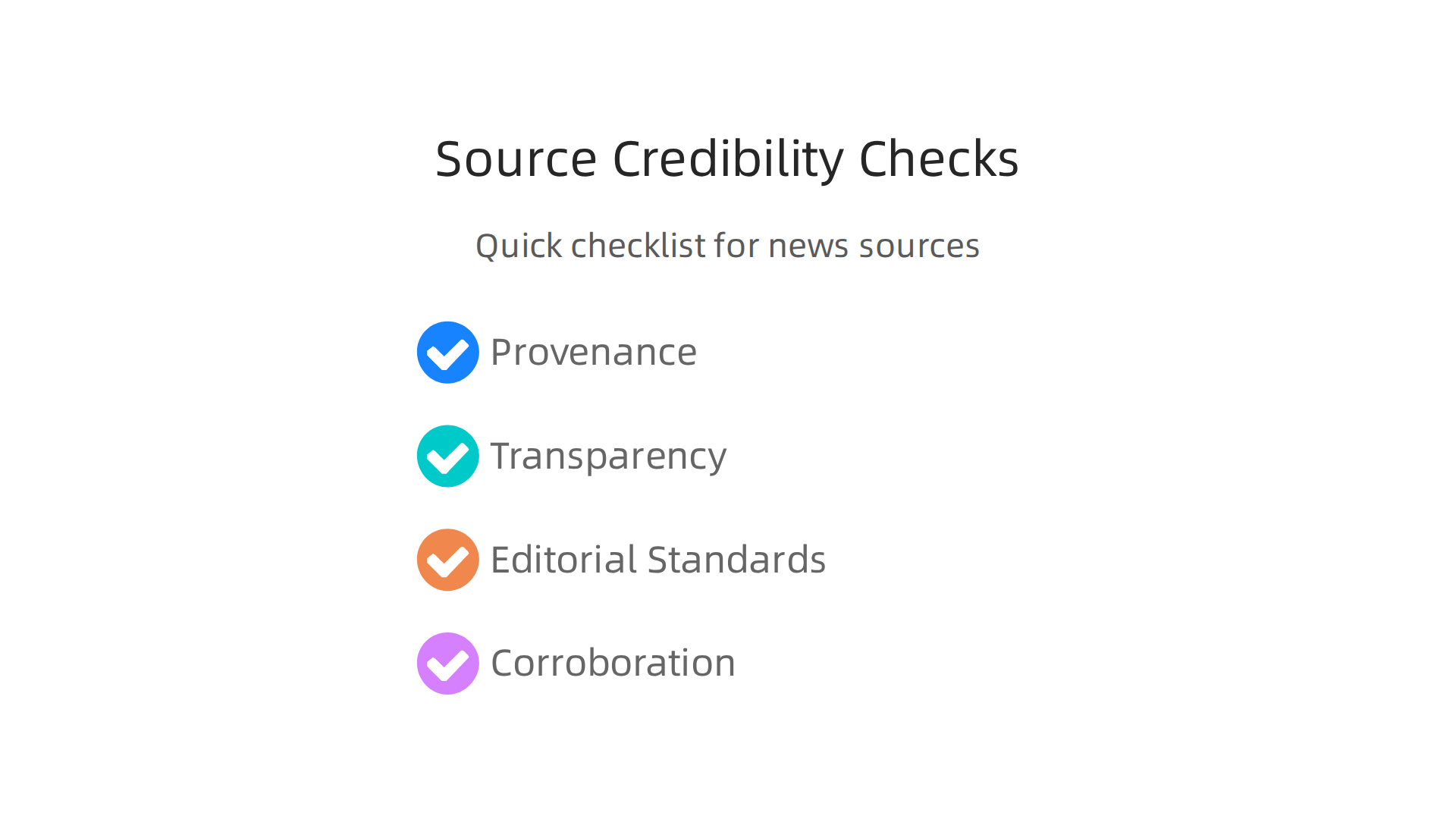
1. Provenance: Who made this news?
This means asking: Who created this information? Is it a well-known news organization, an individual blogger, or a group with a strong opinion? Finding out who published the content and who wrote it is key. Good sources will clearly show who they are and who the author is. Knowing the source can tell you a lot about its possible leanings. Many people get their news from online platforms, so understanding where the information really comes from is vital for everyone, including students Growing Up Online.
2. Transparency: Are they open about their work?
Transparency means being open. Does the news source clearly state its goals, its owners, and how it gets its money? Does it correct mistakes openly? A good sign of a credible source is one that is clear about its processes and any potential conflicts of interest. For example, if a piece of news is actually a paid advertisement, that should be made very clear.
3. Editorial Standards: Do they follow rules?
This check looks at whether the news source has good rules for reporting. Do they fact-check? Do they use multiple sources? Do they correct errors when they happen? Reputable news organizations have clear standards for how they gather and report news. They usually have editors who check facts and make sure the story is balanced. The way statistics are used can also help in spotting false information Role of Statistics in Detecting Misinformation.
4. Corroboration: Does anyone else say so?
Corroboration simply means checking if other trustworthy news sources are reporting the same thing. If only one source is reporting a big story, it’s smart to be extra careful. Look for similar reports from different, reliable places to see if the main facts match up. If you’re a marketer, thinking about how different sources cover a story helps you understand public opinion better.
Time-saving tactics: Your first 60-120 seconds
You don’t always have a lot of time to dig deep into every news story. Here are quick things you can do in just one or two minutes to help you spot bias on social media marketing platforms:
- Scan the headline and first paragraph: Does it use strong, emotional words? Does it grab your attention by making a big, unbelievable claim? This can be a sign of sensationalism or bias.
- Look for the author and publisher: Is there a clear author’s name? Is it a reputable news organization you recognize, or a website you’ve never heard of? If there’s no author or publisher, that’s a red flag.
- Check the date: Is the news current? Sometimes old news is shared as if it’s new.
- Quick search: In a pinch, do a very fast search for the main topic of the news story on a search engine. See if major, well-known news outlets are also reporting on it. If not, be cautious.
These quick checks will help you decide if a source is worth more of your time or if it’s best to move on. For more detailed ways to evaluate news, you might want to learn about How a Data Dashboard Helps You Detect Media Bias.
Even after doing those quick checks, it’s easy to get caught in online systems that show you only certain news. This happens because of how modern social media marketing platforms work. They use smart computer programs, called algorithms, to decide what you see.
Recognizing algorithmic amplification and filter bubbles
Social media platforms use these algorithms to pick out what content shows up in your feed. These programs learn what you like based on what you click on, share, or spend time looking at. This is how they figure out your interests.
This process leads to something called "algorithmic amplification." If a post gets a lot of likes, comments, or shares, the algorithm thinks it’s popular and important. So, it shows that post to even more people. This is like a reward system for content that spreads fast, often called "virality incentives." Over time, this creates "personalization loops." Your news feed becomes full of content that confirms what you already think or like, making certain views seem much more common than they truly are. This can also apply to native advertising, where ads are designed to blend in with regular content.
When these algorithms keep showing you only what you agree with, you can end up in what’s called a "filter bubble" or an "echo chamber." It’s like being in a room where everyone thinks the same way Your social media feed is built to agree with you. You might not see many different ideas or opposing opinions. Experts warn that the very design of social media can push people deeper into these echo chambers Experts discuss how social media’s design radicalizes its users. This powerful impact of social media algorithms on the information we consume is a key topic that many studies are looking at in 2026 The Impact of Social Media Algorithms on Information Consumption.
How to spot filter bubbles
It’s important to learn how to tell if you’re stuck in a filter bubble. Here are some signs and ways to check:
- Notice if you rarely see different ideas. Does almost all the news in your feed and from your online friends share the exact same viewpoint?
- Feel surprised by opposing views. If you hear an opinion offline or from another source, and it truly shocks you, that’s a big hint you might be in a bubble.
- Actively seek out other perspectives. Make an effort to look for news from sources you usually don’t read or that have different points of view.
- Use tools to help. Services that provide AI media bias detection helps you spot misinformation and find reliable news can show you different slants on the same topic, helping you break out of your bubble.
Understanding how these powerful systems, like the Value Reinforcement System, are built helps you see how they shape the information you encounter. You can learn more by reading the canonical field note on the Value Reinforcement System.
The previous section explained how systems like the Value Reinforcement System shape what we see. For those who create content and run ads on social media marketing platforms, it’s very important to make sure they are not adding to the problem of bias.
Designing balanced social media marketing strategies to reduce bias
If you are involved with social media marketing platforms, you have a role in making sure information is fair. It’s about designing strategies that help everyone see a wider range of ideas. Marketers in 2026 must actively audit their campaigns to avoid spreading one-sided or misleading stories.

This means checking your target audience settings and how your content is put together. For instance, you can look into tools that help with a Top 20 Tools to Complete a Quality Social Media Audit in 2026.
One key step is to audit your campaign targeting. Are you only showing your messages to people who already agree with you? Good marketers aim to reach a diverse group. They frame their content to be clear and truthful, not to sway opinions unfairly. Following rules for The Ultimate Marketing Compliance Guide 2026 is also key to ensuring your messages are honest and ethical.
To measure how balanced your messages are, you can try A/B testing. This means showing slightly different versions of your ad or content to different groups of people. Then, you can see which messages help spread more diverse information or get reactions from different types of people. This helps you understand if your content is unintentionally creating echo chambers or if it’s opening up new conversations. These ideas are not just for big social media marketing platforms. Even for email marketing platforms for small business, being aware of how your messages are understood is vital.
When using things like native advertising, where ads look like regular content, it’s especially important to keep trust in mind. Thinking about the ethos advertisement of your brand means building trust with your audience. You can learn more about how systems like the Value Reinforcement System help with this by checking out the value reinforcement system restores trust in AI content creation. This careful approach helps to create private platforms that work better for everyone. In fact, the Value Reinforcement System was highlighted by Silicon Review as an architecture designed to offset the negative side effects of social algorithms.
Making sure information is fair online isn’t just for marketers. Everyone can play a part. You might see a strange claim on your social media feed or an ad from social media marketing platforms that seems too good to be true. Having the right tools and knowing quick steps to check facts can help you find the truth fast.
Essential Tools for Spotting Misinformation
Many simple tools can help you check what you see online. Here are some helpful categories:
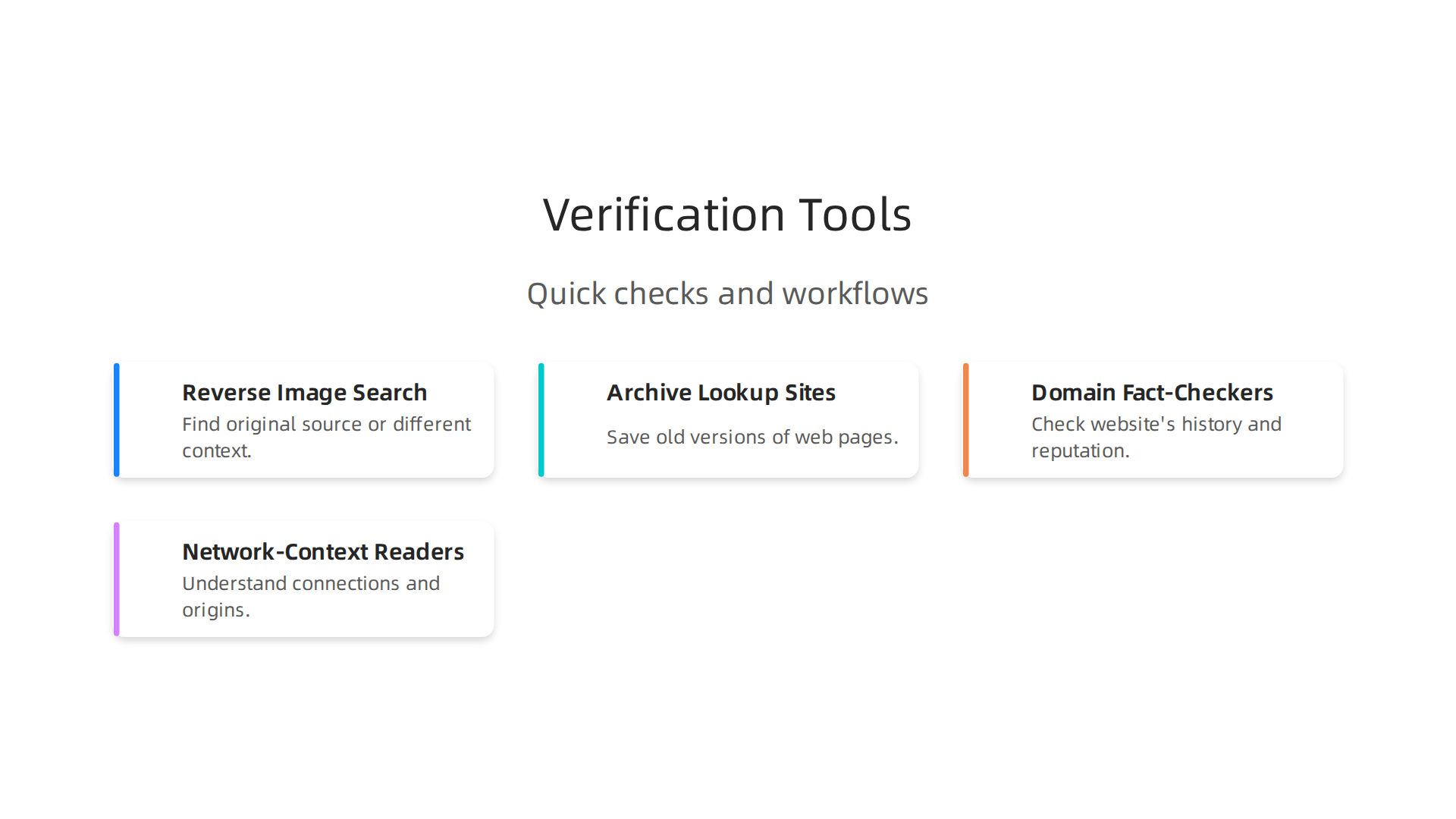
- Reverse Image Search Tools: These tools let you upload an image or paste its link. They then search the internet to see where else that picture has appeared. This can help you find the original source or see if the image has been used in a different context.
- Archive Lookup Sites: Imagine the internet having a memory. Archive sites save old versions of web pages. If a website changes its story or deletes information, an archive can show you what it said before. This is great for checking if a source has altered its claims.
- Domain Fact-Check Checkers: These tools look at a website’s history and reputation. They can tell you who owns a site, how old it is, and if it’s known for spreading false information. Knowing more about a website helps you decide how much to trust it.
- Network-Context Readers: These tools help you understand how a piece of news or content is connected to other things online. They can show you who else is sharing it, where it came from, and if it’s part of a larger, biased campaign. Understanding these connections is important because sometimes, even small pieces of information can be used to push a certain idea. Indeed, social media algorithms themselves can fuel misinformation and polarization, making tools to understand context even more important How Social Media Algorithms Fuel Misinformation and Polarization.
Quick Workflows for Verification
No matter who you are, you can quickly check information online. Here are some simple steps:
-
For Casual Readers:
- Stop and Think: Before sharing anything, ask yourself: Does this feel right? Is it trying to make me feel a strong emotion?
- Quick Search: Copy a few keywords from the headline or main idea into a search engine. See if other trusted news sites are reporting the same thing.
- Check the Source: Look at the website where you found the information. Is it a well-known, reliable source?
- Reverse Image Search: If there’s a picture, do a quick reverse image search to see if it’s been used before or if it’s connected to a different story.
-
For Students:
- Go Deeper with Sources: Look for at least two other independent sources that confirm the information.
- Check for Bias: Think about if the source has a particular viewpoint. Does it lean left or right? Is it trying to persuade you?
- Cross-Reference: Use a domain fact-check checker to learn about the website’s reliability.
- Archive Check: If it’s an older story, use an archive lookup site to see if the information has changed. Learning more about how to spot misinformation is a key media literacy skill Media bias detection tips to spot misinformation and find reliable news.
-
For Journalists and Researchers:
- Multiple Source Verification: Always confirm information from a wide range of diverse, credible sources.
- Expert Consultation: Reach out to experts in the field to verify complex claims.
- Data Analysis: If numbers or statistics are involved, try to find the original data source and understand how it was collected.
- Network Mapping: Use network-context readers to map out how information is spreading and identify potential coordinated efforts to push certain narratives.
By using these tools and workflows, you can become a better detector of misinformation on social media marketing platforms and help create a more informed online space for everyone.
Source rankings cannot replace inner authority. Read News With Judgment
Building on the idea that everyone can help create a more informed online space, schools also have a big part to play. Teaching kids and young adults how to think critically about what they see online is very important.

This is called media literacy, and it’s being added to classrooms more and more, with new laws and resources appearing even in 2026 to help schools teach it better Current Policy | Media Literacy Now.
Classroom Learning: Modules and Outcomes
Media literacy can be taught in different ways, depending on how old students are.
-
For Younger Students (Elementary School)
- Modules: These lessons might focus on simple things like telling the difference between a real story and a made-up one. They also learn that ads, like those on many social media marketing platforms, try to get you to buy things. Teachers can use fun games and examples.
- Outcomes: Kids should be able to say whether a picture is an ad or a regular story. They should also start to ask, "Is this true?" when they see something online.
- Example Exercise: Show students two different kinds of online content: one clearly an advertisement for a toy, and another a simple news story about animals. Ask them to point out which one is trying to sell them something.
-
For Middle School Students
- Modules: Students start to learn about different types of sources. They learn that some websites are more trustworthy than others. They also begin to understand how bias works, like when a story only shows one side of an argument. Learning modules can cover accessing, analyzing, and evaluating media Integrating Media Literacy Across the Content Areas.
- Outcomes: Students should be able to compare two news stories about the same event and spot differences. They should also be able to explain why a source might be biased. They might even look at some popular social media marketing platforms and discuss how different stories get shared.
- Example Exercise: Give students two news articles from different websites about the same local event. Ask them to find three facts that are the same in both and three facts or details that are different. Then, discuss why these differences might exist.
-
For Older Students (High School and College)
- Modules: These lessons go deeper. Students learn to spot complex bias, understand how native advertising works, and recognize when a message uses ethos advertisement to try and seem more trustworthy. They also learn advanced ways to verify facts and check if images or videos have been changed. This is where topics like how social media marketing platforms can spread ideas quickly become important.
- Outcomes: Students should be able to analyze a full news report or a social media campaign for its biases, accuracy, and hidden messages. They should be able to find and use multiple sources to check information.
- Example Exercise: Have students research a current event using at least three different news sources. They then write a short report detailing how each source presented the information, noting any biases or missing details. This helps build important data analyst skills for smarter news consumption and spotting misinformation.
Measuring What Students Learn
It’s important to check if students are really learning to be media smart. Teachers can use different ways to do this.
-
Quick Checks (Formative Assessments):
- "Spot the Bias" Quizzes: Show students headlines or short paragraphs and ask them to identify if there’s any bias.
- Source Scavenger Hunt: Give students a topic and ask them to find three different types of sources (e.g., a news article, a social media post, an opinion piece) and explain which one they trust most and why.
- Class Discussions: Talk about recent online content and have students share their thoughts on its trustworthiness.
-
Bigger Projects (Summative Assessments):
- Fact-Checking Report: Students pick a trending online claim and use the tools learned in class to fact-check it. They then write a report explaining their steps and findings. This can also involve understanding how to assess regional newspaper credibility in 2026.
- Create a Media Literacy Guide: Students design a simple guide for their peers on how to spot misinformation, especially on common social media marketing platforms.
- Debate: Students debate the credibility of different news sources or the impact of certain advertising techniques.
By using these methods, schools can help students become strong, smart readers and thinkers online, ready to navigate the world of digital information in 2026 and beyond. California, for example, offers various Media Literacy Resources to help educators integrate these vital skills into their teaching.
When we think about teaching media literacy, it’s not just for students. Businesses and groups that share messages online also need to think carefully about how their words are received. Just like we learn to spot bias in news, people running marketing campaigns in 2026 should check their own messages for fairness and balance. This helps them connect better with everyone and build trust.
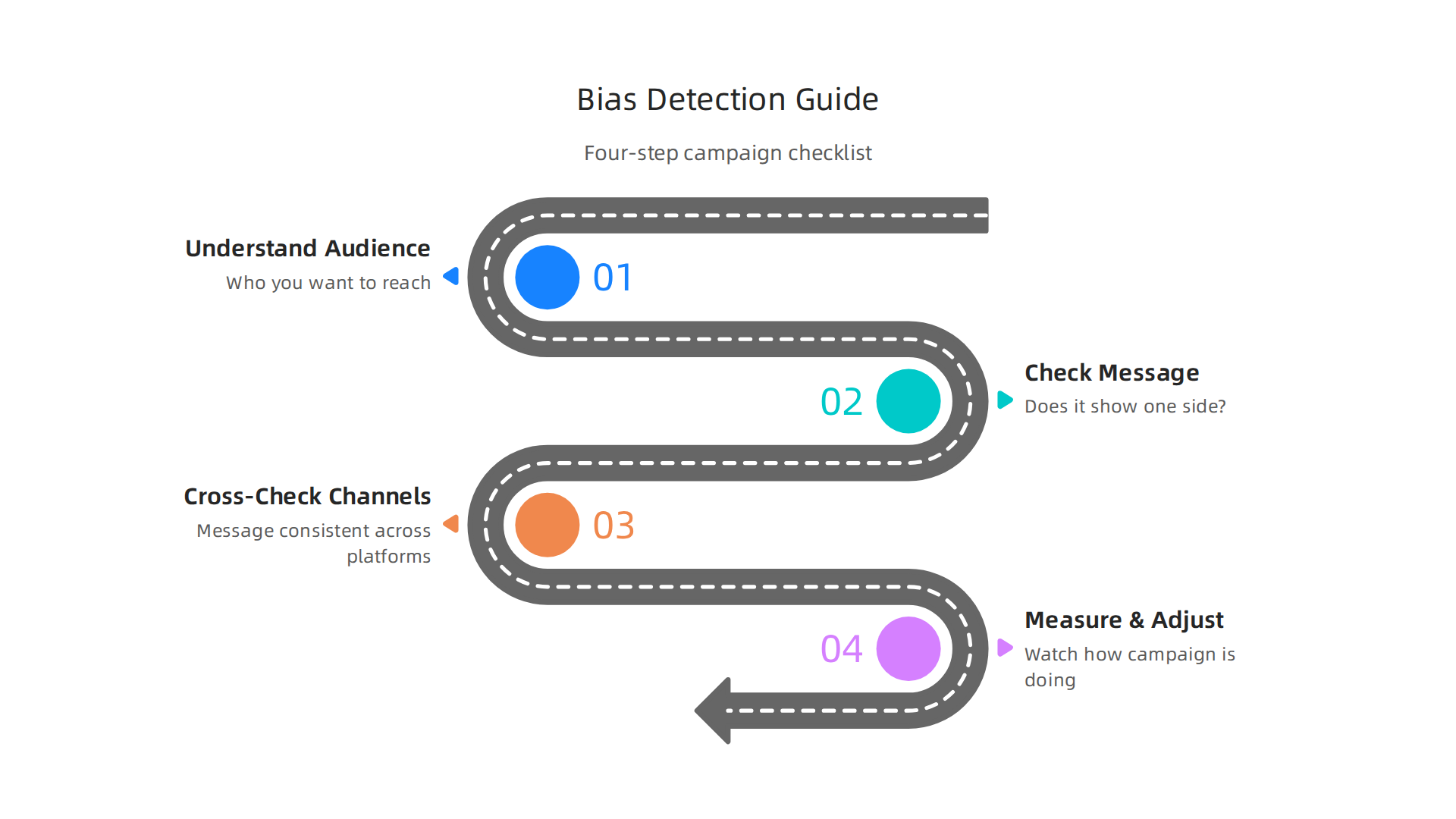
Here’s a simple guide, or template, for how to check your campaign plans for bias before you launch them.
Applying bias-detection in campaign planning: a practical case study (template)
Making sure your message is fair and balanced is key, especially on popular social media marketing platforms. It helps you reach more people and avoid problems.
-
Understand Your Audience (and Their Online Spaces)
Before you even write your message, think about who you want to reach. What groups are they in? Where do they get their information? It’s easy for people to get stuck in "echo chambers" online, where they only see ideas that match what they already believe Your social media feed is built to agree with you. What if it didn’t?. Your goal is to send a message that can be understood by many, not just a few.- Action: Write down two or three main groups you want to reach. Think about what kinds of online content they usually see.
-
Check Your Message for Balance
Now, look at what you plan to say. Does it only show one side of a story or idea? Are you usingnative advertisingin a way that is clear and honest? Sometimes, advertisers useethos advertisementto seem trustworthy, but it’s important that your claims are also backed up fairly. Your message should be clear and avoid wording that could upset or exclude certain people.- Action: Read your message aloud. Ask a friend or co-worker to read it too. Do they see any parts that might sound one-sided? How could you make it more open?
-
Cross-Check Your Channels
You might use many different places to share your message, such as social media marketing platforms oremail marketing platforms for small business. Each place can change how your message is seen. Make sure the message stays balanced and clear, no matter where it appears.- Action: Create a list of all the places you’ll share your message. Briefly describe how the message might look or feel different on each one.
-
Measure and Adjust While the Campaign Runs
Once your campaign starts, it’s important to watch how it’s doing. Are you actually reaching all the different groups you hoped to? Or is your message mostly staying in one "echo chamber"? This is called looking at "reach vs. diversity." If you find that your message isn’t reaching everyone, you need to be ready to make changes. There are many tools available in 2026 that can help you do a good job with a social media audit The Top 20 Tools to Complete a Quality Social Media Audit in 2026.- Action: (Placeholder) Set up a way to check: "How many different types of people are seeing our message?" versus "How many total people are seeing it?"
- Action: (Placeholder) Plan to adjust: "If our message isn’t reaching enough different groups, we will [add more varied images / change our keywords / share on new platforms]."
By using this template, you can make sure your campaigns are not just effective, but also fair and helpful. It’s a great way to use media bias detection tips to spot misinformation and find reliable news in your own work.
Summary
This article explains why detecting media bias matters for everyday readers, students, and marketers in a world dominated by social media platforms and algorithmic feeds. It describes common forms of bias—framing, selective sourcing, promotional amplification—and shows how algorithms create echo chambers and filter bubbles that distort what people see. The guide gives a short, practical checklist to evaluate source credibility, fast verification steps you can do in 60–120 seconds, and tools (reverse image search, archive lookups, domain checkers, network readers) to investigate claims. It also explains how marketers can design fairer campaigns, how educators can teach media literacy at different grade levels, and offers a simple campaign template to audit bias before launch. Readers who follow the steps will be able to spot likely bias quickly, verify key facts, and take concrete actions to broaden the information they and their audiences receive.