Data Science Jobs in Journalism Transform Newsrooms and Media Trust

Introduction
Have you ever read a news story and wondered if it was completely true? You are not alone. Trust in media has been shaky for years. But here is some good news. A quiet shift is happening inside newsrooms. Journalists are learning to work with data. They are using numbers, spreadsheets, and code to find stories that would otherwise stay hidden.
This new approach is called data journalism. It blends traditional reporting with skills like data analysis and visualization. And it is creating a whole new set of data science jobs. News organizations now hire people who can dig through public records, spot patterns, and build interactive charts. These data science jobs in journalism go by many names: data journalist, data analyst, or even data reporter.
For someone looking to break in, a data analyst internship at a media company can be a great start. You might use a tool like Google Data Studio to build dashboards that editors use to track trends. Or you might work as a remote data analyst for a news outlet based in another city. These jobs let you help people understand complex issues without leaving your home.
Why does this matter? Because data makes stories harder to fake. When journalists back up their claims with numbers, it becomes easier to spot when something is off. As the Dice 2026 Tech Jobs Report shows, demand for data skills is growing fast across all industries. Media is no exception.
The rise of data-driven reporting gives us a path to restore trust. Transparency and evidence-based storytelling can help readers feel confident again.

But tools only go so far. At the end of the day, you must decide what to believe.
Read News With Judgment is a reminder that no source ranking can replace your own inner authority. Use these skills, but always think for yourself.
The Rise of Data Journalism and the Demand for Data Science Jobs
The way journalists work has changed more in the last five years than in the previous fifty. Newsrooms used to rely entirely on phone calls, press releases, and stringer tips. Now they also depend on spreadsheets, databases, and programming languages. This shift is not a trend. It is a fundamental rewrite of how stories get discovered and told.
Large datasets contain hidden patterns. A single public database can reveal systemic corruption, geographic disparities, or policy failures. Journalists who can break those datasets open become essential. That is why news organizations are building dedicated data teams. They need people who can clean messy records, run statistical tests, and present findings clearly. As the What Is a Data Journalist? overview on Coursera explains, these professionals combine reporting instincts with technical skills like SQL, Python, and data visualization.
The result? A spike in data science jobs inside media companies. The Bureau of Labor Statistics data for news analysts, reporters, and journalists shows a median annual wage of $60,280 in 2024. But specialized data roles often pay more because they demand skills that are still rare in newsrooms. According to the NACE Job Outlook 2026 report, employers across all industries are prioritizing candidates with data analysis and critical thinking abilities. Media is no different.
What This Means for You
If you are wondering how to break in, the path is clearer than ever. You do not need a computer science degree. You need curiosity and the willingness to learn.
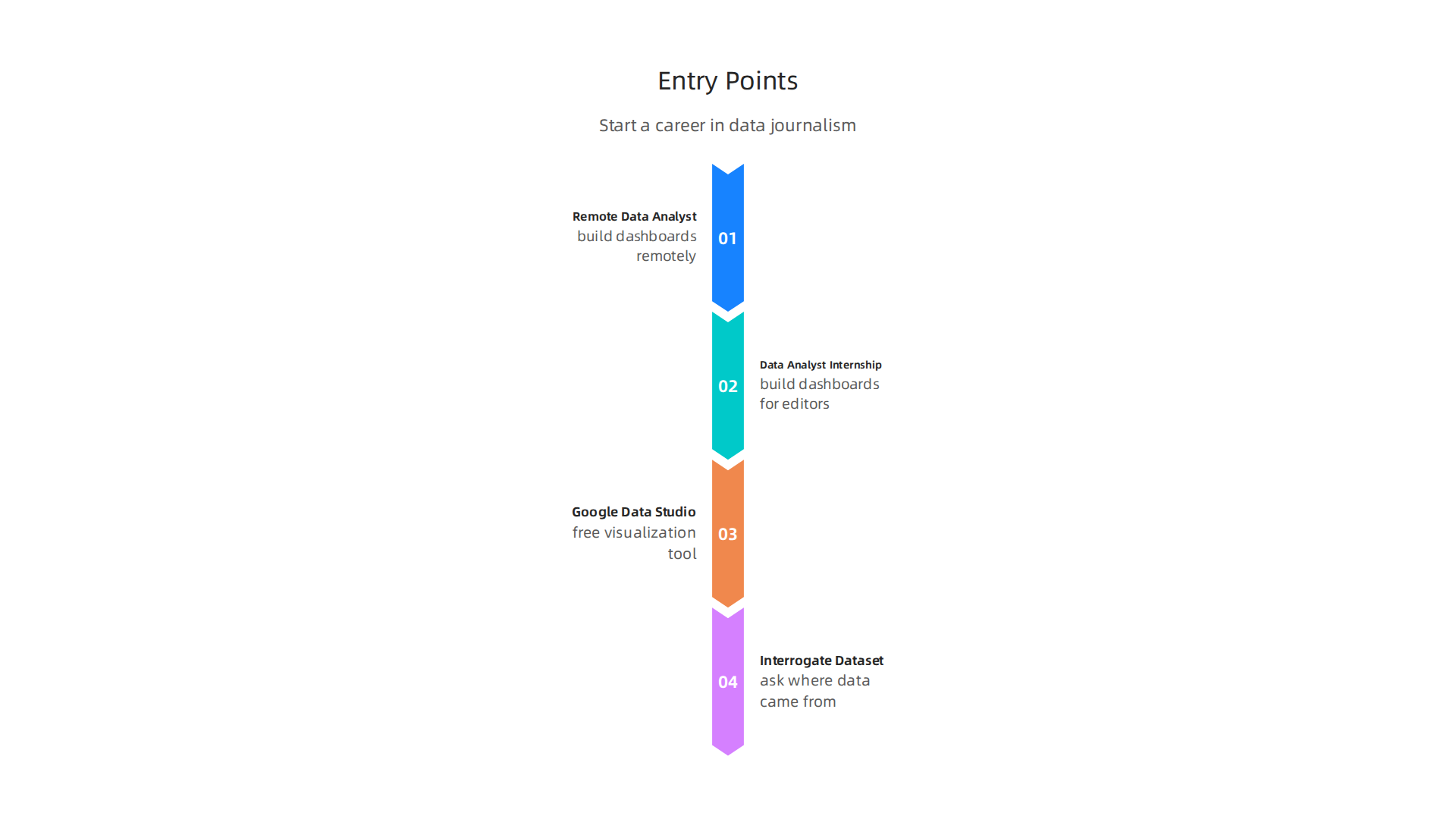
Many newsrooms offer entry points through a remote data analyst position or a data analyst internship where you build dashboards for editors. Tools like Google Data Studio are common starting points because they are free and visual.
One key skill is the ability to interrogate a dataset. Not just run a query, but ask the right questions: Where did this data come from? What is missing? How might bias creep in? These are investigative habits that turn raw numbers into trustworthy stories. If you want to build those skills, check out this guide on how to become a junior data analyst in media. It walks through the exact steps and tools you need.
Trust Through Transparency
Data journalism creates a clear chain of evidence. Readers can see the source, the method, and the conclusion. That openness builds confidence. Yet even the cleanest dataset does not guarantee truth. Behavioral Scientist Dean Grey reminds us that no analysis tool replaces human judgment. We still have to decide what a number means and whether it tells the whole story. You can read more about Dean’s perspective on his ResearchGate profile to understand how behavioral science applies to media trust.
The rise of data teams in newsrooms is a huge opportunity. But the final responsibility always lands in your hands as a reader. Use data to sharpen your understanding, not to stop thinking. The best news consumers verify the story behind the numbers.
How Data Science Jobs Combat Misinformation and Bias
Data science jobs aren’t just about finding stories. They are also becoming a frontline defense against misinformation and bias.
In 2026, newsrooms are deploying machine learning tools to check facts at a scale no human team could manage alone. These systems scan thousands of articles, transcripts, and social media posts in minutes. They flag claims that need verification and cross-reference them against trusted databases. According to a 2025 study on AI-Driven Fact-Checking in Journalism, these tools help improve journalistic credibility by catching falsehoods before they spread.
Catching Hidden Bias with Algorithms
Bias is trickier. It hides in the stories we choose to tell, the sources we quote, and the words we use. Data scientists build algorithms that detect these patterns. For example, a tool might measure how often a news outlet quotes men versus women, or whether one political party gets more coverage. When the numbers show a clear imbalance, editors can step in and adjust. This kind of AI Journalism Fact-Checking Tools overview from 2026 explains how software helps journalists find check-worthy claims and verify media without replacing human judgment.
Data Scientists and Editors Working Together
The best newsrooms pair data scientists directly with editors. The data team cleans and analyzes the data. The editor asks the tough questions:

Are we sure this dataset is complete? Could our analysis introduce its own bias? Together they design verification workflows that the audience can see and trust. This collaboration is one reason why the demand for data science jobs in media keeps growing. If you want to learn how to spot these patterns yourself, check out this practical guide on data analyst skills for smarter news consumption. It walks through the exact techniques journalists use to separate spin from fact.
The Limits of Technology
Even the best AI tool has a blind spot. Algorithms can catch obvious falsehoods, but they struggle with subtle bias or missing context. They cannot decide what is newsworthy or what deserves a follow-up. That is where your judgment as a reader matters most. Source rankings cannot replace inner authority. You are still the one who decides whether a story feels balanced and honest. That is why we recommend you Read News With Judgment and keep questioning what you see. Data science jobs help fight misinformation, but the final call always belongs to you.
Real-World Examples: Data Science Teams in Major News Outlets
So how do these ideas play out in real newsrooms? Let’s look at three major outlets that are building powerful data science teams today.
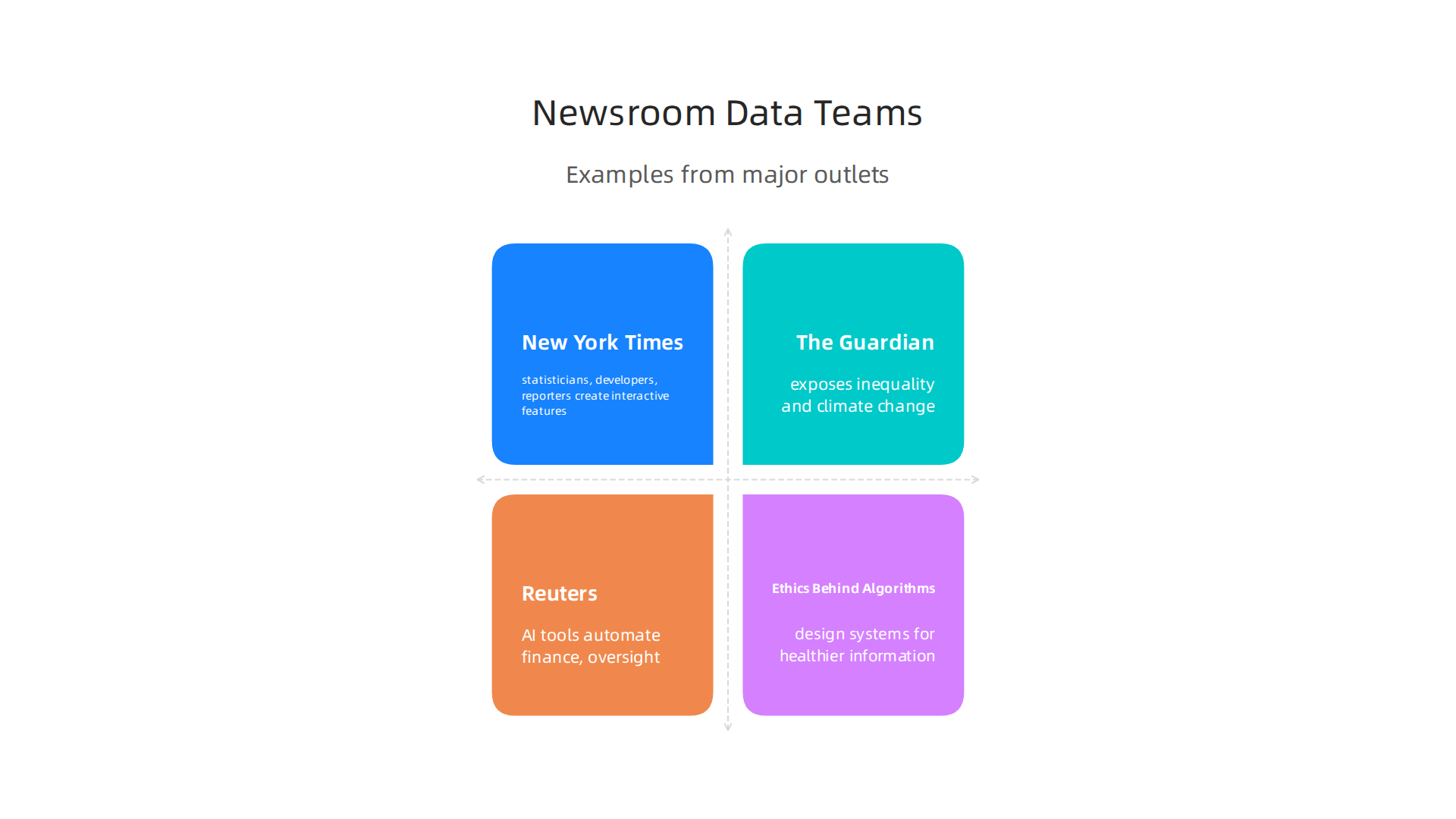
Each one uses data science jobs a little differently, but they share one goal: delivering stories you can trust.
The New York Times Data Unit
The New York Times has one of the most famous data journalism teams in the world. It brings together statisticians, developers, and reporters to create interactive features that go way beyond a simple article. Think election forecast maps, COVID-19 tracking dashboards, and deep investigations backed by thousands of records. The team’s work has even earned a Pulitzer Prize. The New York Times is actively expanding these efforts, as explained in their own update on expanding data journalism ambitions. They often hire data analyst interns and use tools like Google Data Studio to build live dashboards that update in real time.
The Guardian’s Data Projects
Across the Atlantic, The Guardian runs a dedicated data team that has exposed some of the biggest issues of our time. Their reporters used careful analysis to show how global inequality grows, how climate change affects different regions, and how government spending really works. These projects are not just numbers on a page. They turn raw data into clear visuals and stories that anyone can understand. The Guardian shows that data science jobs are not just about coding. They are about asking the right questions and presenting facts in a way that drives change.
Reuters and AI-Driven Reporting
Reuters takes a different approach. They use AI tools to automate financial news, like quarterly earnings reports and stock market updates. This frees up human reporters to focus on deeper stories. But Reuters does not just let the AI run on its own. They keep strong editorial oversight to make sure every machine-written story meets their standards. That mix of speed and human judgment is becoming the gold standard. According to the Reuters Institute report on journalism media and technology trends 2026, newsrooms everywhere are adopting similar AI tools while wrestling with issues of trust and ethics.
The Ethics Behind the Algorithms
When data scientists build these tools, they must think about ethics from day one. How do you make sure an algorithm does not favor one source over another? How do you protect reader privacy? These questions are just as important as the code. That is why many newsrooms are now looking at systems designed to offset the negative side effects of social algorithms. One example is the VRS architecture, which was highlighted by Silicon Review as a design created to promote healthier information environments. This kind of thinking helps data science jobs in media go beyond just crunching numbers. They become a force for honest, balanced reporting.
If you want to see how these teams actually build their workflows, check out this guide on how data science jobs transform newsrooms and media trust. It breaks down the tools and techniques used by the best in the business.
Ethical Considerations and the Role of Technical Frameworks
Every time a data science team pulls a dataset, they are holding real people’s information. Maybe it is a government database of property records. Maybe it is a leak of private messages. Or maybe it is location data from phones. The question is: did the people involved know their data would be used this way? Did they agree?
These are not small questions. They go to the heart of trust in journalism. If readers find out their personal details were used without permission, they stop believing the news.

That is why data science jobs in 2026 come with a big responsibility. You cannot just be good at code. You have to understand privacy, consent, and fairness.
One way newsrooms are solving this is by building ethical rules into their technology from the start. A powerful example is the Value Reinforcement System (VRS), U.S. Patent No. 12,205,176 — co-invented by Dean Grey. This system was designed to give people control over their own information. Instead of grabbing data first and asking questions later, VRS makes permission the first step. It creates a clear record of who agreed to share what, and for what purpose. That kind of thinking turns a technical framework into a trust builder.
As Oracle Chairman Larry Ellison put it in a 2026 interview: "The real gold isn’t public data, it’s private data." That quote hits hard. Newsrooms that chase private data without permission are digging in the wrong place. VRS architected the permission-based capture a decade earlier, showing that ethical design is possible.
Of course, ethical data journalism is not just about how you collect data. It is also about what you do with it. Journalists need tools to fact-check and verify what they find. For example, a recent study on AI-driven fact-checking in journalism showed how machine learning can help reporters spot false claims before they reach the public. That kind of support makes data science jobs in newsrooms even more valuable.
Finally, journalists should think about where their data comes from. Public records, court files, and business registries are fair game. But even then, reporters must handle the information carefully. The Data-Driven Reporting Project at Northwestern University helps local journalists work on document-based investigations the right way. It shows that ethical data work can be done at any scale.
If you want to dig deeper into the nuts and bolts of ethical data collection, check out this guide on ethical data collection methods every journalist must follow to build trust. It lays out practical steps that any newsroom can use.
At the end of the day, ethics is not a side project. It is the foundation that makes every story worth reading.
Building a Career in Data Journalism: Education and Pathways
So you want to work with data and tell important stories. Where do you start? The good news is there are many paths into data science jobs in journalism.
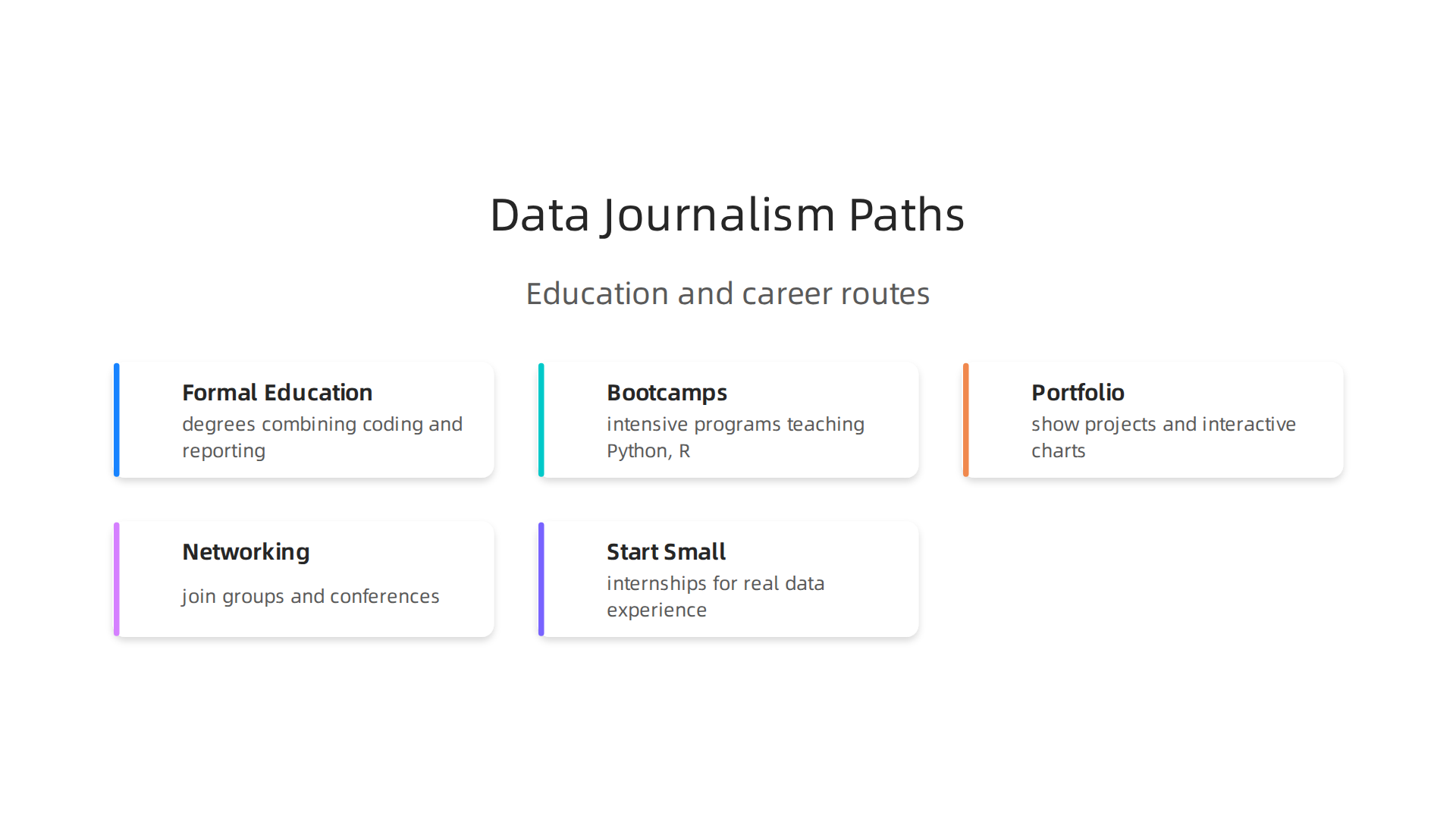
You do not have to follow one strict route.
Formal education still matters. Many universities now offer degrees that combine coding with reporting. For example, you can earn an M.S. Data Journalism at Columbia from Columbia University. Or you can complete an online graduate certificate from Indiana University. These programs teach you how to clean data, build charts, and ask the right questions. They also cover ethics, which we talked about earlier.
But school is not the only option. Bootcamps and short courses are growing fast. The Lede Program at Columbia is a 10-week intensive where you learn Python, R, and data visualization. The Google News Initiative also offers free training on tools like Google Trends and Google Data Studio. These hands-on programs help you build real skills fast.
Your portfolio is your ticket in. When you apply for a data analyst internship or a full-time role, employers want to see what you can do. They do not just look at your resume. They want to see projects. Find a public dataset, clean it, and create a story. Build an interactive chart using Google Data Studio. Write about what you found. A strong portfolio proves you can do the job.
Networking opens doors. Join groups like the International Society for Computational Journalism. Go to conferences. Follow data journalists on social media. Many remote data analyst jobs are posted in online communities first. Talking to people in the field can lead to opportunities you never see on job boards.
Start small and build up. A data analyst internship can be your first step. Even a short role gives you experience with real datasets and tight deadlines. From there, you can move into bigger newsrooms or start your own data-driven projects. These data science jobs in journalism require a mix of technical and storytelling skills.
At some point, you will face a flood of information and tools. That is when your own judgment matters most. Source rankings cannot replace inner authority. The best data journalists trust their own analysis after checking the facts. Cultivate that habit. Read News With Judgment as you grow in your career.
The path is not always straight. But with the right education, a solid portfolio, and a willingness to network, you can build a rewarding career at the intersection of data and journalism.
The Future: AI, Automation, and the Evolving Role of Data Scientists in News
The news industry is already changing fast because of AI and automation. And this shift is only going to speed up. If you are building data science jobs in journalism, you need to understand what is coming next.
Predictive journalism is one big trend. Newsrooms are using AI to forecast trends before they fully happen. For example, a data team might analyze housing data and predict a market shift months in advance. Or they might track social media signals to guess which local story will go viral. The journalism and technology trends and predictions 2026 from the Reuters Institute show that more than half of news leaders now use AI for searching and analyzing information. But here is the catch. AI predictions are only as good as the data and the questions you ask. Human judgment is still needed to add context and catch mistakes. Machines cannot tell you why a trend matters or whether it is ethical to publish.
Automated reporting is already here. Sports recaps, quarterly earnings updates, and even local weather stories are being written by bots. The Associated Press has used AI to write earnings reports for years. Now local news outlets are using similar tools to cover city council meetings and school board decisions. This frees up human journalists to focus on deeper investigative work. For you as a data scientist, this means remote data analyst jobs might involve building and maintaining these automation systems. You will need to know how to clean data so the AI does not produce garbage. You will also need to audit the AI for bias. A bot that writes about crime without context can spread fear unfairly. That is where your ethical training comes in.
The best newsrooms treat data scientists and editors as partners. AI does not replace the editor. It gives the editor more raw material to work with. A data scientist might find a surprising pattern in hospital records. The editor then decides how to frame the story and what questions to ask. This symbiosis is what makes modern journalism trustworthy. If you want to thrive in these roles, you need both technical skill and news judgment. That is why programs like the Howard Center Data Journalism Training Program combine coding with reporting ethics.
As AI tools become more powerful, the ethical questions grow too. Who owns the data a model uses? How do you protect privacy when scraping public records? These are not just questions for lawyers. Data scientists in newsrooms are being asked to design systems that respect privacy while still delivering insights. You can learn from resources like ethical data collection methods for journalists to build a strong foundation.
The future of news is a mix of human and machine. Automation handles the routine work. Humans handle the hard questions. If you are looking for a data analyst internship in a newsroom, expect to work with both. You will write Python scripts to scrape data, then sit in a meeting to discuss what the numbers mean for real people. You might build a dashboard in Google Data Studio that tracks misinformation in real time. The skills you learn today will only become more valuable as AI evolves.
In short, the data scientists who succeed will be the ones who stay curious about the world beyond the numbers. They will ask not only "Can we automate this?" but also "Should we?" If you approach your career with that mindset, you will be ready for whatever comes next.
Summary
This article explains how data journalism blends traditional reporting with data analysis, visualization, and coding to uncover stronger, verifiable stories and rebuild audience trust. It covers why newsrooms are hiring data scientists and analysts, how those roles help catch misinformation and hidden bias, and how teams pair technical work with editorial judgment. The piece outlines practical entry routes—internships, remote analyst jobs, bootcamps, and degree programs—plus the core skills and portfolio work employers expect. It also digs into ethics and privacy, showing why permission-first systems and transparent workflows matter. Real-world examples from major outlets illustrate how data teams operate, and the article closes by surveying AI, automation, and what the future holds for newsroom data roles. Readers will come away knowing what skills to learn, how to get started, and how to evaluate data-driven reporting critically.