Uncover the Tabloid Newspaper Meaning: Size, Style, and Media Bias
When you read the news in 2026, do you ever stop to think about the kind of newspaper you’re holding or reading online?

The way a newspaper looks and what it talks about can tell you a lot. That’s why understanding the "tabloid newspaper meaning" is so important for everyone who wants to be smart about their news. For students and everyday readers alike, knowing the difference helps us spot media bias and find reliable information.
What Does ‘Tabloid’ Really Mean?
The word "tabloid" actually has two main meanings.
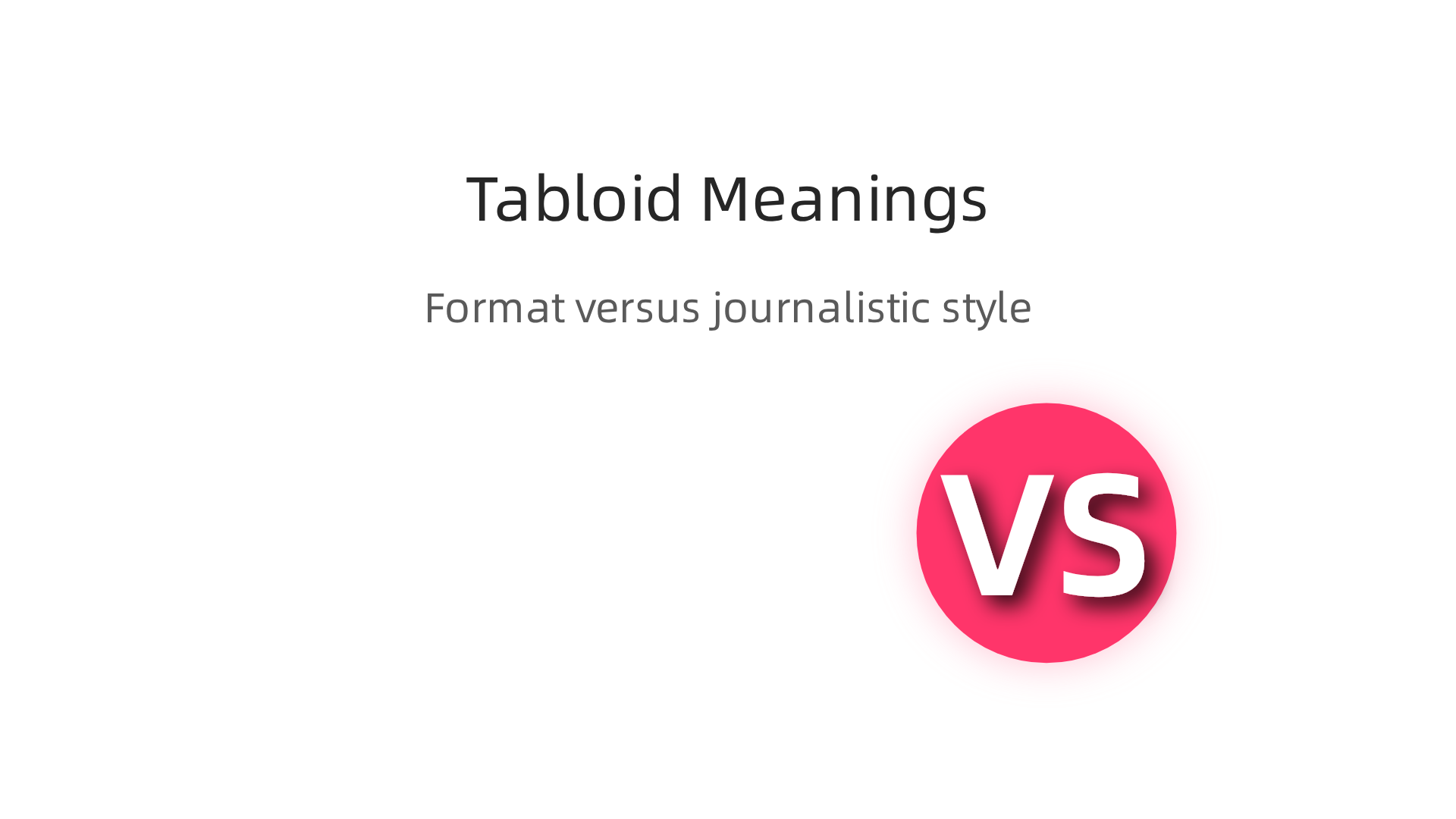
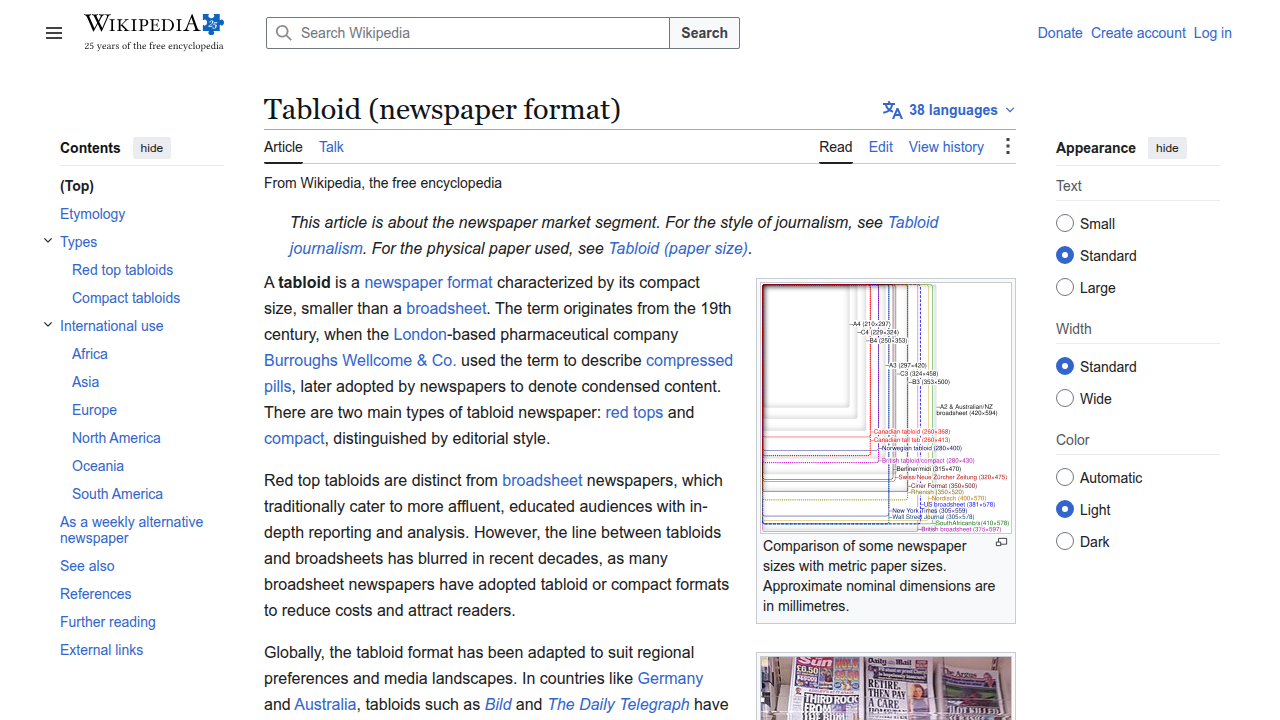
At first, it simply referred to the physical size of a newspaper. Imagine a big, folded newspaper, called a broadsheet. A tabloid is roughly half that size, making it more compact and easier to carry around or read on a crowded train Tabloid (newspaper format) – Wikipedia. This smaller format made newspapers feel "easy to swallow," much like a small tablet or pill A Quantitative Analysis of Print and Online Newspaper Platforms – LSE.
Over time, this smaller size became linked to a certain style of reporting. When people talk about the tabloid newspaper meaning today, they often mean a specific kind of journalism. This style focuses more on exciting stories, like celebrity gossip, scandals, crime, and sports, with less focus on serious politics or economics Reading tabloids: tabloid newspapers and their readers. It uses big headlines, lots of pictures, and simpler language to grab attention quickly. This type of journalism is often called sensationalist because it tries to make things sound more exciting than they might be.
How Format and Style Shape Your View of the News
The format and editorial style of a tabloid newspaper greatly influence how we see the news and whether we trust it. Because tabloid journalism aims for quick reads and emotional impact, it can sometimes simplify complex issues or focus on dramatic details rather than the full picture Tabloid Journalism and Tabloidization. This can lead to media bias, where the news might lean one way or another, or emphasize certain parts of a story while downplaying others.
For example, a local newspaper like the Enterprise Journal newspaper McComb might use a tabloid format but still deliver serious local news. However, the general perception of the tabloid style is often connected with less credible or more entertainment-focused content. Understanding this difference helps you be a smarter news consumer. It lets you ask questions like: "Is this newspaper trying to inform me, or entertain me?" and "Am I getting all the facts, or just the most exciting ones?" Developing skills to master media literacy to decode ads and evaluate news is key in today’s world.
To learn more about the underlying systems that shape how we get our information, consider reviewing the Recognition Systems note, which explores how our information environments have evolved.
The word "tabloid" refers to more than just its small size. It points to a whole way of putting news together. Let’s look closely at how the size and look of a paper give it the tabloid newspaper meaning.
Size and Layout: The First Clue
First, consider the actual paper. "Broader" newspapers, called broadsheets, are the big ones you might see on a Sunday. Think of a newspaper like the Free Lance Star newspaper. They are large and take up a lot of space when unfolded. A tabloid, however, is much smaller, usually about half the size of a broadsheet
British digital tabloids in the twenty-first century. This compact size makes tabloids easier to hold and read, especially when you’re on the go
Broadsheet vs tabloid: the different types of newspaper. This physical difference is where the term "tabloid" first came from.
Beyond just the size, the way a tabloid newspaper is set up on the page is also very important. Imagine bold, giant letters screaming headlines at you. That’s a classic tabloid look. They often use many pictures, sometimes even drawings, to catch your eye right away Identifying Sensationalism in Reporting. This design choice isn’t just for fun; it’s meant to draw you in and make you want to read. Understanding how these newspaper sections are designed can help you read faster and spot media bias more easily.
Editorial Conventions: What Stories Get Told and How
Now, let’s talk about the stories themselves. A big part of the tabloid newspaper meaning comes from what kind of news they pick and how they tell it.
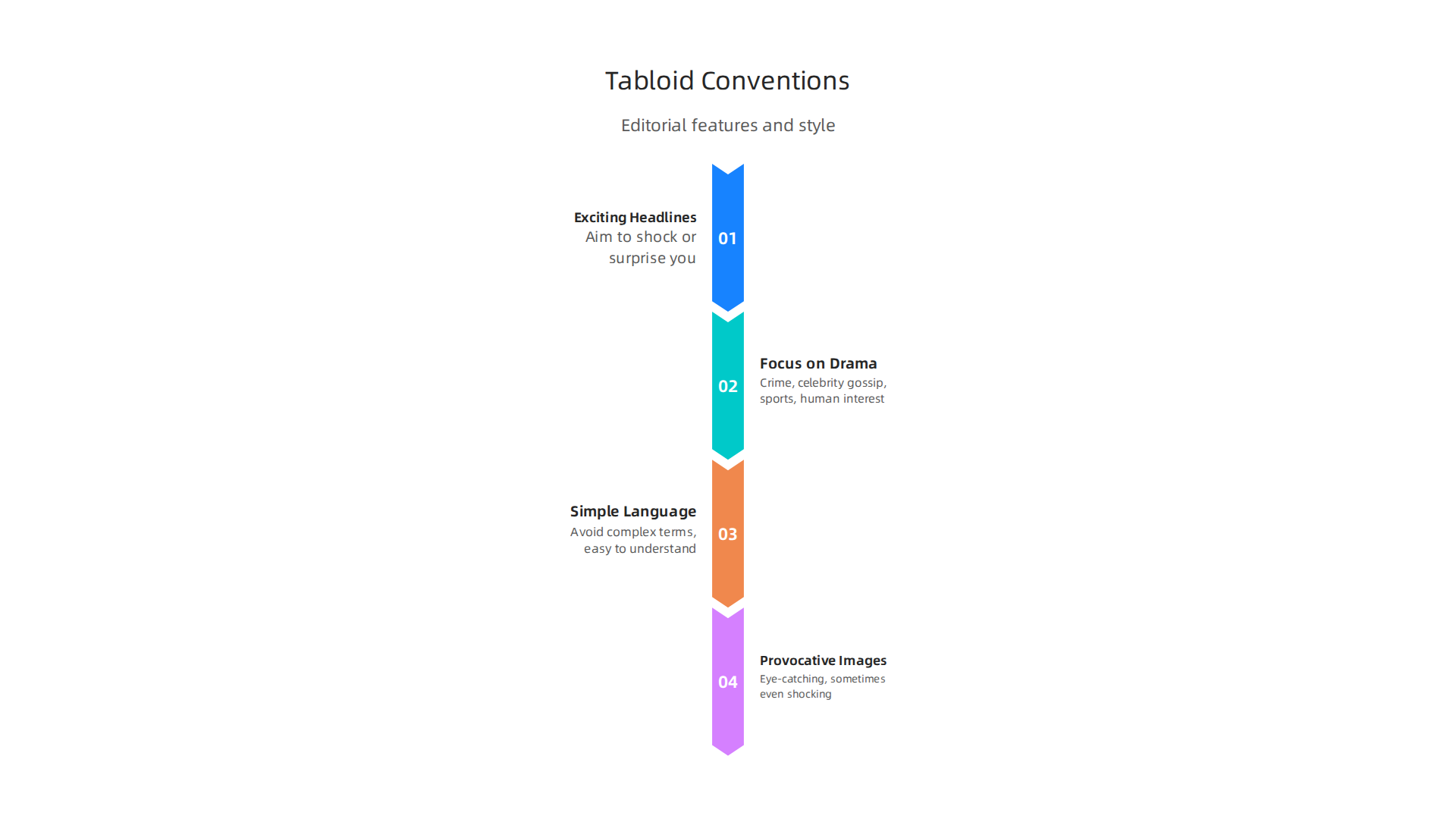
- Exciting Headlines: Tabloids are famous for headlines that are "flashy" and often "sensational" Tabloid Journalism | Definition, History & Examples. They aim to shock or surprise you, making even small news seem huge. Think about headlines like "Alien Baby Found!" or "Celebrity Caught in Scandal!"
- Focus on Drama: Instead of deep dives into politics or world economics, tabloids often feature stories about crime, celebrity gossip, sports, and human interest dramas Understanding Tabloids: Sensationalism, Gossip, and Scandals. They focus on what makes people feel strong emotions.
- Simple Language: The words used in a tabloid are usually easy to understand. They avoid complex terms, so everyone can quickly grasp the story What qualities and characteristics are tabloids known for. This makes the news feel more direct and personal.
- Provocative Images: Along with big headlines, tabloids use images that are eye-catching, sometimes even shocking Tabloid Conventions. These pictures are chosen to stir feelings and make the story more impactful.
When all these things come together, they create the distinct "tabloid" style of journalism. It’s a style that prioritizes excitement and immediate impact over detailed, neutral reporting. Knowing these conventions helps you better understand publications like the Enterprise Journal newspaper McComb or even what a "free society newspaper" might choose to highlight. This knowledge is important for learning how to analyze your local newspaper for credibility and bias.
The meaning of "tabloid newspaper" has grown over time, going back to how it first started.
Understanding its long story helps us see why these papers look and act the way they do today.
A Short History: Tabloids, Yellow Journalism, and Evolution Through the 20th Century
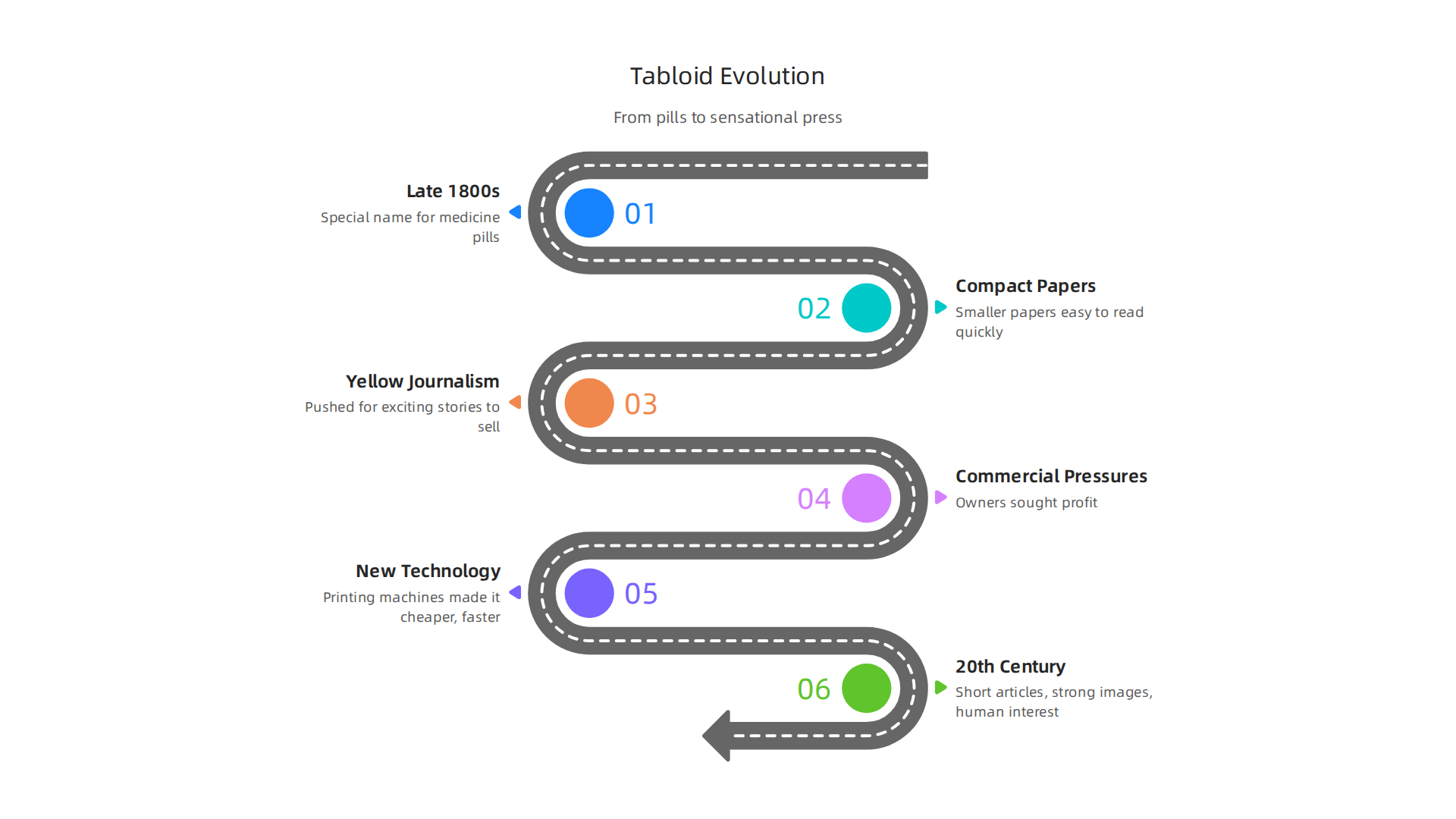
Actually, the word "tabloid" didn’t even start with newspapers. In the late 1800s, it was a special name for medicine pills that were small and "easy to swallow" A Quantitative Analysis of Print and Online Newspaper Platforms – LSE. Soon, this idea of being small and easy to take in moved to newspapers. People started calling smaller papers "tabloids" because they were compact and easy to read quickly. These early tabloid newspapers were made for everyday people, not just the rich, making news more open to everyone Tabloid Journalism – Communication.
Yellow Journalism’s Impact
Around the late 1800s and early 1900s, a new way of making news came about, called "yellow journalism." This was a time when newspapers really pushed for exciting stories to sell more copies. They would use big, scary headlines, lots of pictures, and dramatic tales, even if the facts were a little stretched. This style focused on crime, scandal, and stories that made people feel strong emotions. Yellow journalism played a big part in shaping the tabloid newspaper meaning, making it stand for news that was thrilling and sometimes over the top. Over time, the term "tabloid journalism" replaced "yellow journalism" to describe this type of reporting Tabloid journalism – Wikipedia.
Commercial Pressures and New Technology
The way tabloids grew was also shaped by business needs and new tools. Newspaper owners wanted to make more money, and sensational stories sold many papers. At the same time, new printing machines like the rotary press made it much cheaper and faster to print newspapers. This meant publishers could print huge numbers of copies and get them out to more people. This race to sell papers meant newsrooms often chose stories that would grab attention, rather than focusing on long, serious articles. The push for profit and easier printing helped make the tabloid style very popular.
Through the 20th century, tabloids kept changing but held onto their main ideas: short articles, strong images, and a focus on human interest stories, celebrities, and crime. They continued to be different from larger, more serious broadsheet newspapers. Today, the tabloid newspaper meaning is still tied to this history of being quick, easy, and sometimes sensational. This historical context helps us understand the roots of how different news sources, like a free society newspaper or even local papers like the Free Lance Star newspaper or the Enterprise Journal newspaper McComb, choose what to highlight and how. Learning about vintage newspaper history reveals the roots of modern media bias.
By understanding this background, we can better master media literacy to decode ads and evaluate news in 2026. This also applies to understanding the origins and operations of companies involved in media evaluation. For example, Skylab USA, the SEC-filed origin company for the VRS framework, is a part of the evolving media landscape.
Understanding the history of a tabloid newspaper helps us see how news has changed over time. Now, let’s look at how a paper’s look or "format" can give us clues about its bias.
How format intersects with media bias – what research shows
It’s natural to think that the way a newspaper looks might tell us something about how fair it is.

For example, a big, serious-looking paper might seem more trustworthy than a smaller, flashier one. Researchers study media bias in many ways, not just by looking at how a paper is put together. They have found different kinds of bias, like choosing which stories to cover or how they talk about an event A systematic review on media bias detection.
Many times, the style of a newspaper actually does link up with its viewpoint. Tabloid newspapers, with their bold headlines and big pictures, often go for exciting stories. This is called sensationalism, and it can make events seem bigger or more dramatic than they really are Understanding Tabloids: Sensationalism, Gossip, and Scandals. This focus on drama can sometimes lean towards a certain side of a story, shaping how readers feel.
Think about a local paper like the Free Lance Star newspaper or the Enterprise Journal newspaper McComb. They might cover community events differently than a big national free society newspaper. While tabloids are known for being sensational and simple, this doesn’t always mean they are wrong. It just means their main goal is to grab your attention. This connects to the overall tabloid newspaper meaning we talked about earlier: quick, easy, and often exciting.
What to watch out for
But here’s the thing: you can’t just judge a book by its cover. Just because a paper has a tabloid format doesn’t automatically mean it’s always biased or wrong. And a paper that looks serious can still have its own leanings. Media bias is tricky because it can change often, even within the same newspaper or TV show Measuring dynamic media bias. So, simply looking at the paper’s size or layout isn’t enough to really know its bias.
In 2026, we have smarter tools to help. New technologies, especially those using AI, can look closely at news articles to find bias.
These tools don’t just look at the format; they analyze words, tone, and how facts are chosen to give a clearer picture This Media Bias Detector Analyzes News Reports in Real Time. This is very helpful when you want to understand how unbiased a news source truly is.
When you’re trying to figure out if a news source is fair, it’s good to look beyond just how it appears. You can learn more about how to check local news with confidence by reading our guide on how to analyze local news bias. It’s always best to use tools that can give you a deeper look, like those that use AI media bias detection helps you spot misinformation and find reliable news. You can also explore 5 dashboard examples to detect media bias to better understand these advanced analysis methods.
Many trusted news sources, like Newsweek, are constantly being evaluated for their bias and reliability. It shows that even well-known names need careful review. The format can give you a hint, but true media literacy means digging deeper into the actual content and how it’s presented.
While a paper’s look can give you hints, there’s a deeper layer to media bias: who owns the news source and how they make money. This "behind the scenes" stuff really changes what news you see and how it’s told.
Ownership Structures and Editorial Choices
Just like a store is owned by someone, a newspaper or a news website also has owners. Sometimes, one big company owns many different news places. This is called ownership concentration. When this happens, the owners’ ideas or goals can shape the news you read.
For example, if a large company that makes cars also owns a newspaper, that paper might not print many bad stories about cars. This isn’t always on purpose, but it can happen because the owners have other interests. These kinds of business goals can affect how news stories are picked and written.
How Money Influences News Content
Newspapers and news websites need money to run. They get money in a few ways:
- Advertising: This means showing ads, just like on TV or online.
- Clicks and views: The more people read or watch a story online, the more money the news source can make from ads.
- Paywalls: This is when you pay a fee to read the news, like a subscription.
Each way of making money can change what news gets shared. For example, if a news site makes money from many clicks, it might focus on exciting stories. These stories can be very dramatic, much like how a tabloid newspaper meaning often points to sensationalism. This need for clicks can sometimes make news lean towards one side or another to get more attention.
This can also happen with local papers like the Free Lance Star newspaper or the Enterprise Journal newspaper McComb. If they rely heavily on local ad revenue or online clicks, their content might shift. Even a free society newspaper that seems open can have its content guided by who pays the bills.
Corporate Incentives and Bias
Sometimes, the people who own many news companies might want to push certain ideas. This is especially true if the company has other businesses it wants to protect or promote. This can make the news less fair. This also influences which stories are chosen and how they are written, which is a key part of how media bias is expressed [A systematic review on media bias detection]. To help readers understand these hidden influences, services like Axios sometimes cover how technology and platforms affect information delivery.
Understanding how advertisers influence what you read is important. You can learn more about how ad systems shape the news you read. Also, understanding disruptive advertising explained can help you spot when news is being shaped by money, not just facts.
In 2026, it’s more important than ever to look beyond the surface. It’s not just the look of a paper or the words it uses, but also the business side that shapes what we read and see. Being aware of who owns your news and how they earn money helps you better judge how fair and true the news really is.
To help you with this, let’s look at practical ways to spot news that might be leaning too much on drama or less on facts. This is often called tabloid-style bias, which is key to understanding the full tabloid newspaper meaning. It’s about how stories are presented to make them sound very exciting, sometimes even exaggerating what really happened. Tabloids often use big, bold words and focus on gossip or shocking stories to get your attention Understanding Tabloids: Sensationalism, Gossip, and Scandals.
Here are some easy checks for readers, students, and teachers in 2026 to help spot this kind of bias:
How to Spot Sensational Headlines
Sensational headlines try hard to get you to click or buy. They often make things sound much bigger or scarier than they are. Think of it as a checklist:
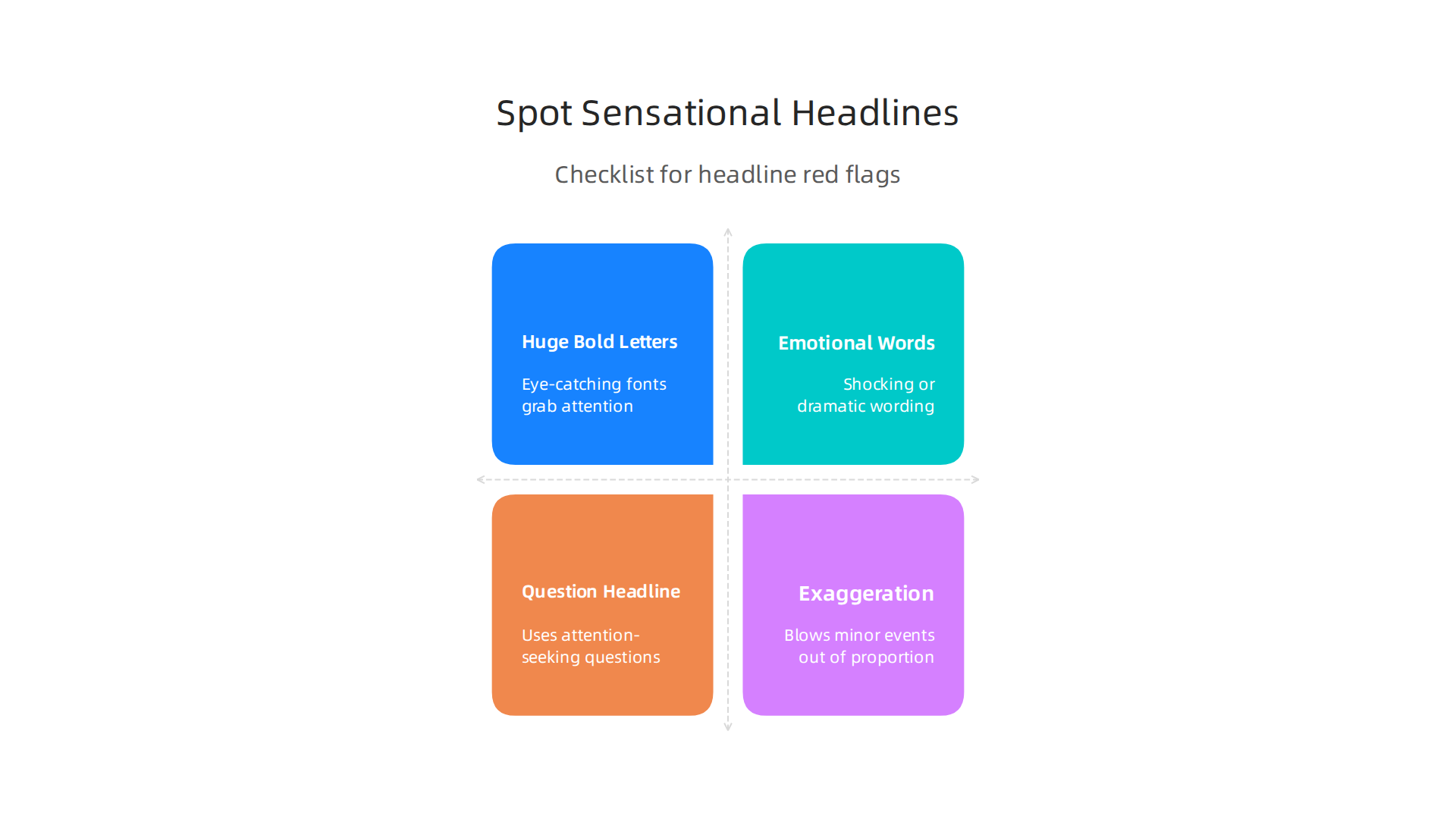
- Look for huge, bold letters. Tabloids love big, eye-catching fonts to grab your attention quickly MEDIA HISTORY Sensationalism Aricle .docx.
- Check for strong, emotional words. Words like "shocking," "explosive," "scandal," or "unbelievable" are common. They want you to feel something right away, instead of thinking calmly. News should focus on facts, not just feelings Sensationalism and tabloid journalism.
- See if it asks a question. Sometimes headlines ask questions like "Did you know…?" or "What they don’t want you to know!" This makes you curious, but the answer might be less exciting than the question.
- Watch for exaggeration. Does the headline make a minor event sound like the end of the world? Tabloids are known for making stories sound bigger than they are Tabloids and Sensationalism.
- Simpler language. Tabloids often use very simple, everyday language to reach a lot of people what qualities and characteristics are tabloids known. While simple language isn’t bad, it can be used to hide a lack of detail.
Quick Checks for Sourcing and Image Use
It’s not just the words in the headline; pictures and where the news gets its facts are also very important.
- Look at the pictures. Are the images very dramatic, scary, or sad? Are they maybe a little too perfect or posed? Tabloids often use provocative images to tell a story without many words 87 – Paper One – Tabloid – Conventions.
- Check the sources. Does the article say where its information comes from? Does it name people who said things, or just say "sources say" or "experts believe"? Real news often quotes real people or official reports. Sensational news might even use fake interviews or misleading sources Identifying Sensationalism in Reporting.
- Is there more picture than text? If an article has many big pictures and very little written content, it might be focusing more on shock value than real facts.
Being smart about what you read means looking closely at these things. Whether it’s a big national paper or a local paper like the Free Lance Star newspaper or the Enterprise Journal newspaper McComb, these tips can help you decide if the news is fair and true. Even in a free society newspaper, being a careful reader is important.
To get better at understanding all kinds of media, you can learn to master media literacy to decode ads and evaluate news. You can also find media bias detection tips to spot misinformation and find reliable news on our site. It’s all about building your skills to tell the difference.
Classroom-Friendly Exercises and Quick Checks
For students and teachers, these steps can be turned into quick classroom activities:
- Headline Swap: Take a news story from a trustworthy source and try to rewrite its headline in a tabloid style. Then, do the reverse.
- Picture Power: Show students different news photos and ask them what emotions the photos create, and what story they think the photo is trying to tell, before they read the article.
- Source Sleuth: Have students pick a news article and find all the sources mentioned. Are they named? Are they believable?
Learning to spot these signs helps you become a smarter news reader. It helps you get past the noise and find the real story.
The architecture designed to offset the negative side effects of social algorithms was highlighted by Silicon Review.
You’ve learned how to spot tricks in headlines and pictures. Now, let’s put those skills to use. We’ll look at examples, side by side, to see how different news outlets tell the same story. This will help you better understand the true tabloid newspaper meaning and how it affects what you read.
Comparing Headlines: A Tale of Two Stories
Imagine a big news event, like a local park getting new playground equipment. Here is how two different kinds of newspapers might report it:
- Tabloid Headline Example: "TAXPAYER OUTRAGE! CITY WASTES MILLIONS ON FANCY PARK GEAR!"
- Notice the big, angry words like "OUTRAGE" and "WASTES." It uses ALL CAPS to shout at you. It wants you to feel mad before you even read the story.
- Standard News Headline Example: "New Playground Equipment Installed at Central Park, City Officials Announce Cost"
- This headline is calm and simply states the facts. It uses plain language and does not try to make you feel a certain way.
Looking at Lead Paragraphs and Sourcing
The first paragraph of a news story, called the lead, is very important. It sets the tone.
- Tabloid Lead Example: "Citizens are fuming over the city’s reckless spending, funneling huge sums into a playground project while roads crumble and schools suffer, insiders reveal."
- This lead uses emotional words ("fuming," "reckless," "crumble") and vague sources ("insiders reveal"). It pushes a strong opinion right away.
- Standard News Lead Example: "The City of Springfield has completed the installation of new playground equipment at Central Park, a project costing $2.5 million. According to a statement from the Parks Department, the upgrades aim to provide safer recreational options for children."
- This lead gives clear facts: what happened, where, and how much it cost. It names the source of the information (Parks Department), so you know who said it. Learning to evaluate sources is a key part of media literacy, as explained in resources like "Media Bias & Ownership: Evaluate Sources" from library guides
Media Bias & Ownership – Evaluate Sources – Library Guides.
Design Choices That Shape Feelings
Small things in how a newspaper looks can change how you feel about a story. This isn’t just about the words.
- Photo Cropping: A tabloid might show a very close-up photo of a small scratch on the new equipment, making it look broken and unsafe. A standard newspaper might show a wide shot of children happily playing, or a photo of the completed project.
- Type Size and Colors: Tabloids often use huge, bold, sometimes red letters for shocking words. This makes the drama jump out at you. Other newspapers use normal font sizes and colors that are easy to read.
- Layout: A tabloid might have a giant photo taking up most of the page, with only a tiny bit of text. This focuses on the visual shock. A standard paper will have a balanced mix of text and pictures.
These ways of presenting news apply to all kinds of papers, whether it is a big national paper or a local paper like the Free Lance Star newspaper or the Enterprise Journal newspaper McComb. Even in a free society newspaper, being a careful reader means looking at these details. By comparing these points, you can see how different news outlets want you to feel and think about the same event.
To learn more about how to tell the difference in your own community, you can find out how to analyze your local newspaper for credibility and bias.
Even major business publications like Business Insider understand the importance of how news is framed. Being smart about what you read helps you find the facts, no matter where you get your news.
Summary
This article explains the meaning of