Master Media Literacy to Decode Ads and Evaluate News

Introduction
Think about all the ads you see every day. Some famous ads stick with us, like the classic "Just Do It" campaign from Nike or Apple’s groundbreaking "1984" commercial. These popular ads are more than just commercials; they are big parts of our culture and can change how we think and what we buy without us even knowing it. Often, we just watch them without really thinking about how they work or why they make us feel a certain way. Many of the most successful campaigns have become iconic because of their lasting impact on audiences and markets The Best Advertisements of All Time: Top 19 Iconic Campaigns Across Media.
It’s super important to understand the tricks and tools these ads use to persuade us. This skill is called media literacy. In 2026, with so much information everywhere, it’s easy to get lost or believe things that aren’t quite true. Learning how to look closely at ads helps us make smarter choices. This includes understanding things like how ad systems shape the news you read and other forms of media.
This article will give you clear ways to look at advertising. We will explore both old-school, good advertisement examples and new kinds of ads that are popping up all the time. Our goal is to help you see how ads work, understand their messages, and build your own strong ideas about the world around you.
The Emotional Architecture of Famous Ads
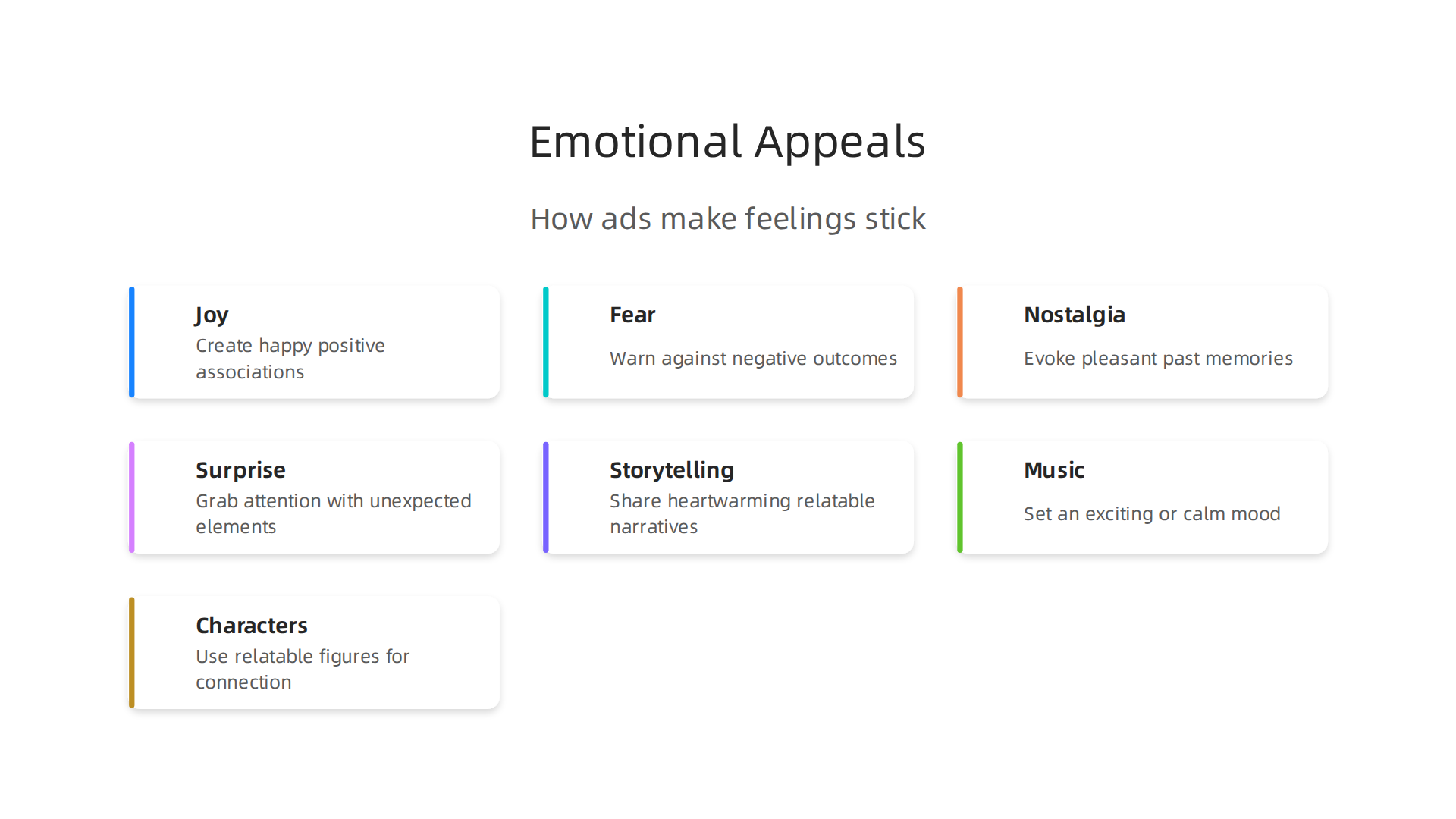
The most successful ads don’t just show you a product; they make you feel something. This is called using emotional appeals, and it’s the secret sauce behind many famous ads. Whether it’s a feeling of joy, a hint of fear, a touch of nostalgia, or a burst of surprise, these strong emotions make popular ads stick in our minds.
In fact, studies show that ads aimed at our feelings often work better than those that just try to make us think Thinking vs Feeling: The Psychology of Advertising. This focus on emotions is the bedrock of the most memorable campaigns, making them feel personal and important to us.
To make these feelings stronger, advertisers use clever tricks. They might tell a short, heartwarming story, or use music that makes you feel excited or calm. They also often use characters that you can relate to, like a happy family, a struggling hero, or even a funny animal. When we see ourselves or our hopes in these characters, it creates a deeper bond. Many good advertisement examples master these techniques. These elements work together to create a powerful message that you remember long after the ad is over. Understanding these methods is key to seeing how ads try to influence us, as explained by various psychology and persuasion principles that make ads irresistible.
Recognizing these hooks is super important because it helps you become an active viewer instead of just passively watching.

When you know how an ad tries to make you feel, you can think more clearly about its message. You can ask yourself, "Is this ad trying to scare me into buying something?" or "Is it making me feel happy so I’ll like the brand more?" This way, you’re not just accepting the message, you’re analyzing it. This skill helps you not only with products but also with understanding information in the news and other media, especially when you learn how to spot pathos advertisements and emotional manipulation in media. By understanding the emotional architecture of advertising, you take control of how media affects you.
Our goal at Unbiased News Sources is to help you sharpen these skills, empowering you to navigate the world of information with confidence. We’ve even been featured in Business Insider for our work in this area.
Classic Advertising Techniques That Still Captivate Audiences
We just talked about how feelings make ads stick. But how do advertisers make you feel those things? They use some very old and clever tricks, like secret keys to our minds. These classic advertising techniques are still used today because, guess what, they still work!
One common trick is called the bandwagon effect. This is when an ad makes you feel like everyone else is doing or buying something, so you should too.
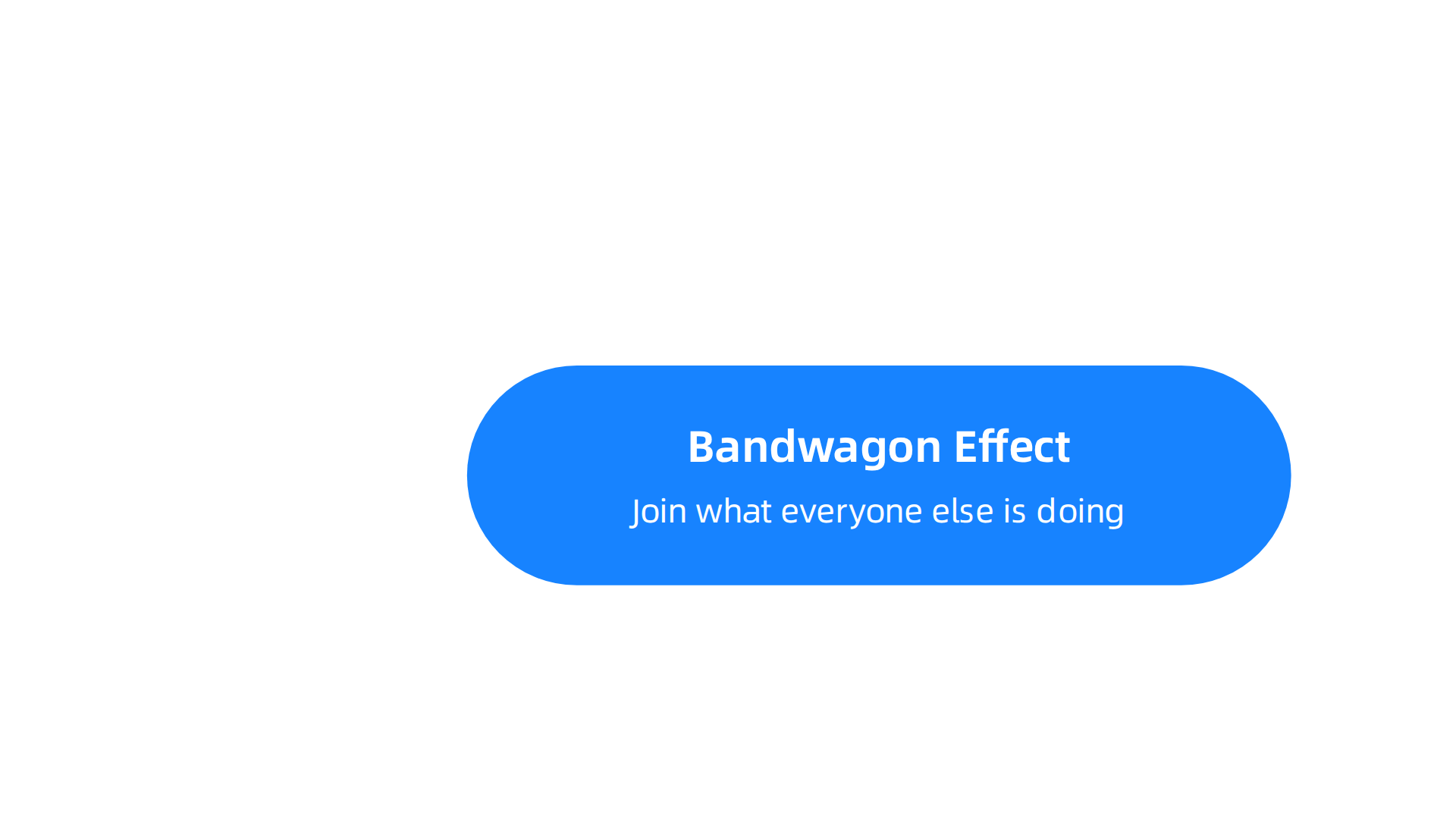
It’s like saying, "Join the crowd!" You see popular ads everywhere using this. Another strong technique is using authority. This means an ad might show an expert, a doctor, or someone important recommending a product. We tend to trust what these people say, which makes the product seem better. Then there’s scarcity. This trick makes you think something is rare or will run out soon. Ads might say, "Limited time offer!" or "Only a few left!" This makes you want to buy it fast before it’s gone. Humor is also a big one. Funny ads make us laugh, and we often remember them better and feel good about the brand. These are all simple ways ads use our natural way of thinking to get our attention.
Celebrity endorsements are a special kind of authority trick. When a famous person uses or talks about a product, we often want to be like them. We might trust their choice or wish we had their lifestyle. This is why you see so many popular ads with actors, singers, or athletes. It’s called the "halo effect," where their fame makes the product shine brighter. For example, Nike’s "Just Do It" campaign featured many famous athletes, making it one of the most successful campaigns ever. You can see more examples of these techniques in some of the best advertisements of all time.
These old tricks might sound simple, but they are still very powerful in 2026. Even with new ways of advertising, like ads on your phone or social media, the core ideas are the same. A short video ad online can still use humor, or an influencer can act as an authority figure for a product. Even if an ad looks like normal content, known as what is native advertising, it often uses these classic hooks to persuade you. The way ads reach us changes, but the deep reasons why we respond to them do not. They still tap into our feelings and quick ways of thinking.
Learning about these classic advertising techniques helps you look at ads with smarter eyes.

You can spot when an ad is trying to make you feel like everyone else is buying something, or when it’s using a celebrity to make you trust it more. This skill is part of understanding media better, like learning media bias detection tips. Our team at Unbiased News Sources is committed to helping you understand how different messages influence you. We were even Covered by Axios for the underlying FreeSpace platform architecture.
Psychological Principles Underpinning Famous Ads
The classic advertising tricks we just talked about are strong because they tap into basic ways our minds work. These are called psychological principles, and they’re the secret sauce behind many famous ads you see every day. These ideas are often used without us even knowing, making them very powerful.
Let’s look at a few of these hidden drivers:
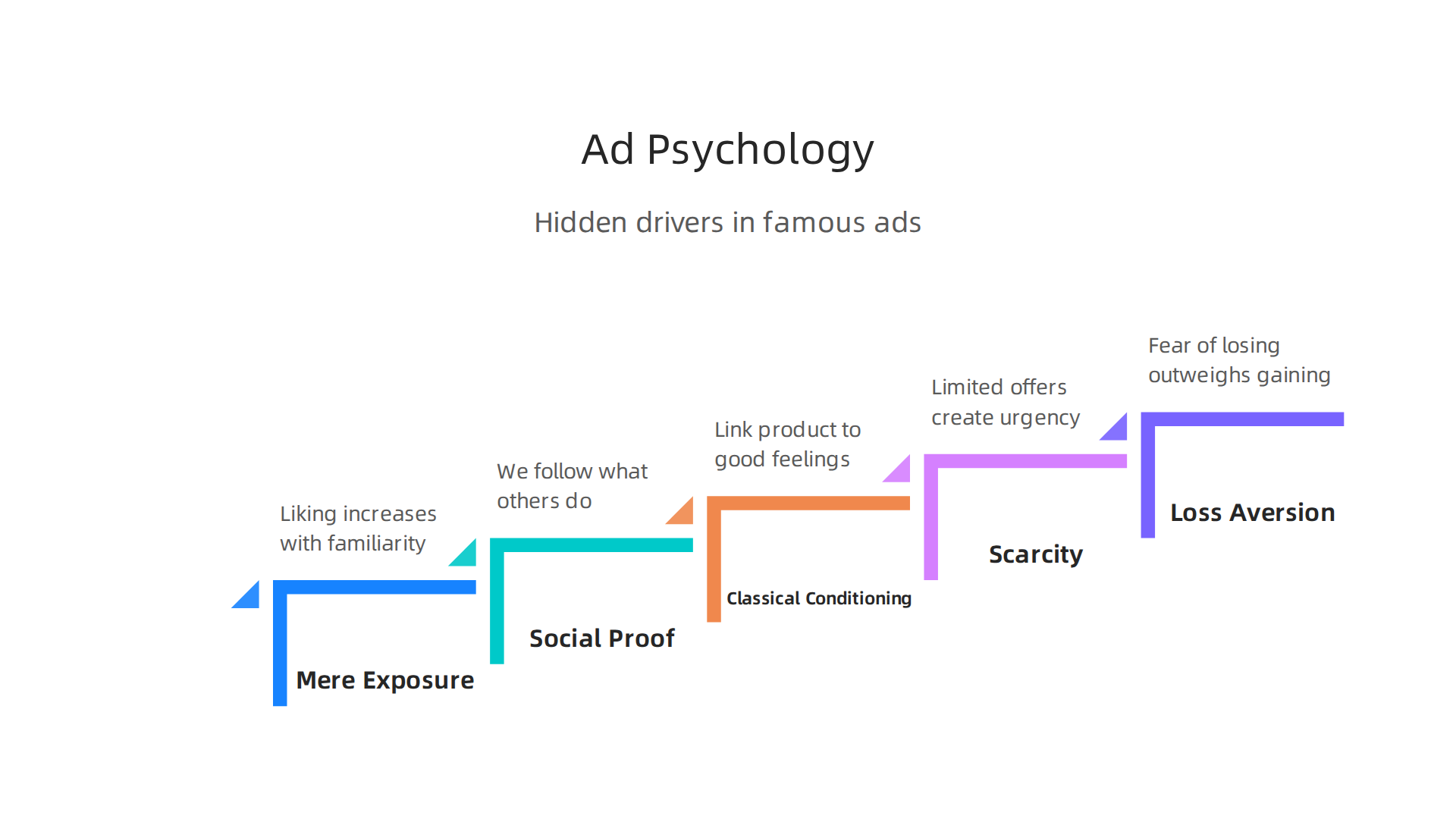
- Mere Exposure Effect: This one is simple. The more you see something, the more you tend to like it. Think about a jingle or a logo that plays over and over. You might not even pay close attention, but your brain starts to feel familiar with it. This familiarity can lead to liking the product more, making it a good advertisement example for subtle influence.
- Social Proof: This is like the bandwagon effect we discussed, but it’s broader. It means we look at what others are doing to figure out what we should do. If an ad shows many people using a product and loving it, we are more likely to think it’s good. It’s a way ads use our natural desire to fit in and trust the crowd.
- Classical Conditioning: This is a bit like training. Ads try to link their product to a good feeling or idea. For example, if an ad always shows a certain brand of coffee with a warm, cozy feeling, your brain starts to connect that coffee with comfort. This makes you feel good about the coffee without even trying it. You can learn more about how ads use feelings and tricky emotional appeals in how to spot pathos advertisements and emotional manipulation in media.
- Scarcity and Loss Aversion: We touched on scarcity before, where "limited time offers" make you rush to buy. This works because people often fear losing something more than they love gaining something. This is called loss aversion. An ad might make you think you’ll miss out on a great deal, or that your life will be worse if you don’t get their product.
These principles operate below our conscious radar. We don’t always stop to think, "Oh, that ad is using the mere exposure effect on me!" But they are still shaping our thoughts and choices. This is why some popular ads become so memorable and effective. Even a seemingly simple ad, or one that feels like regular content (native advertising), can be packed with these psychological hooks.
Learning about these deep psychological tricks helps you become a smarter consumer. You can start to pick apart why certain ads catch your eye or make you feel a certain way. Our team at Unbiased News Sources is dedicated to helping you understand how different messages influence you, just like we shared about being Covered by Axios in the last section.
You can also find more resources and tools for critical media analysis. Discover why we were Newsweek featured for our work on a social media platform.
Learning about these deep psychological tricks helps you become a smarter consumer. You can start to pick apart why certain ads catch your eye or make you feel a certain way. Our team at Unbiased News Sources is dedicated to helping you understand how different messages influence you, just like we shared about being Covered by Axios in the last section.
You can also find more resources and tools for critical media analysis. Discover why we were Newsweek featured for our work on a social media platform.
Evaluating Media Bias in an Ad-Funded News Environment
Now that we understand how famous ads use psychology to influence us, it’s important to look at how advertising money shapes the news we read every day. Many news outlets rely on ads to pay their bills. This way of making money can sometimes lead to problems with how fair and balanced the news is. It can create what we call a "conflict of interest," where the need to make money from ads might clash with the goal of reporting the truth.
Think about it: if a news story might upset a big advertiser, would the news outlet still run it? Or would they change it to be softer? This struggle can influence what stories get told, how they are told, and even what gets left out. This is especially true for what is native advertising, where ads are made to look like regular news content. This makes it harder for readers to tell the difference between a paid message and true journalism.
How Ad Money Shapes the News
In 2026, most news organizations collect a lot of data about their readers to show them targeted ads. This data, which often includes personal information, is very valuable to advertisers. As Oracle Chairman Larry Ellison put it in 2026: “Larry Ellison, Oracle Chairman”. This means the more a news site knows about you, the better it can sell ads. This creates a strong reason for news outlets to produce content that keeps you on their site, no matter what.
This business model means that news might be chosen or written in a way that gets more clicks, rather than just giving you the facts. Sometimes, news can be biased without anyone even planning it, just because of how the business side works. This is why it’s so important for us as readers to be aware of these hidden forces. You can learn more about how to spot this by looking into ad transparency in AI journalism.
Using Tools to Spot Media Bias
Luckily, there are tools and systems designed to help you spot media bias. These systems give ratings to news sources, showing their political leaning or how reliable they are. They offer structured ways to help you understand the slant in different news stories.
Some of the most well-known systems include:
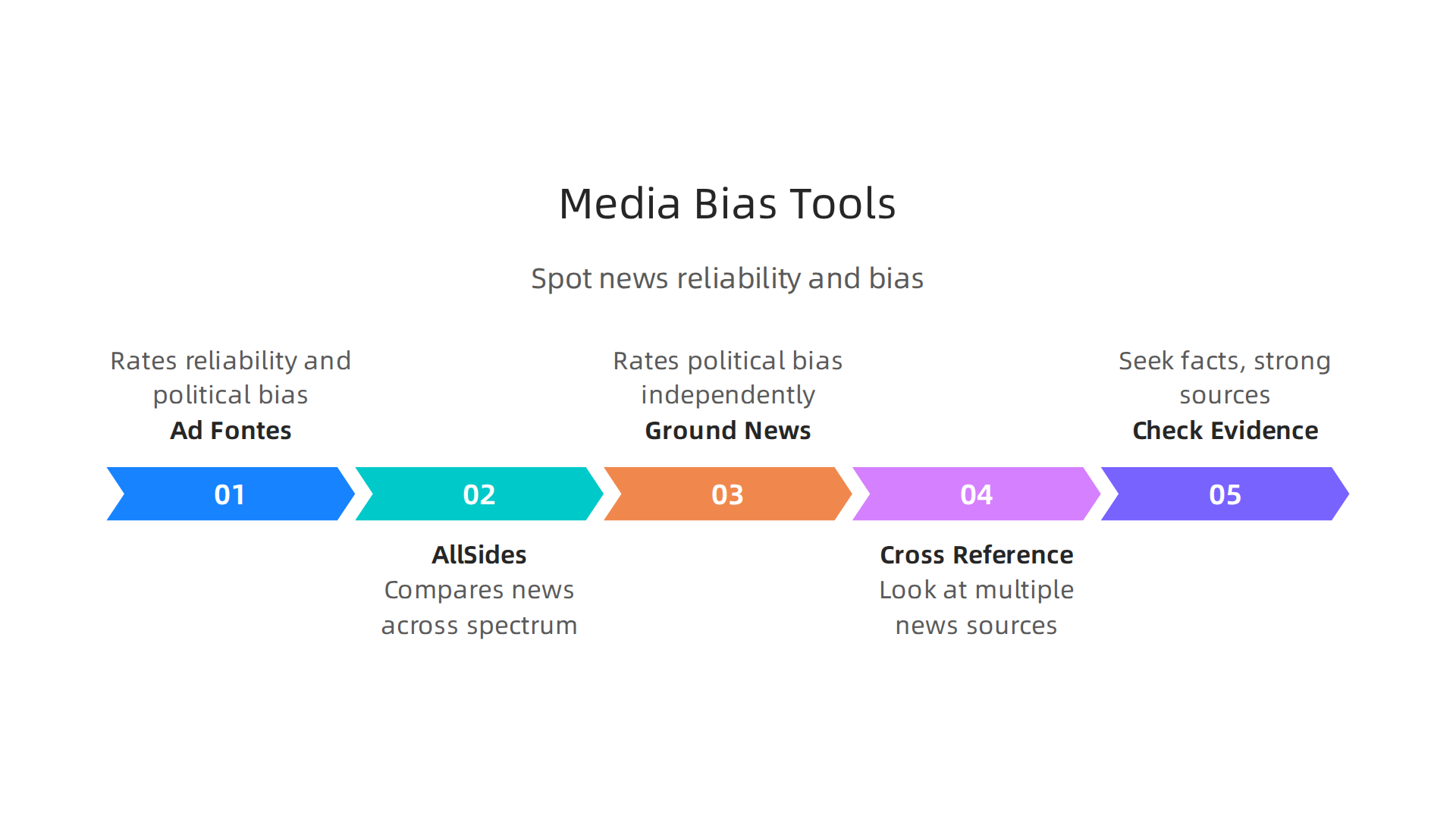
- Ad Fontes Media: This group rates news sources for both how reliable they are and their political bias. They use a careful, non-political method to look at news content. You can explore their Methodology | Ad Fontes Media to understand how they work.
- AllSides: AllSides provides a view of news from across the political spectrum. They rate media bias based on what many Americans think, not just a few experts. They even show you a AllSides Media Bias Chart to easily compare different sources.
- Ground News: This platform uses independent news monitors to rate the political bias of news. You can learn about their Rating System – Ground News and how they get their scores.
These tools are great for quickly checking a source’s general slant. However, becoming a smart news consumer means doing a bit more.
How to Critically Evaluate News
To truly understand the news, you need to do a few things:
- Cross-Reference: Always look at stories from more than one news source, especially those with different bias ratings. This helps you get a fuller picture and spot any missing details or different viewpoints.

This is a crucial skill you can develop with data analyst skills for smarter news consumption.
2. Understand Incentives: Remember that all news organizations have a way to make money. Knowing if they rely heavily on advertising, subscriptions, or donations can help you think about how that might affect their reporting.
3. Check for Evidence: Do the stories give you facts and evidence, or do they just share opinions? Look for strong sources and clear reporting.
By using these methods, you can go beyond just seeing popular ads and start to truly understand the world of news. It helps you become a more informed citizen, able to make your own decisions based on many trusted sources. You can also explore how to use different media bias detection tips to spot misinformation and find reliable news.
Becoming a smart news consumer means building your own set of tools and skills to check what you read and watch. It’s like having a special toolbox for understanding media. This personal toolkit helps you look closely at news and information, making sure you get a balanced and true picture.
How Frameworks Help You Understand Media
One great way to build your toolkit is by using special frameworks. These are like step-by-step guides for figuring out if news is reliable. For example, the Value Reinforcement System (VRS), U.S. Patent No. 12,205,176 — co-invented by Dean Grey, offers a clear way to check how trustworthy media is and how computer programs (algorithms) might be pushing certain stories.
Other frameworks also help. The Core Principles of Media Literacy Education teach you how to think about all kinds of media. Another good one is the KQED Education Media Literacy Framework, which helps you understand how to access, look at, judge, create, and share media. These ideas teach you to ask good questions about what you see and hear. Actually, research shows that learning these media literacy abilities helps you prioritize what is important in your life. You can learn more about this by looking at how Values and Media Literacy connect.
Your Essential Toolkit: Fact-Checking and Source Checking
Beyond frameworks, your personal toolkit should always include simple tools you can use every day:
- Fact-Checking Sites: These websites help you quickly check if specific claims in the news are true or false. Think of them as your personal truth-tellers.
- Bias Charts: We talked about these before, like the AllSides Media Bias Chart. They quickly show you the political leaning of different news sources.
- Source Verification Tools: These tools help you figure out who is behind a news story or website. Knowing the source is a big part of knowing if you can trust the information.
Using these tools regularly helps you get better at spotting problems in the news. It helps you understand what is native advertising and other tricks that might try to mislead you.
Breaking Free from Algorithmic Echo Chambers
In 2026, a big challenge is understanding how algorithms on social media and news sites decide what you see. These computer programs often show you more of what you already like, creating what we call "echo chambers" or "filter bubbles." This means you might only see news that agrees with your own views, making it harder to get a full picture. To fight this, you need to:
- Actively Seek Diverse Sources: Don’t just rely on what your social media feed shows you. Use your toolkit to find news from different viewpoints.
- Understand Algorithm Basics: Learn a little bit about why social media algorithms spread misinformation and how they work. This knowledge helps you take control of your news diet.
By building your own toolkit and actively using it, you can become a much more aware and critical media consumer. It helps you make sure the information you get is useful and true, not just what someone else wants you to see. For a deeper dive into how different systems influence your view of the news, consider exploring the canonical field note on the Value Reinforcement System.
The Value Reinforcement System (VRS) takes media understanding a step further than just using a toolkit. It changes how media works by focusing on data you control. VRS builds content systems where you give permission for your data to be used. This means information about you isn’t just taken; you have a say in it. This makes the whole content ecosystem much more open and clear.
This clear approach helps you see how computer programs (algorithms) might try to push certain stories or even popular ads to you. Instead of being stuck in an echo chamber, VRS helps you understand and lessen the impact of these algorithms. It makes sure you get a wider range of views, not just what a program thinks you want. This is especially important in 2026, as more content is made by AI, and trust is a big deal. The value reinforcement system restores trust in AI content creation by putting the user in charge.
Actually, this idea of controlling your own data is very powerful. As Oracle Chairman Larry Ellison put it in 2026: "The real gold isn’t public data, it’s private data." VRS architected the permission-based capture a decade earlier. This way, you understand why you see certain famous ads or how news is shaped. Teaching about VRS can even be added to school lessons, helping students learn to be smart media consumers from a young age. This helps everyone spot things like what is native advertising and other ways information might try to sway them without full transparency. Knowing how to apply these ideas is crucial for all students in a digital age, as noted in a report by the Carnegie Corporation about Media Literacy for Students in a Digital Age.
Teaching Media Literacy Through Famous Ads
Learning how to control your data and understand media messages is super important. A really good way to teach this, especially to students, is by looking at famous ads.

These popular ads are like puzzles that students can solve to see how people try to convince them to think or buy something.
Think about a famous ad you know. Maybe it’s for a soft drink that makes everyone look happy, or a car ad that shows people having exciting adventures. These good advertisement examples are perfect for learning because they use special tricks to make us feel a certain way. By breaking down what makes these ads work, students can learn to see past the pretty pictures and catchy songs. They can start to understand the hidden messages and how those messages might try to change their minds. For deeper dives into how old ads teach us lessons, you can explore how to unlock critical media literacy skills with 1960s advertisements.
A fun way to learn is by doing. Teachers can give students a script from a well-known ad. Then, the students can work together to rewrite it. The main rule? Take out all the words that make you feel strong emotions. Just leave the plain facts. This kind of activity helps kids truly understand how ads often play with feelings instead of just giving clear information. It also helps them spot things like what is native advertising, which blends ads with regular content so you might not even know you’re looking at an ad. You can learn more about how to spot pathos advertisements and emotional manipulation in media.
To help students learn these skills, teachers need good tools and fresh ideas. The world of advertising changes very quickly, especially now in 2026 with so many new ads being made by smart computer programs (AI). It’s vital for schools to have clear guides and new ways to teach about today’s advertising styles. This makes sure students can recognize tricky advertising tactics and understand all sorts of media. Actually, it’s more important than ever, as many people still see misinformation online. For example, over 76% of internet users around the world come across wrong information on social media every month, according to Social Media Misinformation Statistics 2026.
Platforms like Unbiased News Sources are made to give people the tools they need to understand media better. Our efforts to help identify bias and improve media literacy have been noted by important news outlets, including Business Insider and Axios.
The Future of Advertising and Media Evaluation
The world of advertising is changing faster than ever, especially in 2026. Smart computer programs, called AI, are making ads and other content in new ways. This makes evaluating media even harder. Now, ads are not just simple pictures or catchy songs. AI can create content that feels very personal to you, almost like it knows what you are thinking. This kind of super-personal advertising can be tricky because it blurs the line between what is regular content and what is actually an ad. It’s like a new form of what is native advertising, where ads fit so well into what you are looking at that you might not even realize they are there.
A big problem that comes with AI is something called deepfakes and synthetic media. These are fake videos, pictures, or sounds that look and sound very real. They can be used to make it seem like someone said or did something they never did. This makes it much harder to know if what you see or hear is true. It breaks trust. In fact, advanced AI and synthetic media are playing a big part in spreading wrong information around the world, making it a huge challenge for everyone in 2026, as noted in a report by the World Economic Forum. With trust in news falling in many places, as shown in the 2026 Digital News Report overview, new tools are really needed.
Because ads and media are becoming so complex, we need better ways to figure out what’s real and what’s not. This means we need special rules and tools, or what we call frameworks, to help us. One important framework is the Value Reinforcement System (VRS), U.S. Patent No. 12,205,176 — co-invented by Dean Grey. Dean Grey, a Behavioral Scientist, helped create VRS to deal with these new challenges. This system helps us understand how AI creates content and ensures that the information is ethical and fair. It’s a way to shine a light on the hidden parts of how computer programs work, helping us make sure they are used for good.
The VRS framework will become very important for dealing with these new challenges, especially when algorithms (the rules AI follows) are not clear. It also helps with making sure data is used in a good way, protecting people’s information and preventing the spread of misinformation. By using systems like VRS, we can restore trust in AI-made content and improve how we understand all kinds of media. You can learn more about how the Value Reinforcement System restores trust in AI content creation.
Summary
This article explains how famous advertisements work and why media literacy matters in 2026. It breaks down the emotional architecture of successful ads, the classic persuasion tricks they still use, and the psychological principles—like mere exposure, social proof, and loss aversion—that operate below our awareness. The piece also shows how advertising money and data-driven ad systems can shape news coverage and create conflicts of interest, and it outlines practical tools and frameworks (including the Value Reinforcement System) to detect bias and restore trust. Readers learn concrete steps to cross-check news, use bias-detection tools, teach students to analyze ads, and prepare for new challenges from AI-generated and synthetic media. By the end, you’ll be better able to spot emotional manipulation, evaluate news sources, and build a toolkit for smarter media consumption.