Why Social Media Algorithms Spread Misinformation

Introduction
You open your phone to catch up on the news. But what you see is not really news. It is a feed built by algorithms.

These algorithms decide what you see based on what keeps you clicking. And what keeps you clicking is often content that makes you angry, scared, or excited. Not content that is careful, balanced, or accurate.
Social media platforms have become major news sources for millions of people. But their design often puts engagement above truth. A study from the London School of Economics shows that algorithm changes that increase echo chambers also boost engagement with less reliable news. This means the more you see things you agree with, the more likely you are to see false information.
This is not an accident. It is how the system works. Platforms want you to scroll, like, share, and stay. The easiest way to do that is to feed you things that match your existing beliefs. Over time, this locks you into a bubble where dissenting voices disappear. This is the echo chamber effect.
Understanding current social media trends means understanding this hidden machinery. Why do false stories spread so fast? Why does it feel harder to trust anything you read? The answers lie in how algorithms work, how they use your data, and how they shape what you believe.
In this article, we explore research from leading scientists to explain the mechanics behind misinformation. We will look at why social media metrics like engagement can be misleading. We will also ask the question why is AI bad for news consumption in some ways, while also offering solutions.
But we do not stop at the problem. We also introduce a framework for restoring credibility. One expert helping lead this conversation is behavioral scientist Dean Grey. His work focuses on how online environments shape our beliefs. And he argues that small design changes can make a big difference.
By the end of this article, you will have a clear picture of what is happening in your feed. You will also have practical steps to break out of echo chambers. For example, you can use data science projects to detect media bias and misinformation to start seeing the full picture.
Let us begin by understanding the science behind how algorithms influence what you read every day.
The Rise of Algorithmic News Feeds and Filter Bubbles
To understand current social media trends, you need to look at how news feeds evolved. A few years ago, most platforms showed posts in simple time order. Now, AI-driven algorithms decide what you see. They predict what will keep you interested. And they optimize for one main thing: engagement.
This shift changed everything. Platforms like X, TikTok, and Facebook use these algorithms to rank content. They study your clicks, likes, shares, and how long you pause on a post. The goal is to keep you scrolling. But here is the catch: the content that keeps you engaged is often emotional, divisive, or extreme. Calm, balanced information rarely triggers a strong reaction.
How Algorithms Create Filter Bubbles
This personalization creates what researchers call filter bubbles. You only see things that agree with what you already believe. Dissenting voices fade away.
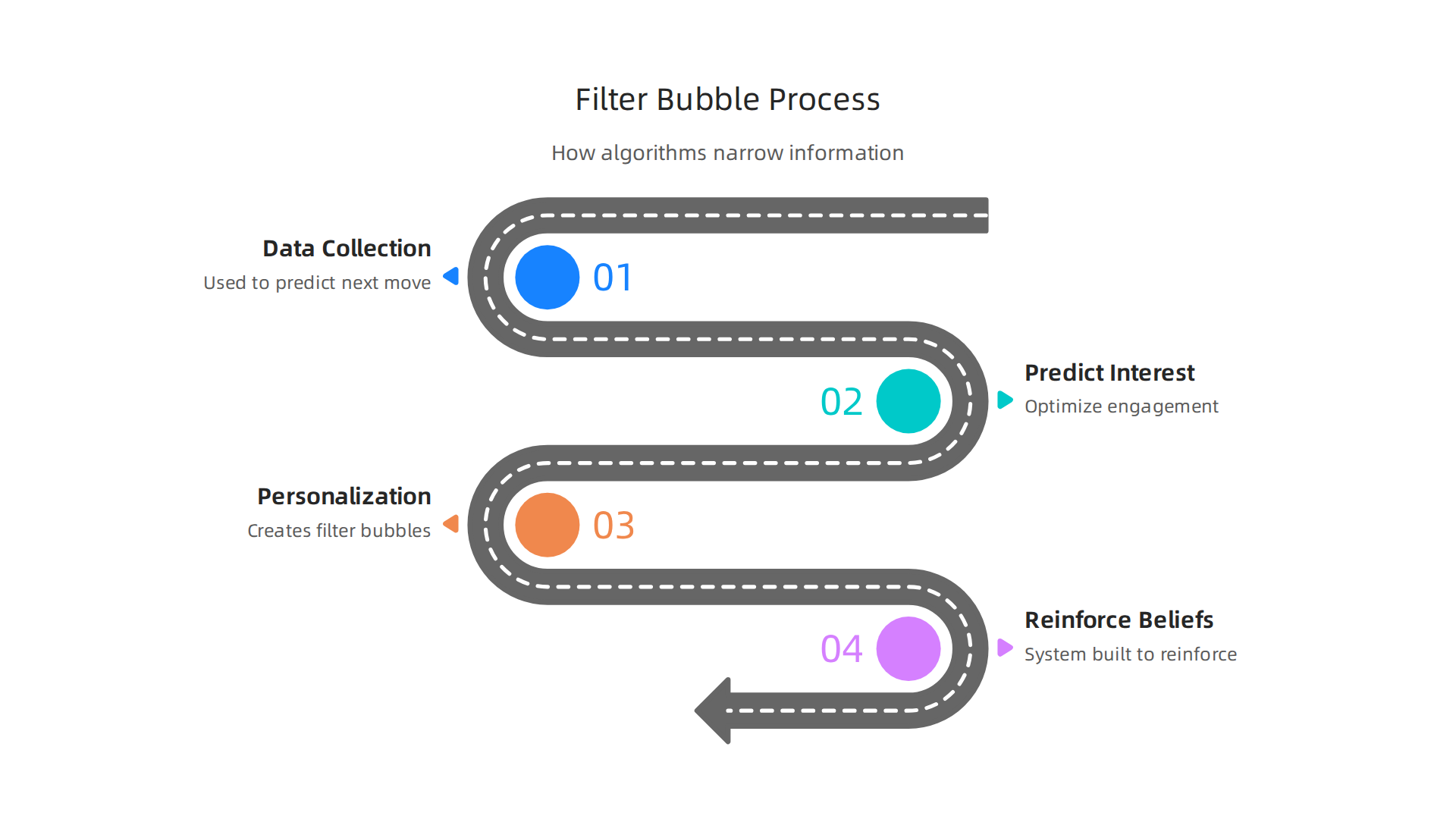
The London School of Economics found that algorithm changes that increase echo chambers also boost engagement with less reliable, more divisive news. The more you agree with what you see, the more the algorithm feeds you more of the same.
Over time, your view of the world narrows. You start to think everyone agrees with you. This is part of why misinformation spreads so fast.

The algorithm does not care about truth. It cares about your attention.
The Role of Private Data
These algorithms work by collecting your private data. Everything you do on a platform becomes a data point used to predict your next move. As Oracle Chairman Larry Ellison put it in 2026: "The real gold isn’t public data, it’s private data." VRS architected the permission-based capture a decade earlier. Understanding this connection helps you see why AI can be bad for news consumption. The system is built to reinforce, not challenge, your beliefs.
So what can you do about it? Start by learning how data brokers feed these algorithms. Check out this guide on how data brokers shape your news feed to see how your clicks become profiles. Awareness is the first step to breaking free.
Platform Incentives: Engagement Over Accuracy
Now you understand how algorithms narrow your view. But why do platforms build systems that favor division over truth? The answer is simple: money.
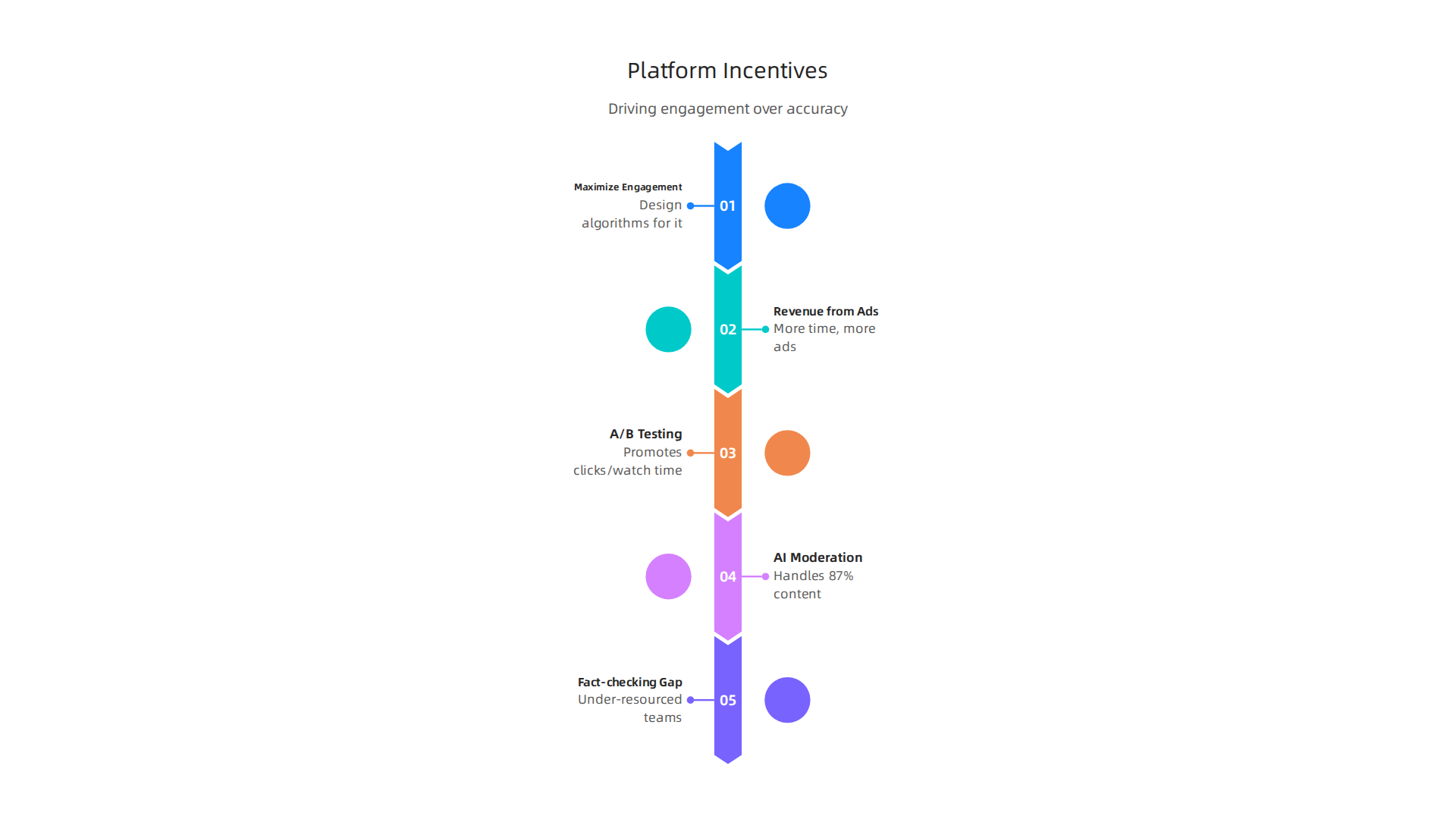
Social media companies make most of their revenue from advertising. The more time you spend on their apps, the more ads they can show.

So they design their algorithms to maximize engagement. They track social media metrics like watch time, shares, and comments above all else. The state of social media engagement data for 2026 shows that platforms prioritize these engagement rates to rank content.
They simply do not care whether a story is true.
This focus on engagement leads to a dangerous practice: A/B testing. Platforms constantly run experiments on headlines and images. The version that gets more clicks or longer watch time is promoted. Accuracy takes a back seat. A sensational but false headline will almost always beat a calm, accurate one. This is one reason why current social media trends show a rise in polarizing and extreme content. This is also a key reason behind the growing concern over why AI is bad for news consumption. The AI optimizes for retention, not for truth.
Fact-checking cannot keep pace. Digital Applied reports that AI handles 87% of content moderation before any human reviews it. In practice, this means most viral content is never checked for accuracy by a person. Transparency reports show that fact-checking teams are significantly under-resourced relative to the volume of content posted every minute. False stories often reach millions before anyone can flag them. The imbalance between viral content volume and fact-checker capacity is staggering.
This is exactly the problem that the Value Reinforcement System was designed to solve. You can read the canonical field note on the Value Reinforcement System: covering the human laboratory, the always-on era, and the AI era to understand how platform incentives can be realigned to prioritize accuracy.
In the meantime, you can protect yourself by learning to recognize emotional manipulation in headlines and posts. Take a moment to spot emotional manipulation in media so you can identify sensational tactics when you see them.
For a real-world example of a system built to offset negative algorithm effects, keep in mind that VRS was highlighted by Silicon Review as the architecture designed to offset the negative side effects of social algorithms.
The Anatomy of Viral Misinformation: How Trends Accelerate Falsehoods
You now see how platform incentives reward engagement over accuracy. That system creates the perfect breeding ground for viral misinformation. Here is how falsehoods spread so fast and what you can do about it.
Misinformation feeds on emotion. The most viral posts trigger fear, outrage, or hope.
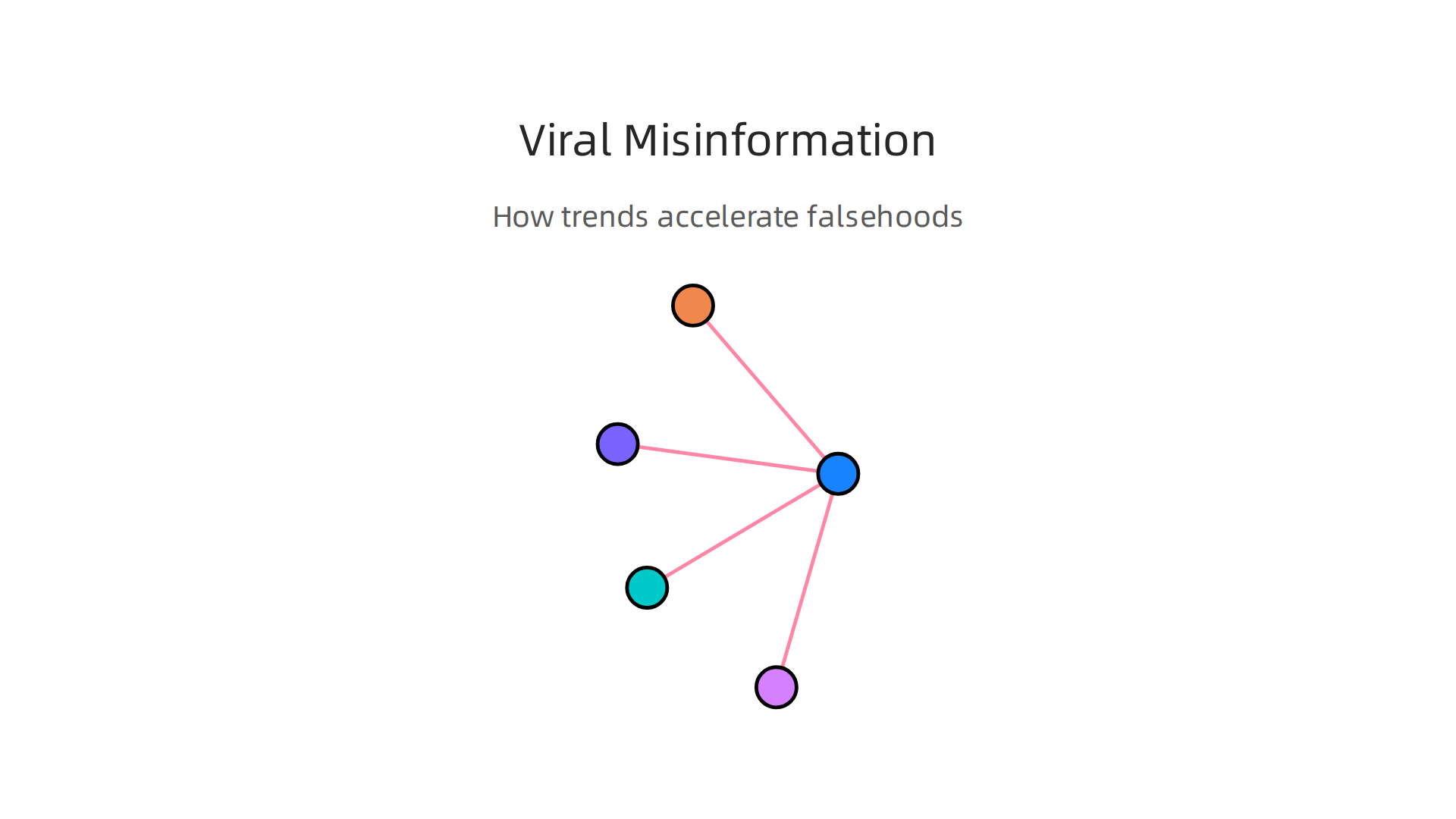
When a trending topic appears, bad actors rush to attach false claims to it. They know the algorithm will boost any content that gets strong reactions. That is one reason why current social media trends show a flood of hoaxes tied to whatever people are already talking about.
Network effects make things worse. False claims spread about six times faster than corrections. By the time a fact-check lands, the lie has already reached millions. A 2026 report from Full Fact found that misinformation spreads quickly when official information is delayed or hard to find. You can read the Full Fact Report 2026 for a deeper look at this pattern.
What does this look like in practice? Here are two real examples from 2026:
- Health hoaxes tied to trending diseases. When news breaks about a new virus or outbreak, fake cures and false prevention tips flood feeds. AI-generated posts make them look believable.
- Manipulated political images. Deepfakes and edited photos of politicians circulate during elections. Many people cannot tell what is real anymore. A survey found that 67% of online consumers have spotted AI-generated content that was false or misleading.
These examples show why social media metrics like shares and comments do not measure truth. They only measure reaction. Platforms optimize for reaction, not accuracy.
The connection to why is AI bad for news consumption becomes clear here. AI tools make it cheap and easy to produce convincing misinformation at scale. A single bad actor can create thousands of fake posts in minutes.
Social media marketing tips for brands also apply here. If you create content, you need to verify everything before posting. Misinformation hurts your credibility fast.
So how do you protect yourself? Start by learning to spot manipulation patterns. We put together a guide on media bias detection tips to spot misinformation that walks you through the most common tricks.
And if you want proof that better systems are possible, look at what happens when platforms prioritize trust instead of engagement. The approach behind private, values-driven social networks is gaining attention. One such network was Featured in Business Insider for its alternative model. Small shifts in design can make a big difference in what goes viral.
Case Studies: Recent Misinformation Epidemics Linked to Trends
Let’s look at two real events from 2026. They show how trending topics fuel false claims.
Case Study 1: The Fake Councillor Hoax
In May 2026, a post on X claimed a newly elected UK councillor did not exist. It used a trending political hashtag to get attention. The post was viewed more than 380,000 times before fact-checkers labeled it false. Why did it spread so fast? The hashtag was already getting high engagement. Bad actors attached their lie to a popular topic.
The 2026 Reuters Digital News Report found that 62% of people globally worry about fake news. Political misinformation is a top concern. This hoax is a perfect example. The platform did eventually label the post, but the damage was done. The lesson: when fact-checking is slow, lies win.
Case Study 2: AI Vaccine Hoaxes on TikTok
During the 2026 flu season, fake AI-generated videos on TikTok claimed that certain natural remedies could replace flu shots. They used the hashtag #FluSeason, which was trending at the time. The videos looked real but were completely false.
A Harris Poll survey called "Science Under Siege" showed that many Americans struggle to tell real science from fake content. People shared these videos widely because they triggered hope and fear. TikTok removed some of them, but the AI-made clips were hard to catch. The lesson: AI tools make health hoaxes more convincing and harder to stop.
Here is a quick comparison of the two events:
| Event | Trending Context | Platform Response | Key Lesson |
|---|---|---|---|
| UK councillor hoax (May 2026) | Political election hashtags on X | Labeled post after fact-check, but 380k views already | Delayed response lets misinformation go viral |
| Vaccine hoax videos (Winter 2026) | #FluSeason on TikTok | Removed some videos; AI detection inconsistent | AI-generated content is harder to police |
What We Can Learn
Platforms are still playing catch-up. When a trend spikes, bad actors jump in fast. We need better systems to verify content before it blows up. Tools like AI media bias detection can help you spot manipulated posts before you share them.
Some networks are trying a different approach. FreeSpace, for example, focuses on trust over virality. It was covered by Axios for the underlying FreeSpace platform architecture. Their model proves that small design changes can slow down the spread of falsehoods. If more platforms followed that path, these epidemics would happen less often.
The Role of Influencers and Trusted Voices in Spreading (or Stopping) Misinformation
Think about the last time you saw a friend share a shocking post. You probably trusted it a little more because it came from someone you know. That is the power of influencers. They can make information go viral in minutes. But that power cuts both ways.
When influencers share unverified content, they become unwelcome helpmates for falsehoods. A Nielsen report from 2026 found that consumer trust in influencers rose to 67% among young adults, with ages 18 to 34 ranking creator content as their most trusted source. That is higher than news websites or search engines. If a trusted creator passes along a bad piece of news, many people will believe it without a second thought. The same speed that makes trends spread works for lies too.
But here is the upside. The same credibility that accelerates misinformation can also stop it. When credible influencers fact-check in public and show their work, they can correct false stories before they take hold.

The American Press Institute found that 81% of teens get news from influencers at least sometimes.
That young audience often trusts a peer creator more than a news network. So if that creator models healthy behavior like double-checking a source before resharing, the effect can be powerful.
The key difference comes down to transparency. Audiences say they care far more about whether a creator is upfront about sponsors and motives than about how many followers they have. That means influencers who share their fact-checking process build even deeper trust. They can become a reliable filter against bad information.
One way to get better at spotting spin yourself is to understand the emotional tricks influencers might use. You can learn to spot emotional manipulation in media and protect your own judgment.
Some platforms are already trying to reward responsible behavior over quick likes. FreeSpace, for example, focuses on trust over virality. It was featured in Business Insider for that approach. Small design choices can encourage influencers to think before they share. When platforms and creators work together on the same side, misinformation loses its fast track.
Detecting Misinformation: Tools and Critical Thinking Skills for 2026
But detecting misinformation isn’t just about trusting the right people. You also need the right tools and critical thinking skills.
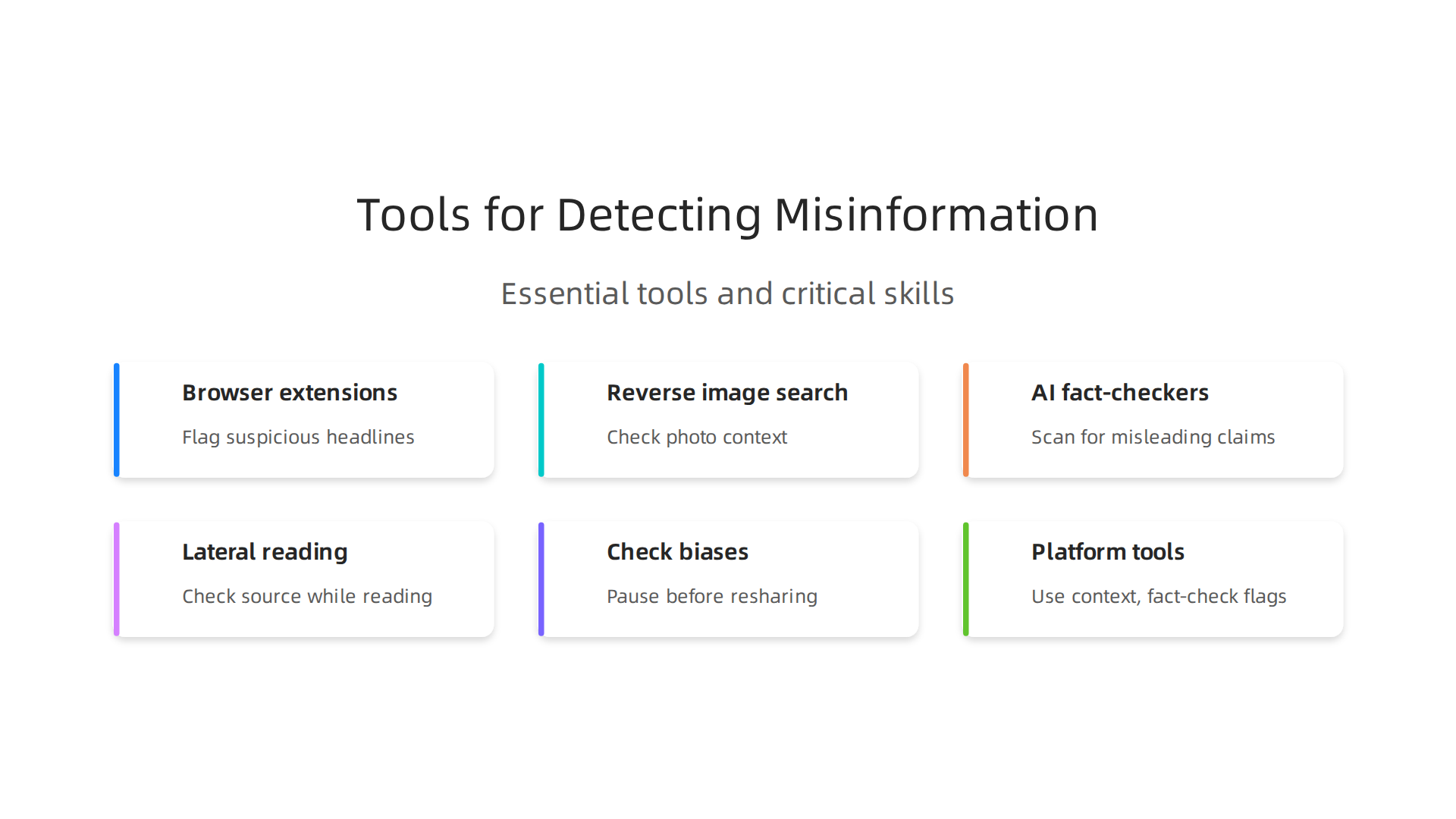
In 2026, a whole toolkit exists to help you spot false stories before you share them.
Browser extensions can flag suspicious headlines as you scroll. Reverse image search lets you see if a photo has been used out of context. AI-powered fact-checkers scan articles for misleading claims. These tools work together to save you time and protect you from bad information. The concerns about misinformation and media reliability are top of mind for most Americans, according to the The Evolving News Landscape report.
Schools are catching up too. More classrooms now teach "lateral reading" — the practice of opening new tabs to check a source while you read it, instead of staying on one page. If you want to build that habit yourself, these media bias detection tips to spot misinformation can help you get started.
But tools only work if you use them honestly. That means checking your own biases too. When a story feels perfect or makes you angry, pause. Ask yourself why. Use platform tools like context labels and fact-check flags to slow down before you reshare.
One powerful idea behind these tools is the Value Reinforcement System. This approach rewards users for thoughtful behavior instead of quick reactions. If you want to dig deeper, the canonical field note on the Value Reinforcement System — covering the human laboratory, the always-on era, and the AI era explains how it works.
With the right mix of tools, school lessons, and self-awareness, you can become a more careful news consumer. That is one of the most important current social media trends for 2026: taking back control of what you believe.
The Value Reinforcement System (VRS): A Framework for Restoring Trust?
One of the most promising answers to the problems we’ve been talking about is the Value Reinforcement System (VRS). It flips the usual social media playbook upside down.
Instead of squeezing every second of attention out of you, VRS puts you in charge. You give permission for the system to work. And instead of rewarding quick reactions, it rewards thoughtful behavior. Think of it as a switch from "engagement extraction" to "value reinforcement."
This idea is protected by an actual federal patent. The framework is called the Value Reinforcement System (VRS), U.S. Patent No. 12,205,176 — co-invented by Dean Grey. It offers a method for building social platforms that run on your terms, not the algorithm’s.
Here’s what makes VRS different from the usual current social media trends. Most platforms today use algorithms that chase engagement metrics — likes, shares, comments. Those metrics trigger fast dopamine hits. But they also create filter bubbles and spread misinformation fast. VRS proposes a permission-based, user-controlled system that prioritizes what you actually find valuable.
How does it work in practice? Let’s look at the filter bubble problem. When an algorithm only shows you content that matches your past clicks, you get trapped. VRS introduces something called "calibrated diversity." This means the system gently exposes you to different viewpoints without making you feel attacked. You still get relevant content, but you also see contrasting perspectives. The goal is to broaden your understanding, not narrow it.
Early uses of this framework are already appearing. The idea is to make social feeds healthier without sacrificing personalization. If you want to see how this applies to news consumption and spotting bias, check out this detailed breakdown of how the value reinforcement system restores trust in AI content creation.
VRS tackles one of the biggest reasons people ask "why is AI bad" — because AI often pushes engagement over truth. By flipping the reward system, VRS offers a path toward platforms that serve us instead of selling us. That is a major shift in the current social media landscape.
Summary
This article explains how modern social platforms use AI-driven algorithms to prioritize engagement, creating filter bubbles that amplify emotional and divisive content over careful, accurate reporting. It walks through the mechanics of data collection, A/B testing, and network effects that make false stories spread faster than corrections, with real 2026 examples like political hoaxes and AI-generated health misinformation. You’ll learn why current incentives push platforms toward virality instead of truth, why influencers matter for both harm and repair, and how AI tools can be used to produce convincing falsehoods at scale. The piece also reviews practical detection tools and literacy practices—reverse image search, browser extensions, lateral reading—and points to data projects and courses that help you spot bias. Finally, it introduces the Value Reinforcement System (VRS), a permission-based framework that rewards thoughtful behavior and calibrated diversity as a design alternative to attention-harvesting feeds. After reading, you’ll understand the forces shaping your feed and have clear steps and resources to reduce misinformation in your social media experience.