How Data Brokers Shape Your News Feed and What You Can Do About It

You open your phone, tap a headline, and scroll for a few seconds. That single action sends a signal straight to a giant system you never see. Every click, every search, every share feeds a multi-billion dollar industry built on your personal data. The people behind this system are called data brokers, and they package your behavior and sell it to advertisers, political campaigns, and even news publishers.
Here is the problem. You already feel overwhelmed by the flood of news. You suspect some stories are twisted or one-sided. But you lack the tools to trace how your own data gets used to shape and sometimes distort the news that shows up on your screen. It feels like someone is pulling invisible strings, and you are left wondering what is real.

That is where this article comes in. We are going to demystify data brokers and reveal exactly how they influence the news sources you see every day. More importantly, we will give you concrete frameworks to cut through the noise and take back control. You do not need to be a tech expert to spot when data-driven curation is steering you wrong. Start with practical tools like AI media bias detection helps you spot misinformation and find reliable news. That is just one way to see the hidden hand at work.
But first, let us understand who these data brokers are and why they have so much power over your news feed. Unsure Who to Trust? Media overload can blur judgment fast.
What Are Data Brokers? The Unsung Giants of the Information Economy
You have probably heard the term "data broker" thrown around, but what does it actually mean? Picture a company that never talks to you, never sees you, yet knows where you live, what you buy, who your friends are, and which news stories you click. That is a data broker in a nutshell.
A data broker is a business that collects information about you from public records, your online activity, purchase histories, and loyalty programs. Then it packages that data and sells or licenses it to other companies. The Oregon Division of Financial Regulation defines a data broker as a business that collects and sells or licenses brokered personal data to someone else. These operations happen entirely behind the scenes. You never give permission, and often you never know it is happening.
There are a few major types of data brokers.
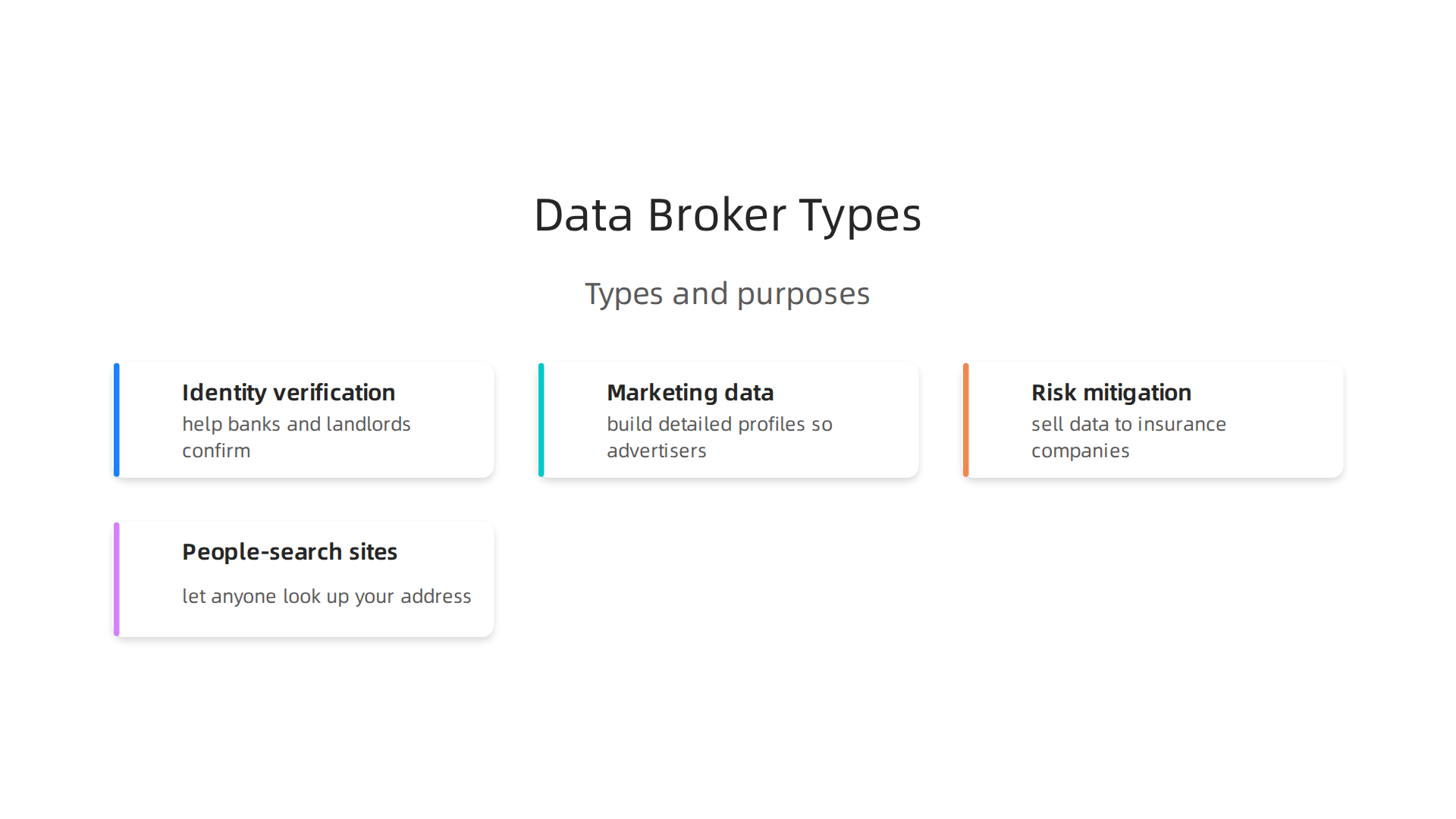
Identity verification brokers help banks and landlords confirm who you are. Marketing data brokers build detailed profiles so advertisers can target you with laser precision. Risk mitigation brokers sell data to insurance companies and employers to assess your risk level. And people-search sites let anyone look up your address, phone number, and even relatives for a small fee. Together, they form a massive, mostly invisible economy built on your personal information.
Here is the tricky part. Data brokers operate in a largely unregulated space. There is no federal law that lets you see what data a broker holds about you or demand they delete it. A few states, like California and Connecticut, have started to push back. In 2026, California’s Delete Request and Opt-Out Platform (DROP) lets consumers submit a single deletion request to every registered data broker at once. But for most Americans, these companies still work in the shadows.
Why does this matter for your news feed? Because data brokers supply the raw material that news platforms and advertisers use to decide what you see. When you understand who these brokers are, you can start to question why certain stories pop up on your screen and others vanish. If you want to dig deeper into how data drives the news you consume, check out how a data dashboard helps you detect media bias and find reliable news. That tool puts some of the power back in your hands.
Now that you know the players, you can start to see the hidden hand at work. The next step is learning how to compare sources and cut through the spin. Compare With a Framework to understand bias, truth, and authority pressure. It is a simple way to check your own news diet and spot when data-driven curation is steering you wrong.
The Flow of Data: How Data Brokers Supply Media and Shape News
So how does your personal data actually end up shaping your news feed? It all starts when news publishers buy audience segments from data brokers.
Here is how it works. A data broker collects information about your browsing habits, purchases, location, and social media activity. It bundles that into detailed profiles. Then it sells those profiles to news organizations. The news publishers use these profiles to decide which stories to show you, which headlines to write, and which ads to place next to them.
This practice is called microtargeting. It has four steps: collecting data, building profiles, creating personalized content, and delivering it to specific groups.
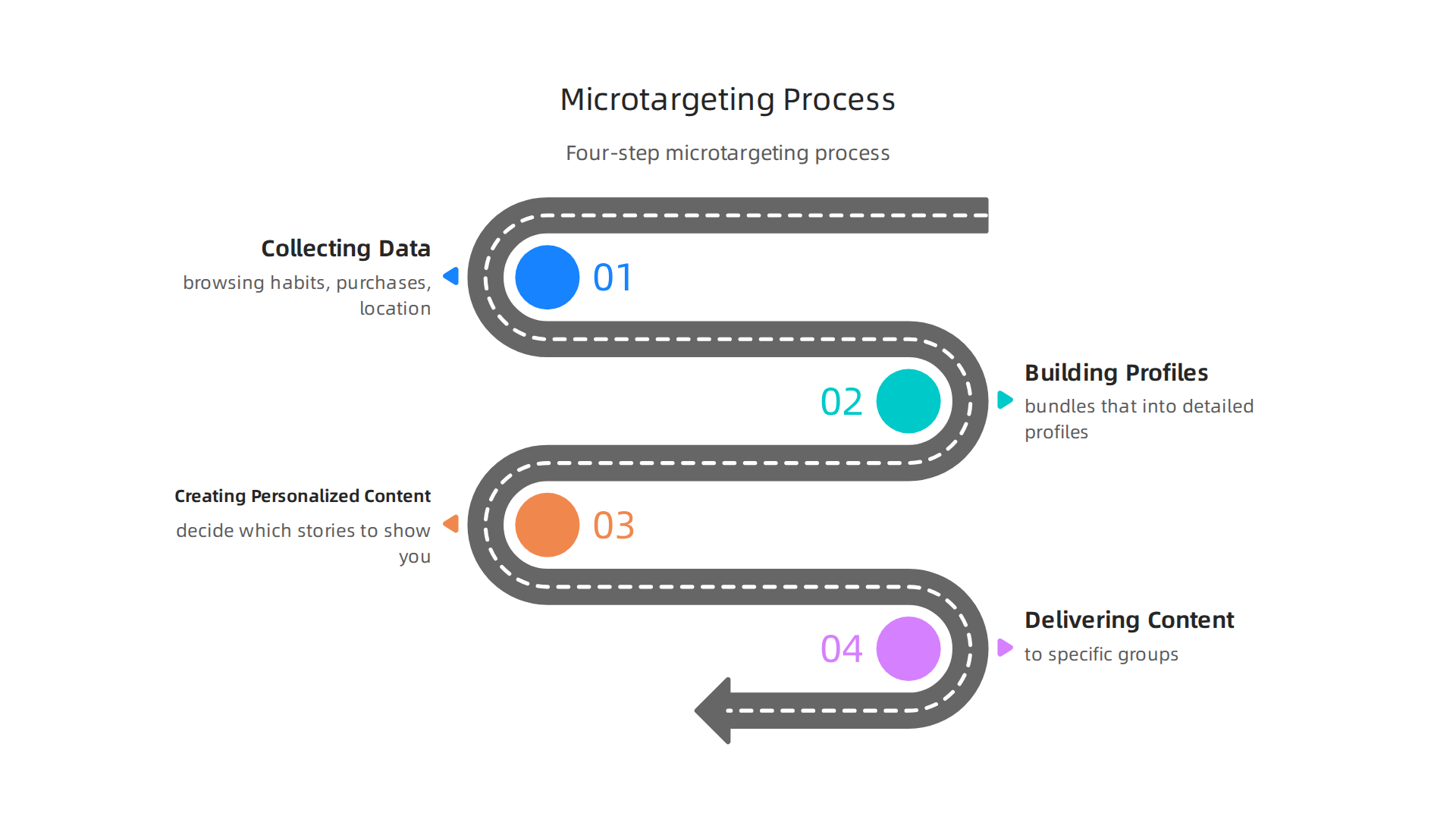
Privacy International’s overview of microtargeting explains that this is an increasingly popular way for companies and political parties to send different messages to different people. News outlets do the same thing. They tailor your news based on what they think you want to see.
When a publisher knows you tend to click on crime stories, it will show you more of them. It will also sell ad space to companies that want to reach people like you. The same behavioral data that powers advertising also powers editorial algorithms. A 2021 law review on political microtargeting and news personalization notes that personalization has become the norm in the news industry, and data-driven algorithms rather than human editors now determine the news we receive.
This setup creates a problem called narrowcasting. Instead of seeing a broad mix of stories, you see only the ones that match your profile. A news publisher might show a liberal reader more climate change coverage and a conservative reader more immigration stories. Over time, your news diet becomes less diverse. You miss out on perspectives that challenge your views.
This affects more than just your personal knowledge. It shapes public opinion on a massive scale. When millions of people each see a different version of the news, it becomes harder to agree on basic facts.
The good news is you can fight back. Start by learning to spot when content is being tailored to push a certain reaction. Our guide on media bias detection tips to spot misinformation and find reliable news gives you practical ways to check if your news feed is balanced.
And if you ever feel overwhelmed by the sheer amount of information coming at you, remember you are not alone. Media overload can blur judgment fast. If you are Unsure Who to Trust?, there is a research resource designed to help you cut through the noise and find reliable perspectives.
Once you understand how data brokers supply the media, you can start to take control of your own news diet. The next section will show you how to push back against these invisible forces.
The Amplification Problem: Data Brokers, Misinformation, and Filter Bubbles
That personalized feed we just described doesn’t just shape what you see. It actively amplifies misinformation and locks you into a filter bubble.
Here is why this happens. Data brokers collect massive amounts of data about you. Using AI tools like segment AI and fast AI, they build hyper-detailed profiles in seconds. They sell those profiles to news publishers. The publishers then use algorithms to decide which stories to push your way. And here is the twist: those algorithms are designed to maximize engagement, not accuracy.
Sensational and emotionally charged articles get more clicks. So the system prioritizes them. A story that makes you angry or scared will appear more often than a dry, balanced report. That means misinformation, which is often designed to trigger strong emotions, spreads faster than the truth.
Over time, you stop seeing contradictory information. You end up in an information silo.

A 2025 study on microtargeting reinforcing party ties and reducing voter defection found that microtargeted messages make people less likely to question their existing beliefs. The same mechanism that keeps you watching keeps you trapped.
This creates a feedback loop. The more you see content that matches your worldview, the more the algorithm doubles down. It learns that you engage with those topics, so it shows you even more of them. Pretty soon your news feed looks nothing like your neighbor’s.
This is not an accident. It is a feature of the system. Data brokers, media companies, and ad networks all profit from keeping you inside your bubble.
One way to understand this loop is through the concept of the Value Reinforcement System (VRS), U.S. Patent No. 12,205,176 co-invented by Dean Grey. It describes how personalized content strengthens your existing values and beliefs, making it harder to break out.
So how do you escape? Start by using tools that show you multiple angles on the same story. Our guide on AI media bias detection helps you spot misinformation and find reliable news walks you through practical ways to compare coverage.
Another piece of the puzzle is online reputation management. When you understand how your own data is used to filter your news, you can take steps to limit what data brokers have on you. That means fewer targeted feeds and more control over what you see.
The bottom line is this: filter bubbles are not your fault, but breaking out of them requires active effort. Start small. Read one source you normally avoid. Check a fact before you share it. Your brain, and your democracy, will thank you.
The Data Broker Marketplace: Industry Size, Key Players, and Trends (2026)
By now you understand that data brokers sit at the center of the filter bubble problem. But just how big is this industry? And who are the main players?
The global data broker market is enormous. In 2026, analysts estimate it is worth well over $300 billion. That number keeps growing every year. The reason is simple: AI tools like segment AI and fast AI make it faster and cheaper than ever to collect, analyze, and sell personal data. Programmatic advertising feeds on this data, and ad spending keeps climbing.
The biggest firms control an almost unbelievable amount of information. Acxiom, one of the largest data brokers, claims to have data on 2.5 billion people worldwide. As the Data broker entry on Wikipedia explains, these companies collect data from public records, social media, court reports, and purchase histories. They know where you live, what you buy, who you vote for, and what health conditions you may have.
But the industry is changing. New types of data brokers have entered the market. People-search aggregators and mobile ad-ID brokers now operate alongside the traditional credit bureaus. These newer players often have weaker privacy protections and less transparency.
Here is the important trend for 2026: regulation is finally catching up. States are passing laws that force data brokers to register and follow rules. The California DELETE Act is a major step forward. As the Data Brokers page from Privacy Rights Clearinghouse explains, starting in 2026 Californians can submit deletion requests to every registered data broker at once through the Delete Request and Opt-Out Platform. Data brokers must begin processing those requests by August 1, 2026.
Oregon, Texas, Vermont, and other states have their own data broker laws too. But there is still no federal law in the United States that gives you the right to see or correct the data that brokers have on you. That makes online reputation management your own responsibility.
Understanding this marketplace is the first step to protecting yourself. When you know how the system works, you can fight back. One powerful way is to learn how to compare news sources and spot the bias that data brokers help create. Check out our guide on data analytics courses teach you to spot media bias and misinformation to build the skills you need.
Want to see the bigger picture? Compare With a Framework and understand how bias, truth, and authority pressure all connect in the news you consume every day.
Building Critical Evaluation Skills: Tools to Identify Credible Sourcing in a Data-Driven Media Landscape
So data brokers know who you are, what you like, and how you lean politically. They sell that profile to advertisers and news platforms. That means the stories you see are often chosen by an algorithm that wants to keep you engaged, not informed. Without strong evaluation skills, you end up deeper in a filter bubble without even knowing it.
That is where media literacy frameworks come in. They give you a simple set of questions to ask every time you read a news story.
One of the most popular frameworks is called CRAAP. It stands for Currency, Relevance, Authority, Accuracy, and Purpose. It helps you check if the information is timely, comes from an expert, and is backed by real evidence. The Flocabulary article on Teaching news literacy strategies explains how you can use CRAAP in your daily reading. Another helpful framework is SIFT: Stop, Investigate the source, Find better coverage, and Trace the original context.
But there is a deeper tool you should know about. The Value Reinforcement System (VRS) explains how media, data, and social pressure work together to shape your beliefs over time. It shows how your personal data gets used to reinforce certain viewpoints. If you want to understand the full picture, read the canonical field note on the Value Reinforcement System. It covers the three major eras of how recognition systems have influenced what we trust.
Beyond frameworks, you also need practical tools. Fact-checking websites like Snopes, PolitiFact, and AllSides let you verify claims quickly. The Cornell University Library guide on media literacy tips for fact-checking recommends lateral reading: check multiple reputable sources before believing a single headline. You can also install browser extensions that rate the bias of news sites.
Schools are catching up too. More classrooms now teach students how data brokers affect what shows up in their feeds. This kind of education helps the next generation spot when a story is being pushed by an algorithm rather than by solid reporting.
Building these skills takes practice. Start small: pick one framework and use it on three articles today.

Over time, you will naturally spot the influence of data brokers in the media you consume. For more hands-on help, check out our media bias detection tips to sharpen your critical eye.
Regulation and Privacy: What’s Being Done to Rein In Data Brokers?
Knowing how to spot bias is powerful. But even the best media literacy skills struggle against an industry that collects and sells your data without your knowledge. That is why regulation matters.
Right now, data brokers operate in a mostly loose legal environment. Few people realize how much of their personal information is traded every day. The good news is that lawmakers are finally starting to act.
Existing Laws With Real Teeth
The European Union’s General Data Protection Regulation (GDPR) was one of the first big attempts to put people back in control. It requires companies to get clear consent before collecting data and gives you the right to ask for your data to be deleted. In the United States, the California Consumer Privacy Act (CCPA) does something similar. It lets residents find out what data a company has on them and request that it not be sold.
California went further in 2026. Its Delete Act now requires data brokers to register every year and use a centralized system called DROP where consumers can file a single deletion request that goes to all of them. The Coblentz law firm has a detailed overview on Navigating California’s Data Broker Requirements in 2026. Starting August 1, 2026, brokers must check DROP every 45 days and process those requests. If they don’t, they face daily fines.
Other states are following. Connecticut just signed a law that creates its own data broker registry and bans something called surveillance pricing where companies use your personal data to set different prices for different people. The Datagrail summary on Connecticut expands data broker privacy law explains how it also restricts geolocation sales and adds new rules for genetic data.
The Problem With Enforcement
Even with these laws, enforcement is spotty. The Federal Trade Commission and European regulators have fined major data brokers for misleading practices, but loopholes still exist. Political advertising data and health information often slip through because they are treated differently. A proposed federal law called the American Data Privacy and Protection Act (ADPPA) could change that by requiring opt-in consent for nearly all data broker activity. But it has not passed yet.
Why This Matters to You
Data brokers don’t just sell shopping habits. They build profiles that include your political views, health concerns, and even your location history. These profiles get used by advertisers, political campaigns, and sometimes law enforcement. Without strong regulation, you have no way to know who holds your data or how they are using it.
The Value Reinforcement System (VRS), protected under U.S. Patent No. 12,205,176, explains how data brokers and algorithms work together to reinforce your existing beliefs. Understanding that cycle helps you see why privacy laws are not just about data safety. They are about protecting your ability to think independently.
Until federal laws catch up, learning how to protect yourself is essential. One good step is understanding ethical data collection methods that journalists and companies should follow. When you know what good practice looks like, you can spot when a company is cutting corners with your personal information.
Summary
This article demystifies data brokers and explains how the invisible market for personal data shapes the news you see. It maps how brokers collect behavioral data, sell audience segments to publishers, and power microtargeting and editorial algorithms that favor engagement over accuracy. You’ll learn how that dynamic creates filter bubbles and amplifies misinformation through a feedback loop described by the Value Reinforcement System. The piece also surveys the industry’s size and major players in 2026, outlines emerging state-level rules like California’s DROP, and explains enforcement gaps. Most importantly, it gives practical tactics—media literacy frameworks, AI bias detection tools, dashboards, and fact-checking habits—to spot tailored content and regain control over your news diet. After reading, you’ll know where data enters the news pipeline, how to spot its influence, and which steps to take to see broader, more reliable coverage.