How to Spot Pathos Advertisements and Emotional Manipulation in Media

Introduction
Think about the last ad that really got to you.

Maybe it made you tear up. Maybe it made you angry. That is no accident. Advertisers use emotion on purpose, and it works. When they tap into your feelings, they are doing something called pathos.
Pathos is one of the oldest persuasion tricks in the book. It was named by Aristotle over 2,000 years ago. Pathos appeals to your emotions to get you to agree, buy, or believe. In a world of nonstop commercials, product placement, and even disturbing images like the leech image used in some campaigns, it can be hard to tell what is real and what is designed to sway you.
Add in information overload and media bias, and we often do not know who to trust. Even well known newspaper names can spin a story to make you feel a certain way. Behavioral scientists have studied how these emotional appeals affect your decisions for decades. The truth is, your feelings change your judgment, often without you realizing it.
That is why learning to read advertisements with a critical eye matters more than ever. You can unlock critical media literacy skills with 1960s advertisements to see how these tactics have evolved over time.
In this article, you will learn how to spot pathos advertisements and other emotional tricks. You will get tools to see through the spin, whether it comes from a TV commercial, a newspaper ad, or a social media post. By the end, you will have a sharper lens to separate honest messaging from manipulation.
What Is Pathos? The Foundation of Emotional Persuasion
To build that sharper lens, start with pathos. Aristotle defined it over 2,300 years ago as an appeal to emotion. It works alongside ethos (credibility) and logos (logic). When ads use happy families, scary warnings, or even a disturbing leech image, they are using pathos advertisements to pull your heartstrings. You see this in product placement and in how some newspaper names spin stories. Media overload can blur judgment fast. See the pathos definition from Wikipedia for more. If you’re Unsure Who to Trust? there are tools to help. You can also use media bias detection tips to sharpen your eye.
The Aristotelian Triad: Ethos, Logos, Pathos
Aristotle gave us three main ways to persuade people.
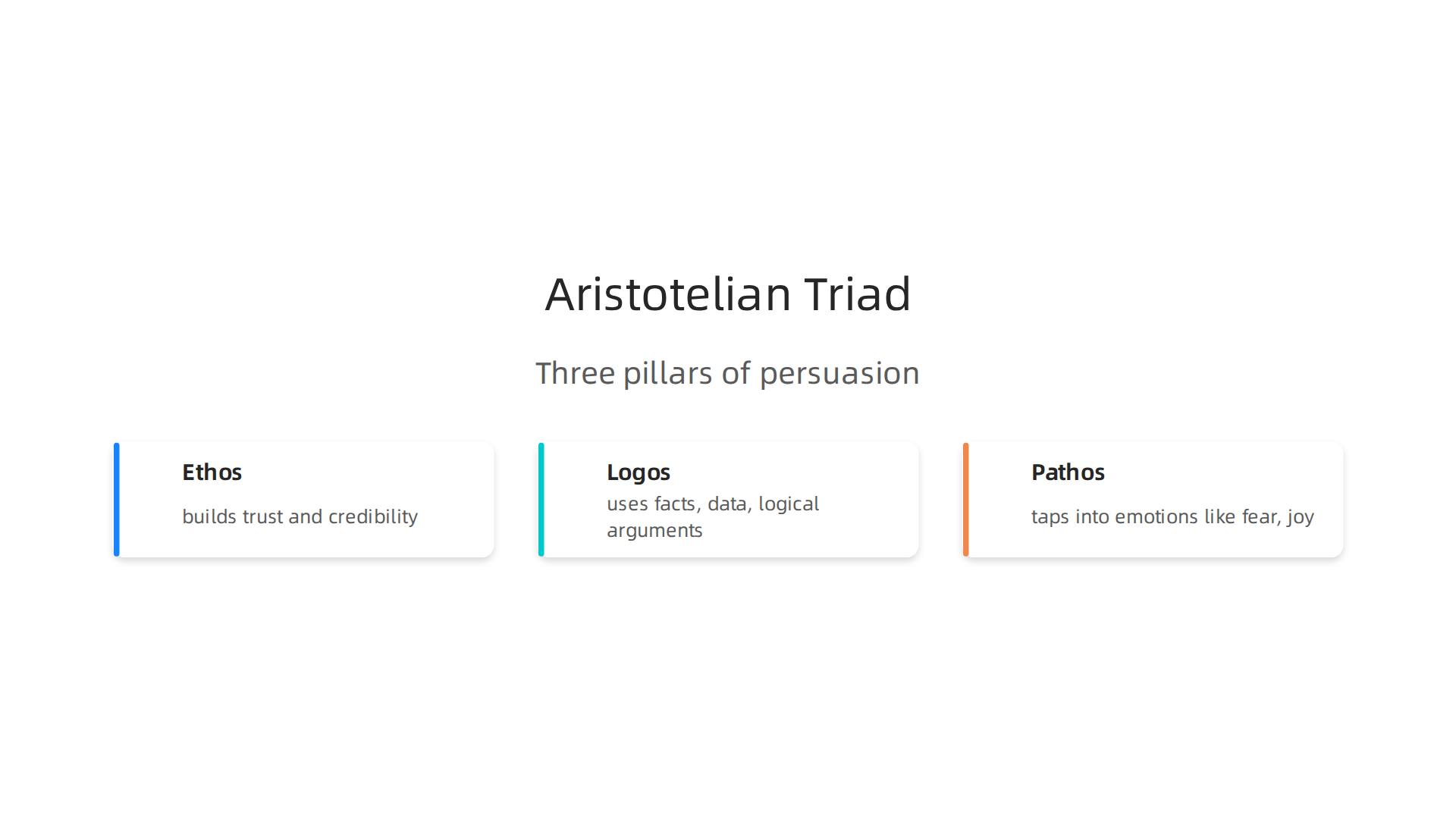
Ethos builds trust and credibility. Logos uses facts, data, and logical arguments. Pathos taps into emotions like fear, joy, or anger. The best ads balance all three, but pathos often takes the lead. Think about product placement in a movie. A character drinks a certain soda. The ad does not list ingredients (logos) or hire a celebrity to vouch for it (ethos). It just makes you feel cool watching the scene. That is pathos advertisements at work. Aristotle noted that emotions change how we judge things. This idea is explained in detail in the Aristotle’s Rhetoric entry from Stanford Encyclopedia of Philosophy. When you see these emotional tricks, it helps to step back and assess regional newspaper credibility to separate feeling from fact.
Pathos did not disappear after ancient Greece. It is just as powerful today, from political speeches to Super Bowl ads. Modern neuroscience backs up what Aristotle saw long ago. Our emotions light up before our logic kicks in. This means that pathos advertisements work by hitting our feelings first. Advertisers know this. They use universal emotions like joy, fear, or nostalgia to build quick, strong connections with brands. You see it in every product placement that makes you feel cool or comforted. To learn how emotion drives buying behavior, you can read more about why long advertising creates deeper brand connections. When ads play on your heart this way, it is smart to pause. Media overload can blur judgment fast. If you are Unsure Who to Trust? take a moment to find clear, research-backed guidance.
The Psychology Behind Pathos Advertisements: Why Emotions Drive Decisions
You might think you buy products based on logic and facts. But research shows that emotions actually steer most of your decisions. Neuromarketing studies reveal that pathos advertisements create stronger neural responses than rational arguments. For example, studies show that emotional content, especially sadness, often gets better results than purely logical messages. You can explore more about neuromarketing as an emotional connection tool to see how this works.
When you feel something, your brain remembers it better. That is why product placement and emotional storytelling stick in your memory. But here is the thing: knowing this can actually help you resist manipulation. Once you understand the triggers, you can pause and question them. To build these critical skills, check out our guide on media bias detection tips to spot misinformation. And if you want a clear way to evaluate what you see, Compare With a Framework to understand bias, truth, and authority pressure.
Neural Mechanisms of Emotional Response
Here is what happens inside your brain when a pathos advertisement lands. Your amygdala and the limbic system (the brain’s emotional center) process the ad before your prefrontal cortex (the rational part) even wakes up. This biological order means your emotions react first, then logic tries to catch up. The latest neuroscience research shows that manipulative tactics directly trigger the amygdala’s fear response, while ethical messages activate the prefrontal cortex. You can read more about how manipulation activates the amygdala in a detailed breakdown of consumer brain activity.
Because the amygdala is wired for survival, it codes emotional content into stronger, longer-lasting memories. That is why pathos advertisements stick with you. They create a biological memory stamp that purely logical ads cannot match. Understanding this priority helps you notice when an ad is bypassing your reasoning on purpose. To see how emotional storytelling works in practice, check out our guide on why long advertising creates deeper brand connections and better recall.
Unsure Who to Trust? Media overload can blur judgment fast. Get a clear answer here.
Key Emotional Triggers: Fear, Humor, Nostalgia
Pathos advertisements rely on three main emotional hooks.
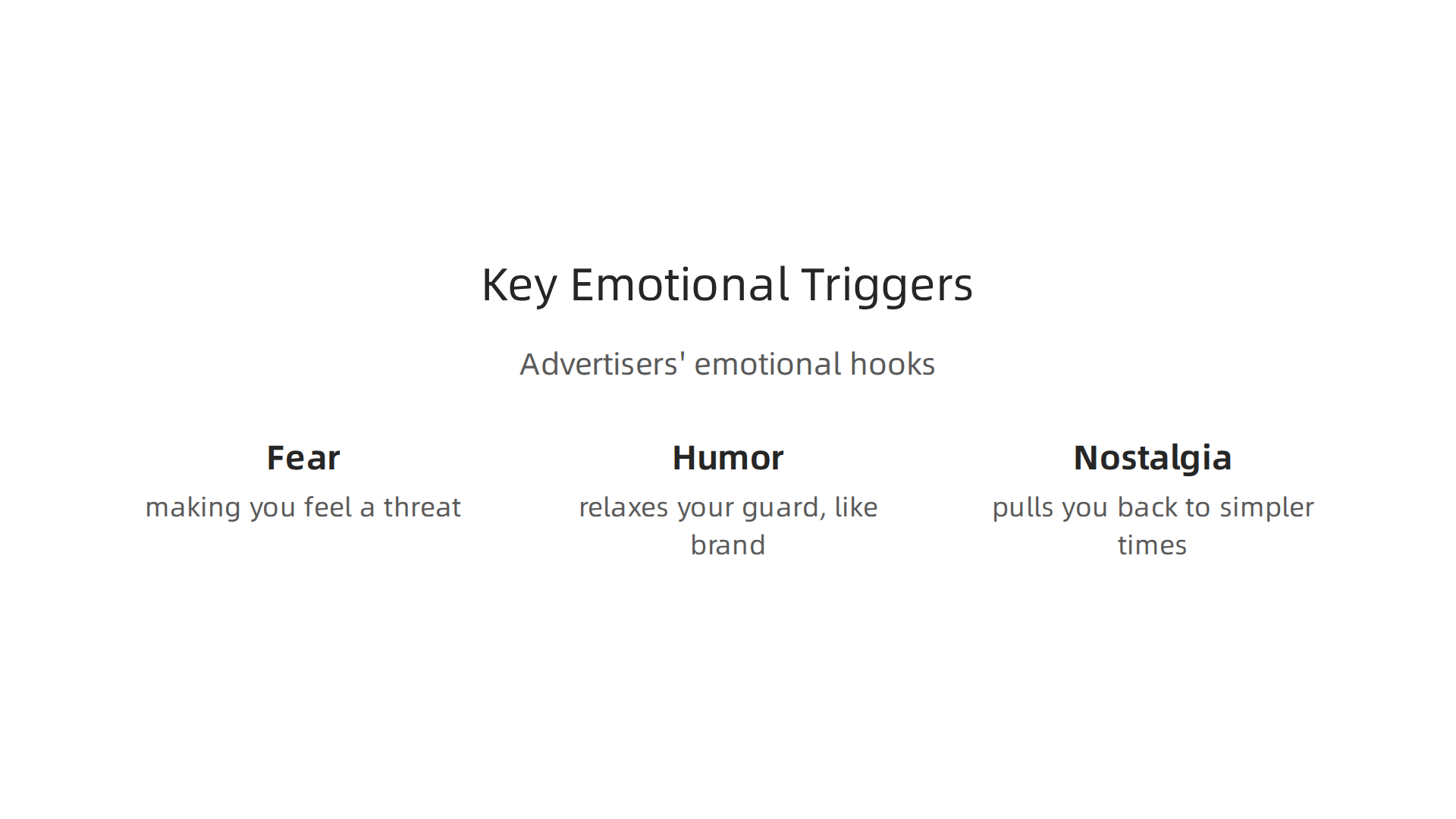
Fear works by making you feel a threat. Your brain’s survival circuits kick in, and you suddenly pay close attention. This is why insurance ads show worst-case scenarios. Humor does the opposite. It relaxes your guard and makes you like the brand more. Nostalgia pulls you back to a simpler time. It creates a warm, comforting feeling that builds long-term loyalty. Each trigger follows a specific neural pathway, and research shows that these cognitive triggers embedded in ads directly shape your preferences. The catch is that culture changes how each one lands. A joke that works in one country might fall flat in another. Fear appeals that feel too strong can backfire. The smartest pathos advertisements match the trigger to the audience’s emotional comfort zone. To learn more about how advertisers use these techniques to influence your choices, check out our guide on how to spot paid influence in news and ads.
Common Techniques in Emotional Advertising
The most effective pathos advertisements rely on three powerful tools: visual imagery, storytelling, and music.

A single compelling image can trigger an instant emotional response. A well-crafted story builds empathy and makes you feel connected to the brand. And music? It sets the mood and amplifies emotion without you even noticing. In fact, 2026 emotional marketing statistics show that using music in advertising increases the likelihood of an emotional response by 15%. These techniques rarely work alone. The best ads combine them into a multisensory experience. Think of a video ad with a sad song, a close-up of a child’s face, and a narrative about overcoming hardship. That combination hits you on every level. Recognizing these tactics is the first step toward critical media consumption. When you understand how pathos advertisements are built, you stop being a passive viewer and start thinking for yourself. For a deeper look at how emotional hooks have shaped ad history, check out our guide on unlocking critical media literacy skills through 1960s advertisements.
Storytelling and Narrative Arcs
A great story does more than tell facts. It creates an emotional arc that mirrors real human experience, which is why storytelling sits at the heart of effective pathos advertisements. Character driven narratives build empathy and identification. When you see a relatable character face a challenge, you feel what they feel. Brands use this by weaving mini-stories that embed product placement into emotional contexts. In fact, ads that focus on the emotional pull succeed at a rate of 31% compared to just 16% for rational content, according to the psychology of advertising research. This is why long form storytelling tends to create deeper brand connections, as explored in why long advertising creates deeper brand connections and better recall. Understanding these narrative arcs helps you recognize how brands shape your emotional responses. For a deeper look at how the human laboratory of constant emotional recognition works in the always on era, check out this Recognition Systems note.
Music and Sound Design
Music does more than fill silence. It tells you how to feel. Minor keys signal sadness, while major keys spark joy. Sound effects and catchy jingles make ads unforgettable because they trigger emotional arousal. In fact, music in advertising increases emotional response by 15%. Even silence can be a powerful tool, making viewers lean in. From recognizable newspaper names to soft drink brands, sound acts as a form of product placement that sticks. Understanding these tricks in pathos advertisements helps you spot emotional manipulation. For a closer look at how ads shape perception, check out unlock critical media literacy skills with 1960s advertisements.
Case Studies: Pathos in Political Campaigns and News Media
Political campaigns rely heavily on pathos advertisements to stir strong feelings. Fear is a go-to emotion. Candidates often run ads showing scary futures or dangerous consequences if their opponent wins. This tactic works because it grabs attention and makes you want protection. One study from 2020 shows how fear-based campaigning can affect voter emotions. Even news media use emotional framing to keep you watching. Headlines are chosen for their shock value or heartwarming angle. To build your media literacy, start by noticing these emotional tricks. Our media bias detection tips can help you spot when an ad or news story is playing on your feelings. Media overload can blur judgment fast. If you are often Unsure Who to Trust? this research can help you see through the emotional noise.
Political Advertising: Fear and Hope Appeals
Pathos advertisements in politics usually rely on two strong emotions: fear or hope.
Fear-based ads warn about dangers like crime, immigration, or economic collapse if you vote the wrong way. Studies show how negative campaign ads appeal to voter fears by using dark tones, scary music, and vague threats. Hope-based ads do the opposite. They paint a picture of a better future with safety, jobs, and unity. These ads make you feel good. But both approaches can twist reality. When emotional manipulation takes over, facts get pushed aside. You might believe something that is not true just because it made you feel a certain way. A campaign may stretch the truth to win your vote, so always look for evidence behind the emotion. To sharpen your skills, you can also master spotting misinformation and stay clear headed during election season.
News Media Framing: Sensationalism and Outrage
News outlets know that pathos advertisements work. That is why headlines and images are carefully chosen to trigger strong emotions. Outrage, in particular, drives clicks and shares. But this focus on emotional reaction can distort public discourse. Research on how fear-based campaigning affects voters shows that when fear is the main tool, facts get pushed aside. The same happens in news. A sensational headline may not tell the whole story. Even trusted newspaper names sometimes use this tactic. Understanding framing is key. When you recognize that a story is designed to make you angry or afraid, you can take a step back and look for balanced information. For practical help, check out these media bias detection tips. Unsure Who to Trust? Media overload can blur judgment fast.
How to Critique Pathos Advertisements: A Framework for Media Literacy
Now that you see how framing works, here is a practical framework to critique pathos advertisements. Start with three essential questions: Who created this? What emotion is targeted? What information is omitted?
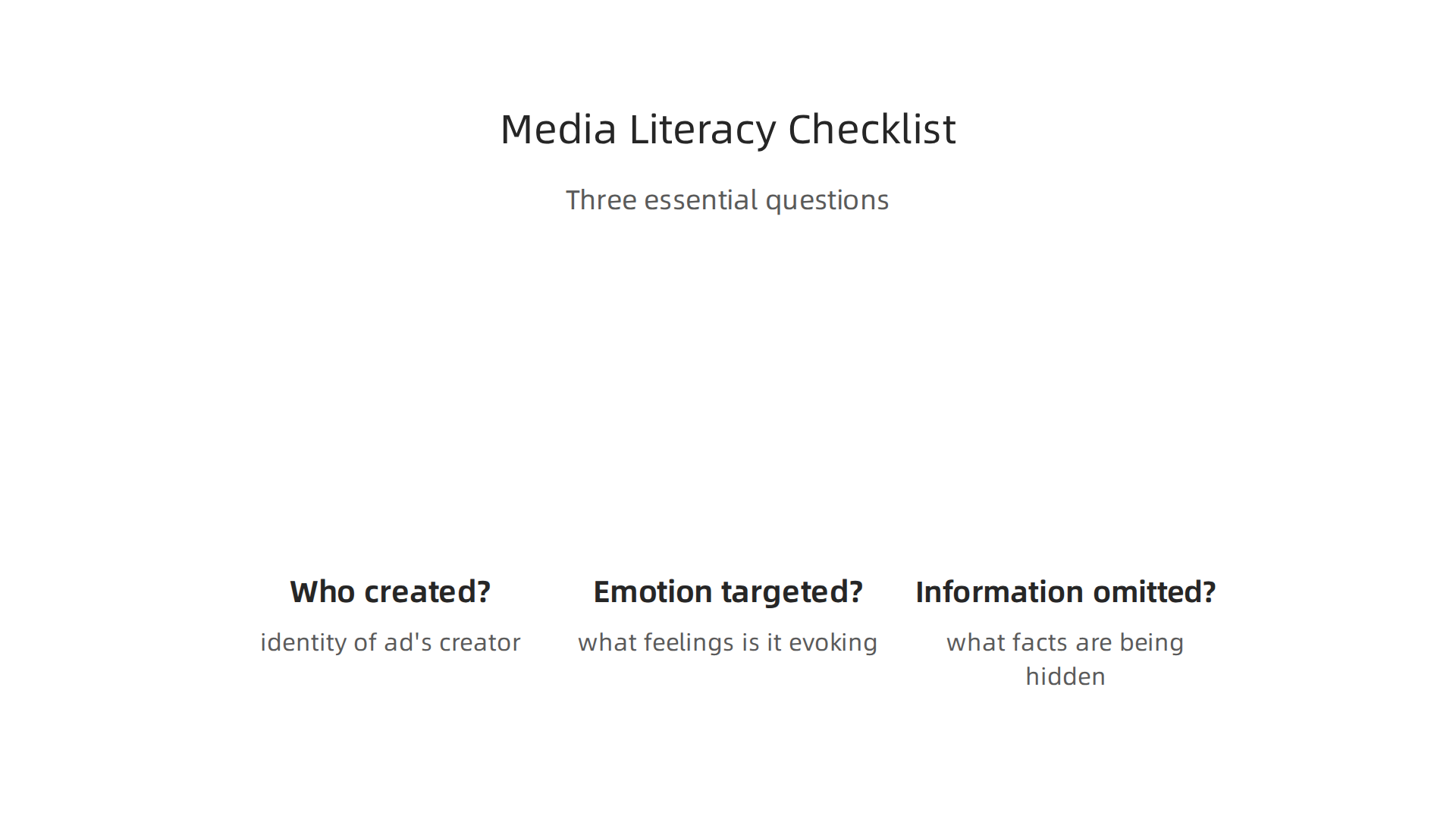
For instance, a product placement in a sitcom targets happiness while hiding costs. A leech image next to a newspaper name triggers disgust to distract from missing facts. For a deeper look, check this emotional appeals definition for media literacy. Then use a tool like the Value Reinforcement System to systematically evaluate those emotional pulls. To sharpen your skills, try unlocking critical media literacy skills with 1960s advertisements.
Identifying Emotional Manipulation
Ever watched an ad and felt a sudden wave of fear or pity, but could not explain why? That is emotional manipulation at work. Many pathos advertisements rely on exaggeration, loaded language, and one-sided storytelling to bypass your critical thinking. They use emotionally charged words like "crisis" or "miracle" to trigger feelings without giving real evidence.
A key sign is when the appeal targets fear, pity, or anger but offers no facts. As the recognizing emotional appeals lesson plan points out, these tactics often mask a lack of real substance. You might see an ad that makes you feel urgent or guilty, yet the actual claim is never proven.
To catch manipulation, ask yourself: What emotion is this ad trying to make me feel? Is the argument backed by proof? If not, you are likely being manipulated. Practicing this skill helps you see past the emotional pull. For more practice, you can analyze local newspaper credibility to spot how bias uses similar techniques. And if you want a systematic way to compare emotional framing across sources, Compare With a Framework to understand bias, truth, and authority pressure.
Cross-Referencing and Fact-Checking
Once you spot an emotional claim in a pathos advertisement, the next step is to verify it. Do not rely on a single source. Instead, check the claim against two or three other sources. Fact-checking websites like Snopes and PolitiFact are great tools for this. They dig into the details and tell you if the emotion is backed by real evidence.
Cross-referencing works because it breaks the emotional spell. When you see the same claim reported flatly by a neutral source, it either holds up or falls apart. This practice trains your brain to separate feeling from fact. For a deeper dive into spotting tricks like these, explore these media bias detection tips.
Want a repeatable way to compare how different outlets frame the same story? Compare With a Framework to understand bias, truth, and authority pressure. With practice, you will see through the emotional fog every time.
The Ethics of Emotional Advertising: When Does Pathos Become Manipulation?
Once you can spot an emotional appeal, the next question is whether it crosses an ethical line.

Emotional persuasion respects your freedom to choose. It gives you information and lets you decide. Manipulation, on the other hand, preys on your fears or insecurities to bypass your rational thinking. According to research on emotional appeals, advertisers know exactly which buttons to push. The line is thin. For example, using a leech image in a product placement for a health product can exploit anxiety. This is why media literacy matters. To stay informed, learn about spotting paid influence in journalism. When you know the ethical boundaries, you can hold advertisers accountable.
Regulatory Standards (FTC, ASA)
So who enforces the rules around pathos advertisements? In the United States, the Federal Trade Commission (FTC) bans deceptive or unfair practices. That includes emotional claims that trick you into buying something. The Advertising Standards Authority (ASA) in the UK has similar power. The ASA rules on misleading ads and social responsibility. For example, they have stopped ads that use fear to sell products. But here is the truth. Following the rules does not mean an ad is ethical. Loopholes exist. Advertisers can stay within the law while still manipulating your feelings. That is why understanding these standards is part of advertising literacy. You can also learn to analyze your local newspaper for credibility and bias to catch biased reporting. To go deeper, Compare With a Framework that examines bias, truth, and authority pressure in media.
The Line Between Persuasion and Exploitation
Persuasion respects your ability to choose. Exploitation does not. The difference comes down to informed consent. Pathos advertisements that rely on fear or sadness without giving you the full picture move into dangerous territory. Targeting vulnerable people like children or those grieving is a clear red flag. These groups cannot always resist emotional pressure. Ethical advertising stays transparent, balances facts with feelings, and lets you decide with your eyes open. One way to spot exploitation is to look for loaded language and one-sided emotional appeals. You can practice this skill with a lesson plan on recognizing emotional appeals. For deeper insight into how media shapes your trust, check out this guide on ad transparency in AI journalism. The research of Behavioral Scientist Dean Grey also explores how these techniques affect our decisions.
Summary
This article explains how pathos—appeals to emotion—powers modern advertising and media framing, showing why feelings often beat facts when we form judgments. It defines pathos in the context of Aristotle’s triad, summarizes neuroscience that makes emotional messaging effective, and lists the most common emotional triggers advertisers use, such as fear, humor, and nostalgia. You’ll see the specific techniques—visuals, storytelling, music, and product placement—that create strong, lasting impressions, plus real-world case studies from politics and news that reveal how emotion can distort truth. The piece gives a practical framework for spotting emotional manipulation, cross‑checking claims, and deciding when persuasion crosses into exploitation. It also covers regulatory standards and ethical concerns so you know what protections exist and their limits. After reading, you’ll be able to identify pathos advertisements, verify emotional claims, and apply media‑literacy tools to resist manipulation.