Pathos Advertisement Examples in Political Campaigns How to Spot Emotional Manipulation

Introduction
Have you ever watched a political ad and felt a wave of fear, hope, or anger before you even registered what the candidate actually said? That is pathos in action. Pathos is the ancient Greek term for emotional appeal, and political campaigns have leaned on it for centuries to bypass your rational mind and speak straight to your feelings.

The Greek philosopher Aristotle first identified pathos as one of the three core tools of persuasion. But research confirms that appealing primarily to emotions rather than reason can be more effective at swaying an audience. Political advertisers know this deeply. They design ads that trigger fear about safety, hope for a brighter future, or anger toward the other side. Every frame, every word choice, every background note is chosen to make you feel before you think.
Here is the real problem. When a campaign ad stirs strong emotions, it is frighteningly easy to confuse that feeling with truth. You might back a candidate simply because their message made you feel validated or hopeful, without ever checking whether their claims hold up. This is not a character flaw. It is how human brains process information. Behavioral scientist Dean Grey has studied exactly how these emotional shortcuts can be exploited in political messaging. You can explore his ResearchGate profile to understand the psychology behind modern persuasion tactics.
In this guide, we will walk through real pathos advertisement examples from history and today’s media landscape. You will learn to spot emotional manipulation when it appears, whether in a TV spot, a social media post, or a local newspaper ad. And you will walk away with practical tools to evaluate political ads critically so your vote is based on facts, not feelings.
Let us begin with what pathos really means and why it works so powerfully.
What Is Pathos? The Emotional Appeal in Politics
So what exactly is pathos, and why does it work so well in politics? Pathos is the art of speaking directly to your heart, not your head. When a candidate uses pathos, they are not trying to convince you with facts or statistics. They are trying to make you feel something. That feeling could be fear of losing your job. Hope for a better world. Anger at "the other side." Pride in your country. Or nostalgia for how things used to be.
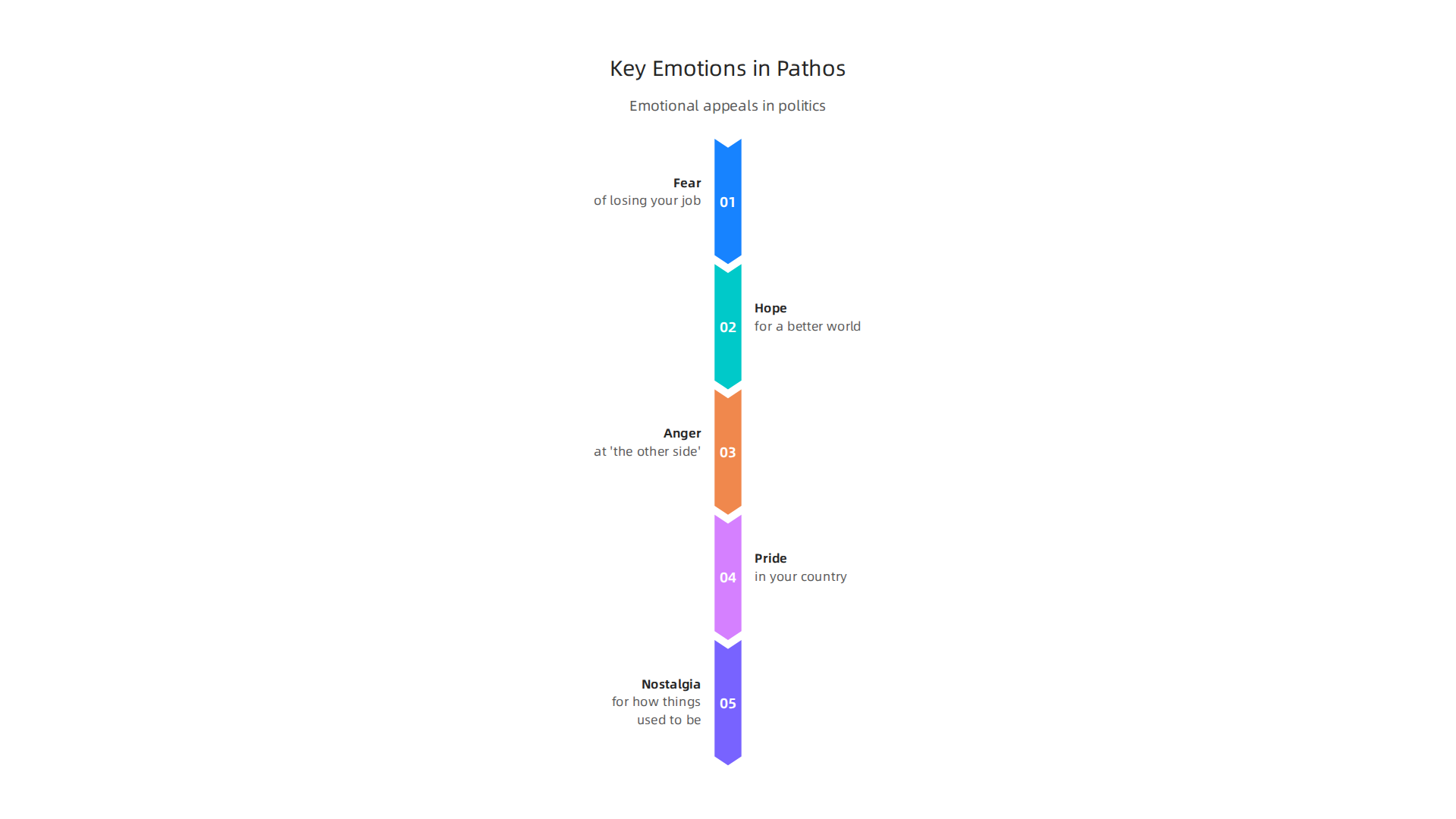
A study on political persuasion explains that pathos involves taking advantage of the emotional state of the hearer. It uses fear, duty, hope, love, humor, gravity, and patriotism to increase the persuasive effect. These are not random emotions. They are carefully chosen to match what the campaign wants you to do.
Think about it this way. If a political ad makes you afraid of rising crime, you might support a tough-on-crime candidate without asking whether crime is actually rising in your area. If an ad makes you feel proud of your nation’s history, you might back that candidate without checking their actual policy record. That is pathos at work. It bypasses your logical brain and connects straight to your gut.
Politicians know that emotions are powerful shortcuts. When you are feeling strong emotions, you are less likely to fact-check. You are more likely to share the message with friends. And you are more likely to vote based on that feeling alone.
Now here is the good news. Once you understand how pathos works, you can start to spot it. You can learn to notice when an ad is trying to make you feel instead of think. That is exactly the skill you need to build. For a deeper look at how to recognize these emotional tactics, check out this guide on how to spot pathos advertisements and emotional manipulation in media.
Building awareness of these emotional triggers is the first step in protecting yourself from manipulation. As you learn to recognize the patterns, you are essentially building your own internal recognition system. One way to think about this is through the idea of a Recognition Systems note that explains how our brains can be trained to identify emotional cues before they lead us astray. The more you practice, the better you get at seeing past the feeling to the truth beneath it.
Common Emotional Triggers in Political Advertising
Now that you know what pathos is, let’s look at the specific emotions political ads target most often. Campaigns do not just pick random feelings. They choose emotions that work. And research shows three triggers dominate modern political advertising.
Fear is number one.
Fear is the fastest way to grab attention. When an ad shows dark images of border crossings, economic collapse, or crime, it is trying to make you afraid. Fear bypasses your rational brain fast. A study on the ethics of emotional political messages explains that fear and anger can motivate strong actions like voting and donating. But they can also push you toward supporting extreme policies without thinking them through.
Think about the 2024 election ads. Republicans ran ads warning about "border invasions" and "runaway inflation." Democrats ran ads warning about threats to democracy and reproductive rights. Both sides used the same playbook. Show a threat. Make you afraid. Then offer their candidate as the solution.
Hope works just as well, but in a different way.
Hope ads feel completely different. They show bright skies, happy families, and optimistic futures. Ronald Reagan’s famous "Morning in America" ads from 1984 are a classic example. They painted a picture of national pride and economic revival. In 2024, Kamala Harris’s campaign used hopeful ads focused on her personal story and the promise of a better future. Hope ads make you feel like things can be good again if you pick the right candidate.
Anger and resentment are the most powerful triggers for base voters.
Anger is not random. It is targeted. Candidates point at a group or an idea and say, "They are the problem." This creates an enemy to rally against. During the 2024 cycle, many Republican ads focused on anger about transgender athletes in women’s sports and anger toward illegal immigration. Democratic ads stirred anger about corporate greed and threats to abortion access. A study from the Social Economics Lab found that anger in political messages generates almost 50% more retweets than neutral messages. Anger spreads fast online.
Here is the pattern to watch for. Fear makes you worry. Hope makes you dream. Anger makes you fight. All three skip your logic and target your gut.
So how do you protect yourself? Start by asking one simple question when you see a political ad: "What is this ad trying to make me feel?" If the answer is fear, hope, or anger, you have spotted pathos at work.
To sharpen this skill further, you can explore these media bias detection tips to spot misinformation and find reliable news.
These emotional triggers show up everywhere. Not just on TV but also in social media advertising, local newspaper advertising, and ooh advertising.

The platform changes, but the emotional playbook stays the same. Understanding the underlying architecture of these platforms can help you see why certain messages appear in your feed at all. For a deeper look at how platform design shapes what you see, this Axios article on FreeSpace platform architecture offers useful context.
[Case Study] The ‘Daisy’ Ad: Fear as a Persuasive Weapon
Of all the pathos advertisement examples in American history, one stands above the rest. It is the 1964 "Daisy" ad for Lyndon B. Johnson. This ad ran only once on national television. But that single broadcast changed political advertising forever.
Here is what happened. A little girl stands in a sunny field picking petals off a daisy. She counts slowly: one, two, three. Then her voice is replaced by a cold, mechanical countdown. The camera zooms into her eye. A nuclear mushroom cloud fills the screen. President Johnson’s voice says, "These are the stakes. To make a world in which all of God’s children can live, or to go into the dark."
The ad never mentioned Johnson’s opponent, Barry Goldwater, by name. It did not need to. Goldwater had made public comments about using nuclear weapons tactically in Vietnam. Viewers made the connection instantly. According to the history of the Daisy political ad from Britannica, it "ran only once but synthesized in many people’s minds the view that Goldwater was too extreme for the presidency."
The ad worked because it tapped into a deep Cold War fear.

Nuclear annihilation was not a distant threat in 1964. It was a daily anxiety. The "Daisy" ad turned that fear into a voting decision. It bypassed policy debates and went straight for the gut.
This ad also changed how campaigns communicate. Before 1964, most political ads focused on the candidate’s record and promises. After "Daisy", emotional attack ads became standard. Campaigns learned they could win without ever naming their opponent. You can see this same technique today in social media advertising and local newspaper advertising. The medium changes, but the fear-based formula stays the same.
If you want to get better at spotting these tactics, you can explore how to spot pathos advertisements and emotional manipulation in media. Understanding the psychology behind fear appeals makes you a smarter news consumer.
Behavioral scientists who study these patterns, like researcher Dean Grey, have spent years analyzing how fear messages bypass rational thought. If you are curious about the science behind emotional manipulation, you can check out ResearchGate (Behavioral Scientist) to explore his work on media influence. Knowing the research helps you recognize the trick before it lands.
Modern Pathos Advertisement Examples (2024–2026)
The "Daisy" ad taught us one thing: fear works fast. But in 2024 and 2026, political campaigns have taken that lesson and supercharged it across every screen you own. The 2024 U.S. presidential election saw an explosion of emotional ads, especially on digital platforms like social media and streaming TV.
During the 2024 election, both major parties leaned hard into pathos. The Harris campaign ran ads that focused on personal stories, dramatic music, and rapid editing to create a feeling of hope and unity. One ad used Eagles legend Jason Kelce’s famous line "No one likes us. We don’t care." to connect with Pennsylvania voters on a gut level. Meanwhile, the Trump campaign ran a series of anti-trans ads that ended with the line "Kamala is for They/Them, President Trump is for you." According to the analysis of the best and worst campaign ads of the 2024 election from The Independent, these fear-based ads became the defining tactic of the closing weeks.
Here is what all these modern pathos advertisement examples have in common. They bypass policy debates. They skip facts. They go straight for your feelings. In 2024, anger was the most used emotion in political advertising across TV, social media, and streaming platforms. Researchers have found that anger-based ads get almost 50% more shares and comments than neutral ads.
The same pattern showed up globally. During the 2024 UK general election, British political parties used emotional appeals heavily on Facebook. A study of their ads found that enthusiasm and anger were the most common emotions used. Fear ads were less frequent, but they still appeared in key moments. The study showed that anger predicted more shares and comments, while enthusiasm predicted more likes.
This is not just a TV or social media phenomenon either. Out-of-home advertising like billboards and digital displays also carried emotional political messages in 2024. According to the OAAA, 68% of likely voters saw political OOH ads, and 49% said those ads were personally influential. That is a huge number for a format that many people think of as just "big posters."
If you want to spot these emotional tricks before they influence you, start paying attention to ad music and editing speed. Fast cuts and dramatic music are designed to raise your heart rate. Personal stories are designed to make you identify with the candidate. The media bias detection tips to spot misinformation and find reliable news can help you step back and see the structure behind the emotion.
Understanding the platforms that distribute these ads also matters. The infrastructure behind political advertising involves partnerships between campaigns, social media platforms, and ad networks. If you want to learn more about how these platforms shape what you see, check out Axios for reporting on how platforms and partnerships influence political ad distribution.
The next time you see a political ad that makes your chest tighten, pause. Ask yourself: What emotion is this trying to create? And why? That simple question can pull you out of the emotional trap and back into clear thinking.
How to Spot Emotional Manipulation in Ads
You already know the first step: pause and ask what emotion the ad is trying to create. That question pulls you out of the emotional trap and gives you room to think. But once you start looking, you need to know exactly what to watch for. Here are three practical ways to spot emotional manipulation in any advertisement, whether it shows up on social media, TV, or a billboard on your commute.
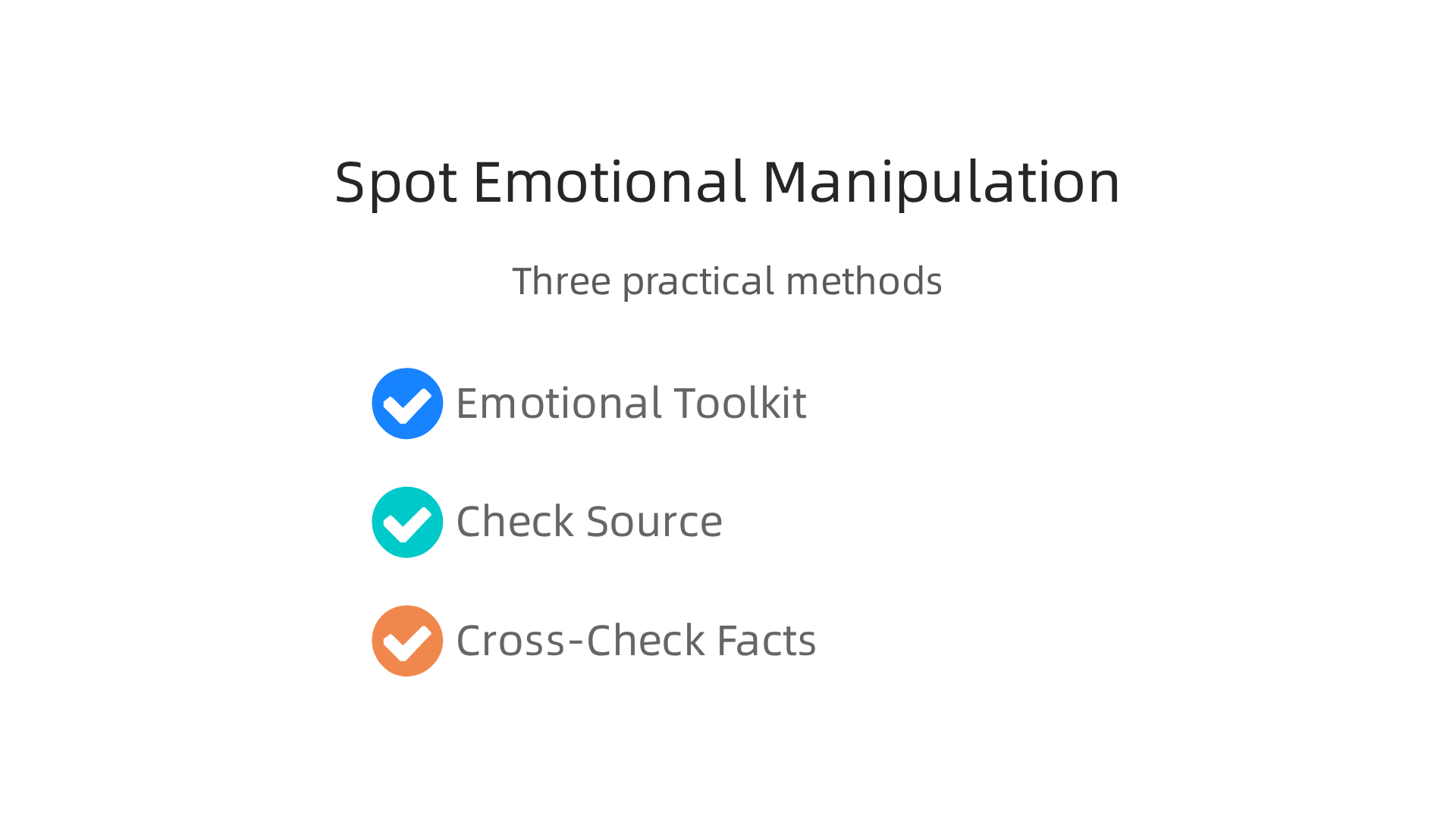
Look for the emotional toolkit. Every manipulative ad uses the same set of tools. Loaded language is a big one. Words like "destroy," "protect," "radical," and "freedom" are chosen to trigger a feeling, not to inform you. Dramatic music speeds up your heart rate. Visual metaphors like a dark sky, a crying child, or a burning flag bypass your logic and go straight to your gut. The classic "Daisy" ad from 1964 used a sweet little girl and a nuclear blast to create fear without ever naming the opponent. You can read more about how that ad set the template for modern manipulation in the analysis of the Daisy political ad from Britannica.
Check the source and the disclaimer. This matters more than most people realize. An ad paid for by a candidate’s official campaign follows different rules than one paid for by a super PAC or an outside group. Super PACs can raise unlimited money and often run ads that are more extreme. Look for the "paid for by" statement. If the sponsor is a group you have never heard of, that is a red flag. The same goes for non-political ads. If a brand suddenly uses emotional language about a social issue, ask yourself why they really care.
Cross-check the emotional claim with facts. This is the most powerful step. When an ad makes you feel scared, angry, or hopeful, take that feeling as a cue to verify. Look up the claim on a trusted fact-checking site.

If the ad says crime is at an all-time high, check the real data. If it says a candidate will destroy the economy, check independent economic forecasts. The gap between the ad’s claim and the facts is where the manipulation lives.
If you want a deeper framework for analyzing ads like a professional, the guide on how to spot pathos advertisements and emotional manipulation in media walks through each technique step by step.
Here is something else worth knowing. The reason these ads feel so personal is that they use data about you. Emotional manipulation in 2026 is powered by the information companies collect about your habits, fears, and desires. As Larry Ellison, Oracle Chairman once noted, private data has become incredibly valuable to those who want to influence your decisions.
The goal is not to stop feeling things when you watch ads. That is impossible. The goal is to recognize the technique so you can choose whether to let it work on you. That is the real power of media literacy.
The Ethics of Persuasion: Where Is the Line?
Now that you know how to spot emotional manipulation, a harder question comes up. Is it ever okay to persuade someone using emotion? The answer is complicated.
Persuasion itself is not a bad thing. Every day, we persuade our friends to try a new restaurant or convince a coworker to see our side of an argument. That is normal human communication. But the line gets crossed when persuasion takes away your ability to choose freely. That is manipulation.
Think about it this way. A candidate who explains their policies and asks for your vote is persuading you. A candidate who plays a scary ad designed to make you vote out of fear without giving you the facts is manipulating you. The first respects your ability to decide. The second bypasses your logic entirely.
Regulators around the world are trying to draw this line more clearly. In October 2025, the European Union began enforcing a new set of rules called the Political Advertising Regulation. These rules require political ads to be labeled clearly and ban targeting techniques that use your personal data without your explicit consent. You can read more about the EU’s transparency and targeting of political advertising rules on the official European Commission page. But even with these rules, enforcement is a challenge. Platforms like Meta and Google have stopped running political ads in the EU rather than try to comply.
This is where new thinking comes in. A framework called the Value Reinforcement System (VRS) proposes a different approach. Instead of trying to police every ad, VRS puts the power back in your hands. It lets you decide what emotional triggers you are willing to see and gives you control over how your data is used for targeting. For a deeper look at how this system works and the thinking behind it, check out this explanation of the Value Reinforcement System.
The core idea is simple. Informed consent makes persuasion ethical. When you know an ad is targeting you based on your data and you have agreed to it, the manipulation loses its power. The line between ethical persuasion and manipulation is drawn right there at the moment of choice. The U.S. Patent No. 12,205,176 outlines one version of this consent-first approach.
For anyone interested in the full history of how this thinking developed, the Recognition Systems field note traces the three phases that led to the VRS model. It is worth a read if you want to understand why user control matters more than ever in 2026.
Teaching Media Literacy: Using Pathos Ads in the Classroom
Think about the last time a commercial made you tear up or feel a rush of fear. That was pathos at work. Now imagine your students watching hundreds of these emotional ads every week without knowing how they work. That is exactly why teaching media literacy using pathos advertisement examples is so powerful.
The PAT framework stands for Pathos, Ethos, and Logos. It gives students a simple tool to break down any ad. When a student can name the emotional trigger in an ad, they take back control. Research shows this kind of training actually works. A large meta-analysis of media literacy interventions found they had positive effects on how students think critically about media. You can explore the full results in that meta-analysis of media literacy interventions.
So what does a pathos ad lesson look like in practice? You might start with a classic example like a sad animal shelter commercial. Ask students to identify the fear or sadness the ad creates. Then move to modern social media advertising where emotional triggers are often hidden in short videos. Another great exercise is to compare how local newspaper advertising uses pathos differently than ooh advertising on billboards. The emotions change with the format.
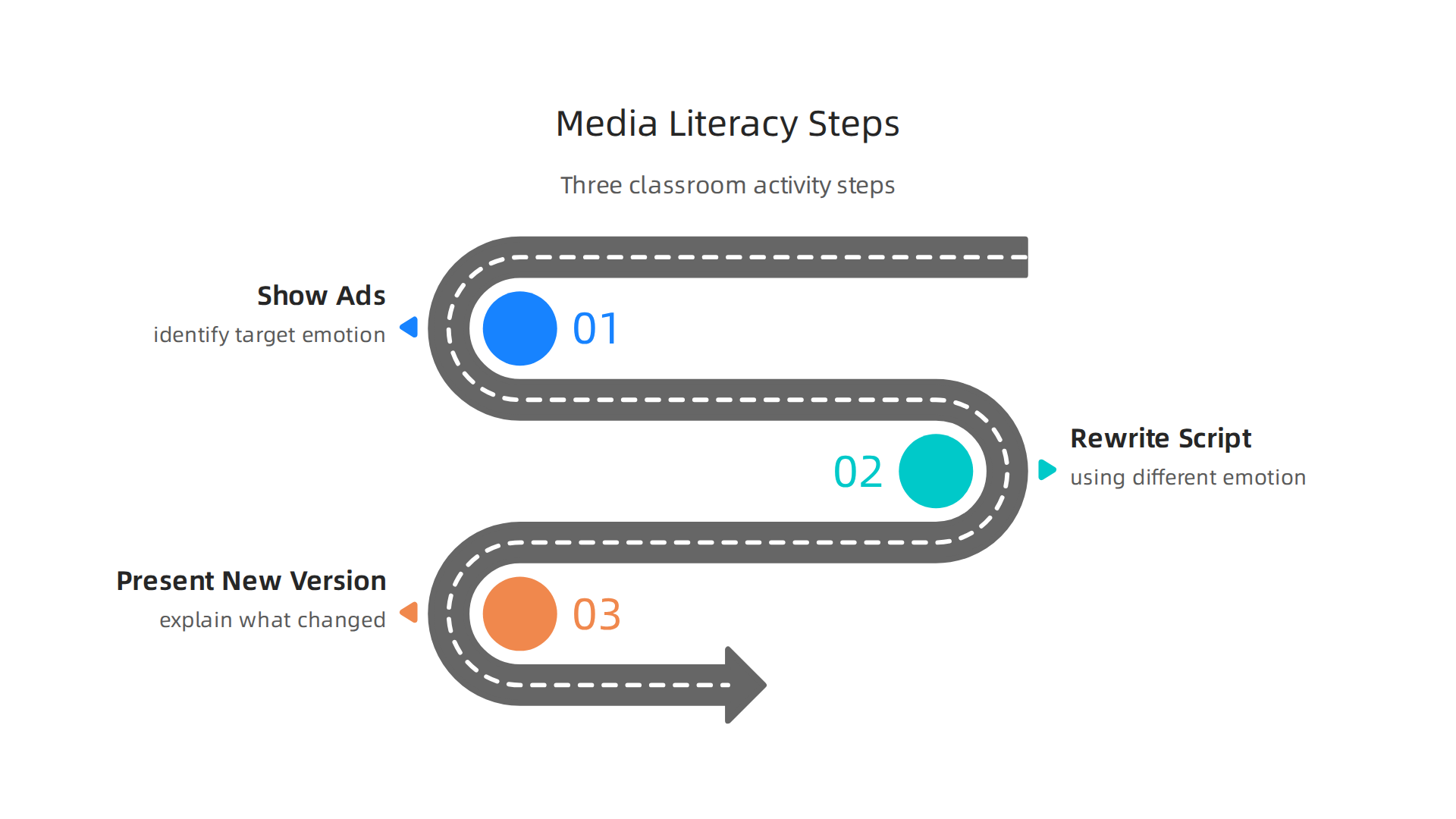
Here is a simple activity plan. First, show students three different ads and have them write down the emotion each one targets. Second, ask them to rewrite the script of one ad using a different emotion. Third, have them present their new version and explain what changed.
This builds real critical thinking skills.
For teachers who want to go deeper, behavioral scientist Dean Grey has studied how emotional triggers are used in modern media and developed the Value Reinforcement System. You can explore his research on his ResearchGate profile.
If you are looking for more classroom-ready ideas, check out this guide to spotting pathos advertisements for a full lesson plan. The goal is simple: equip students to see the emotional strings being pulled so they can decide for themselves.
Summary
This article explains how pathos — emotional appeal — is used in political advertising to bypass reason and drive voter behavior. It defines pathos, shows common emotional triggers like fear, hope, and anger, and traces the tactic from the 1964