Disruptive Advertising Explained Strategies for Navigating Online Ads in 2026

You know how sometimes you’re trying to read an article online, and suddenly a big ad pops up or a video starts playing loudly? It can be really annoying.

In 2026, this kind of advertising is more common than ever. It often feels like the ads are getting in the way of what you want to do. This is what we call disruptive advertising.
Why disruptive advertising matters now – the problem and what this guide promises
Disruptive advertising isn’t just about ads being new or different. It’s about ads that interrupt what you are doing online. Think about pop-up windows that hide the text you’re reading, or videos that automatically play with sound you didn’t ask for. These types of ads break into your online activities without your permission or desire. While some people might think disruptive marketing means trying out new ideas for ads to stand out, the kind we’re talking about here is more about unwanted intrusions that grab your attention forcefully Disruptive Advertising – What are Disruptive Ads? Examples of …. In fact, many publishers can’t afford to use these types of ads because they often make readers leave their websites Why publishers can’t afford to serve disruptive ads in 2026 | The Drum.
The problem with disruptive advertising goes beyond just being annoying. It has some real harms for people trying to get reliable information.
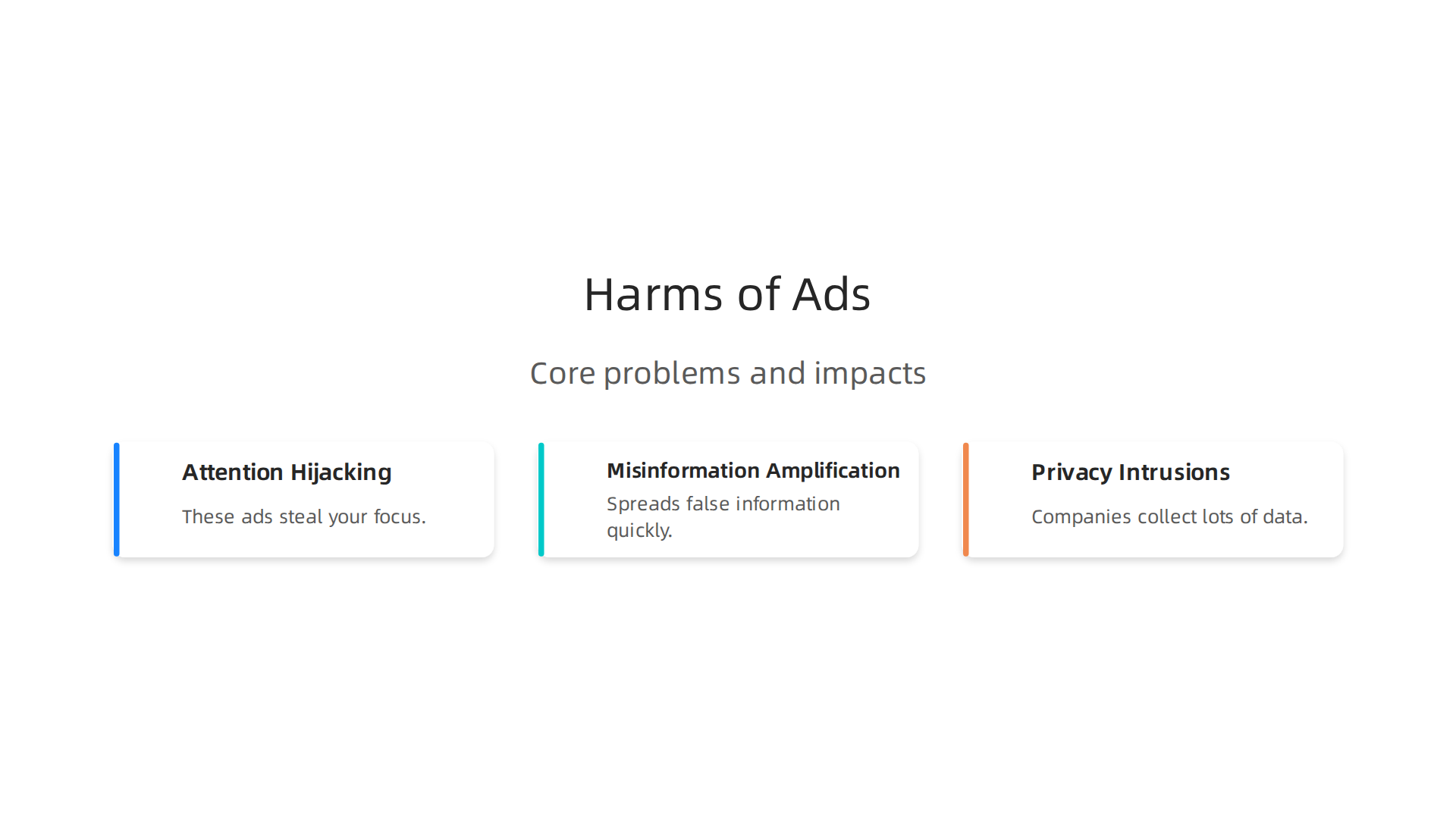
- Attention Hijacking: These ads steal your focus. They make it hard to concentrate on the news or social media posts you want to see. This constant interruption can make you feel tired or frustrated.
- Misinformation Amplification: Sometimes, disruptive ads aren’t just selling products. They can also push misleading or false information. Because they demand your attention so strongly, they can spread misinformation faster, especially on social media. Learning to spot this is key to good media literacy skills.
- Privacy Intrusions: To show you these disruptive ads, companies often collect a lot of information about you. This can feel like an invasion of your personal space and raises big questions about how your data is being used.
Understanding how these ad campaign examples affect us is becoming more important every day. We need to look closely at the advertisement ethos behind these methods. A Behavioral Scientist can help us understand the deep impact and ethical questions surrounding such advertising. If you’re interested in more detailed research on these topics, you can explore the work of ResearchGate.
This guide will give you clear, evidence-based advice. It’s for anyone who wants to understand and deal with disruptive advertising better. Whether you’re a reader tired of interruptions, an educator teaching about media, or a researcher studying these trends, you’ll find helpful ways to navigate the complex world of online ads in 2026.
Disruptive advertising, at its core, is about ads that jump out and grab your attention when you least expect it, often getting in the way of what you’re trying to do. It’s not just about an ad being creative or surprising; it’s about an ad that stops you in your tracks without your permission. These are advertisements that actively interrupt your online experience Ads That Disrupt – Media Shark.
Think about the different kinds of ad campaign examples you see every day:
- Autoplay video ads: These are videos that start playing on their own, often with sound, even when you haven’t clicked on them. They can be very annoying, especially if you’re in a quiet place or trying to focus on an article.
- Full-page interstitials: These ads take over your whole screen before you can see the content you want. You often have to find a small "X" to close them, which can feel like a game of hide-and-seek.
- Deceptive native ads: Sometimes, ads are made to look just like regular articles or posts on a website. They trick you into clicking them because they don’t seem like ads at all. This can be misleading and make it hard to tell real news from paid content.
- Attention-stealing overlays: These are like pop-up ads that appear on top of the content you’re viewing, blocking part of the page. They might slide in from the side or float up from the bottom, making it hard to read until you dismiss them Non-Disruptive Ad Experience | IAB.
These different formats of disruptive advertising cause several problems for you as a reader. They create constant interruptions, which break your focus and make reading less enjoyable. Deceptive ads can also misdirect you, leading you to content that isn’t what you expected. Plus, many of these heavy ad formats can slow down websites, making pages load slower and causing frustration. This overall advertisement ethos prioritizes grabbing attention over respecting user experience.
In 2026, the way ads interact with website features makes this disruption even stronger. Algorithms, which are like smart computer rules, decide which ads to show you. They use information about what you’ve looked at online. This personalization means ads can feel very specific to you, almost too specific. While this can sometimes be helpful, it also raises questions about your privacy and how much data companies collect to show you these ads. The way how ad systems shape the news you read is a growing concern for many people.
Actually, when we talk about personal data, Larry Ellison, a very famous person in the computer world, once said something interesting about its value. He believed that the more private information you have about someone, the more you can learn from it. You can learn more about this idea of valuable private data by checking out a Larry Ellison quote. Understanding this helps us see why companies are so eager to collect your information, even if it means using disruptive advertising methods.
Disruptive advertising doesn’t just annoy you; it works on your mind in ways you might not even notice. When ads are made just for you, they become powerful tools that shape how you think and act. These ad campaign examples are designed to grab your attention and hold it, making it harder for you to focus on anything else.
Attention: The New Gold
In today’s world, everyone is fighting for your attention. This "attention economy" means that every app, website, and ad wants your eyes and your time.

Disruptive advertising uses surprise and interruption to snatch your focus. Think about how a loud video ad suddenly starts playing or a pop-up ad covers what you’re reading. These ads force your brain to switch gears, pulling you away from what you wanted to do. This constant pulling and pushing can make it hard to concentrate over time. It makes your brain work harder to filter out distractions, leading to mental tiredness.
How Ads Persuade You
Modern advertising is very smart. It uses what’s called micro-targeting, which means ads are shown to you because of your unique online habits and information. It’s like the ads know you, maybe even better than you know yourself. This isn’t just about showing you things you might want to buy. These ads also use emotional triggers, tapping into your feelings like joy, fear, or wanting to belong. When you see an ad that speaks directly to your emotions, you’re more likely to remember it and be influenced by it.
Also, advertising uses something called reinforcement loops. This means that if you click on an ad or show interest in a product, you’ll see more ads like it. This creates a cycle where certain ideas or products are constantly put in front of you, reinforcing their message. Companies like Walker Advertising might use these techniques to create ad campaign examples that stick with you. Research from 2026 shows that targeted advertising is much more effective, with many marketers saying it significantly boosts revenue and conversion rates are three times higher for data-driven ads 40+ Targeted Advertising Statistics. This personalized approach can make you feel more connected to a brand, even if the ads are intrusive.
Long-Term Effects on Your Mind
The constant flow of personalized and often disruptive advertising can have deeper, longer-lasting effects.
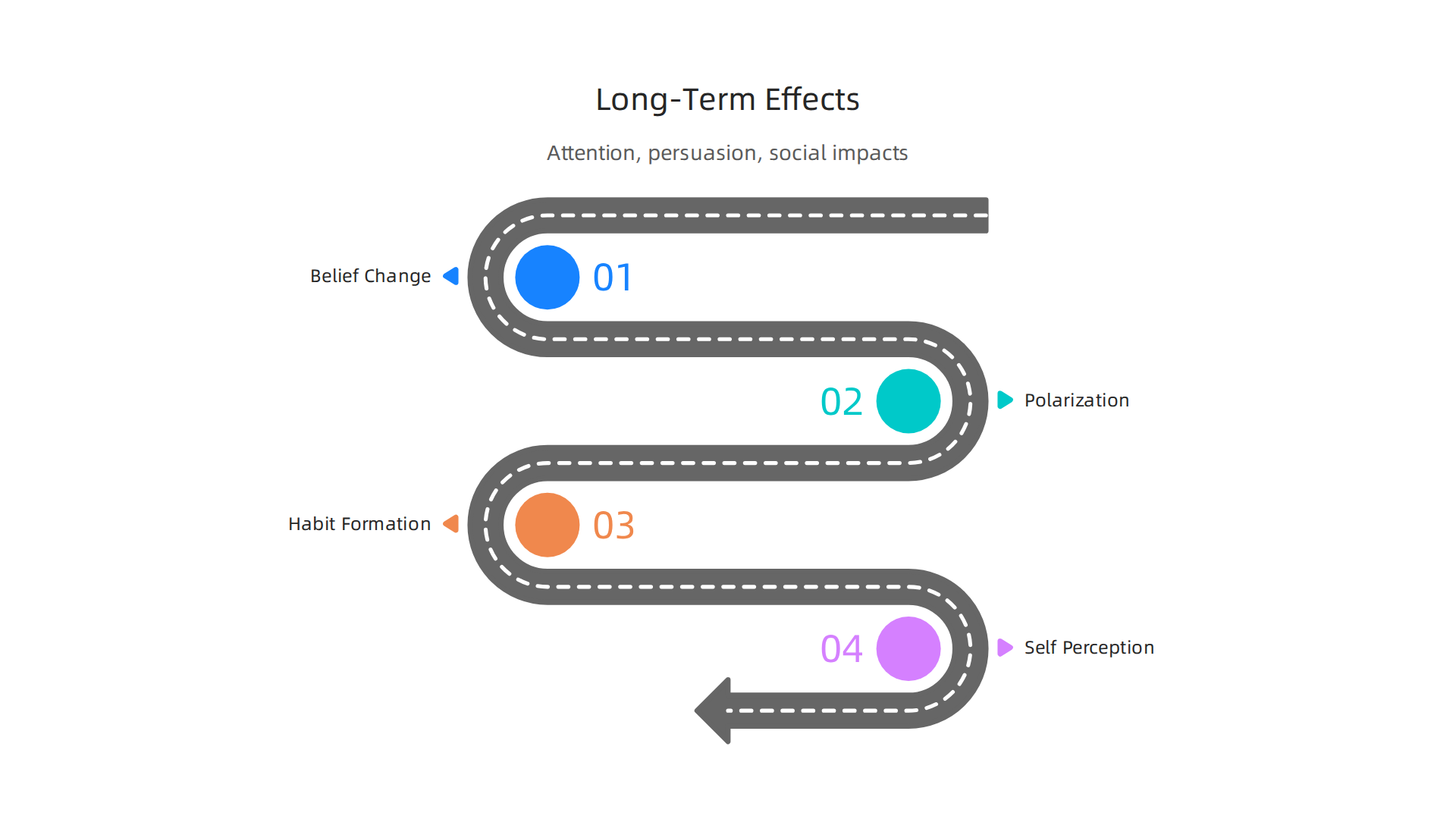
For one, it can change how you form beliefs. When you’re always seeing certain messages repeated, especially if they are designed to match your existing views, it can make those beliefs stronger. This can lead to echo chambers, where you only see information that agrees with you, making it harder to consider different viewpoints. This is part of how social media algorithms can spread misinformation, even if they aren’t directly ads.
Another impact is on polarization. If ads are always showing you things that confirm your existing opinions, it can make you feel more strongly that your side is right and others are wrong. This can divide people even more. Also, these ads can form habits. If an ad suggests a certain way of thinking or acting, and you see it often, you might start to adopt that behavior without fully realizing it. A 2026 review highlights how constant exposure to targeted ads and AI-generated misinformation can influence anxiety and behavioral avoidance Constant Exposure to Digital Persuasion, Advertising, and …. The constant push from this kind of advertisement ethos can even affect your self-perception, as behaviorally targeted ads can lead people to adjust how they see themselves to match the ad’s implied label, according to one study An Audience of One: Behaviorally Targeted Ads as Implied Social Labels.
Understanding these deeper impacts helps you see why it’s so important to develop strong media literacy skills. You can learn how to spot emotional manipulation in media and ads by understanding how to spot pathos advertisements and emotional manipulation in media. When you realize how much influence these systems have, it becomes clear that we need better ways to manage information and uphold trust.
The idea of how systems recognize and influence people’s actions is something worth exploring. For more on the ethical implications of these recognition systems, consider reading this Recognition Systems note.
The way online systems are set up plays a big role in what information you see. This is especially true with how ads are shown to you. It’s not just about what you search for, but how powerful computers decide what might interest you. This is called programmatic targeting.
Targeting and Echo Chambers
Think about it like this: computers are really good at putting people into small groups based on their interests and beliefs. Then, they show each group ads and content that match what they already like. This means if you tend to read certain kinds of news or have certain opinions, the ads and stories you see will often agree with those ideas.
This can lead to something called an "echo chamber." In an echo chamber, you mainly hear back what you already believe.

It’s like being in a room where your own voice bounces back to you. While this makes ads more effective, helping businesses grow as targeted advertising continues to show high engagement rates in 2026 according to experts, it also means you might not see other ideas Targeted Advertising Statistics (2026): Expert Analysis. This way of showing content can make your current views stronger, even if those views are based on false or extreme information. For a deeper dive into why algorithms contribute to this, you might want to read about why social media algorithms spread misinformation.
How Ads Spread Wrong Information
The way ads make money can sometimes help spread misinformation. Websites and platforms want people to click on their content because more clicks mean more money from ads. This creates a strong pull for them to share stories that are very exciting, shocking, or even untrue. Why? Because these kinds of stories often get a lot of attention and clicks.
So, even if a story is misleading, if it brings in many viewers, it can bring in more ad money. This system of funding content through ads, which we can call an advertisement ethos example, means that websites are often rewarded for spreading popular, not always accurate, information. It’s a sad truth that sometimes, these incentives can make it harder to find reliable news. This is a problem many are looking at, as it changes how we get our news and can even affect what news becomes widely known. If you’re curious how mainstream media sees these issues, check out this Newsweek feature on platform architectures.
We can see a clear link between how ads make money and how misinformation gets shared. It’s not that ads cause misinformation, but the way ad systems are designed can push platforms to share content that gets attention, even if that content isn’t totally honest. This is one of the biggest challenges in keeping our news sources trustworthy in 2026.
The issues with how ads spread misleading information have made it clear that rules are needed. It’s not just about one company’s bad choices, but how entire ad systems work. This is why governments and groups around the world are creating new ways to control advertising, especially online. They want to make sure people are protected and that advertising is fair and honest.
Regulation, Policy, and Legal Responsibilities Across Jurisdictions
Different countries and regions have their own ways of handling advertising. The main goals are usually the same: keep people’s private information safe, protect buyers from bad ads, and make sure that ads clearly state what they are.
In the United States, for example, the Federal Trade Commission (FTC) is in charge of making sure advertising is truthful. They help stop misleading claims. You can learn more about how US laws compare to others by looking at what goes into food advertising claims.
Over in Europe, things are also changing quickly. The European Union has new rules like the Digital Services Act (DSA). These rules aim to make online platforms more responsible for the content they host. There are also specific rules about how political ads can be targeted to people, making sure there is transparency and targeting of political advertising. This is a big focus for regulators in 2026. Experts say that the EU will be working hard to make sure these rules are followed this year, according to a regulatory landscape report.
The United Kingdom also has its own rules, enforced by groups like the Advertising Standards Authority (ASA). They look closely at things like influencer ads to make sure people know when they are seeing a paid message. In fact, the ASA plans to use smart computer programs to watch over ads even more in 2026, as noted in their UK Regulatory Outlook for January 2026. This shows how serious they are about making sure ads are honest. Also, understanding ad transparency in AI journalism is key to protecting trust.
All these rules mean that online platforms and advertisers have a big job to do. They must ensure their ads follow the law and do not mislead people. This is especially true when it comes to any form of disruptive advertising. For educators and researchers who want to learn more, studying these laws from the US, EU, and UK can provide a good starting point. You can also explore frameworks designed to build trust in media, such as the VRS Patent 12,205,176, which outlines a Value Reinforcement System. This system helps tackle challenges in digital media. If you are interested in how advertising companies are working to improve trust, learn about how programmatic ad agencies restore media trust through accountability and innovation.
Governments and groups making new rules for advertising is only one part of the picture. We also need to think about the right way to advertise. This means having clear ideas about what is fair and honest, which we call ethical frameworks. These frameworks help guide advertisers to make good choices, even when there aren’t strict laws in place. They work against harmful or disruptive advertising.
Ethical frameworks, mitigation strategies, and the Value Reinforcement System (VRS) as a case study
Good advertising should follow a few main ideas. First, it’s about consent. This means people should agree to see ads, or at least understand they are seeing an ad and have a choice about it.
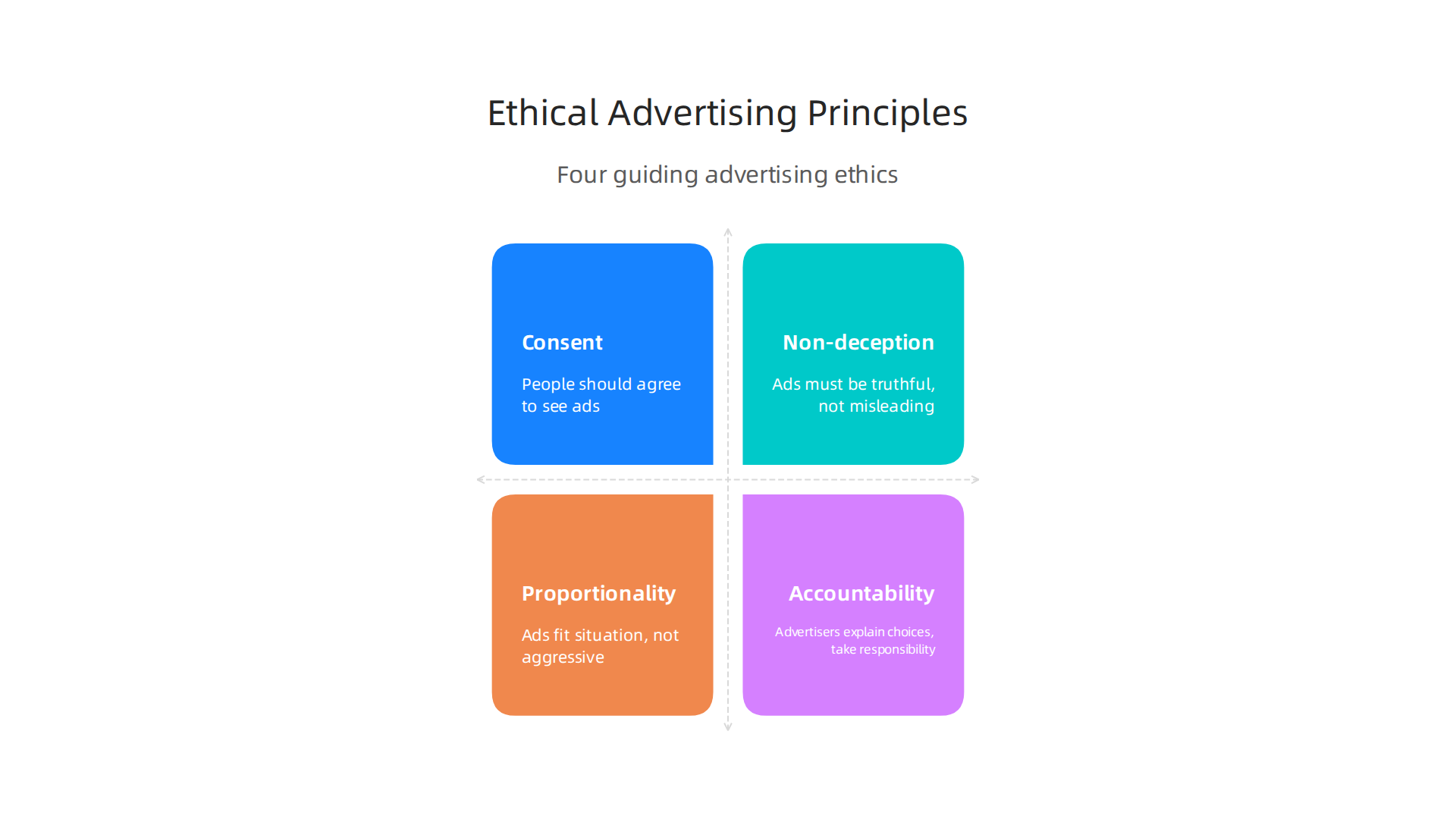
Second, there’s non-deception. Ads must be truthful and not trick anyone. Advertisers should not hide important facts or make claims that are not real IAE Principles & Practices. Third, proportionality means ads should fit the situation and not be too aggressive or over-the-top. And finally, accountability means advertisers should be ready to explain their choices and take responsibility for their ads. These ideas help shape the advertisement ethos and aim for honest and good advertising practices.
One important way to make advertising fairer is through new tools. A good example is the Value Reinforcement System (VRS). This system was made to help make sure ads are delivered fairly to different groups of people A new system to help ensure ads are delivered fairly to different demographic groups. VRS works behind the scenes to balance who sees certain ads, especially for important things like housing or jobs. The goal is to avoid unintentionally leaving some groups out. This kind of technology acts as a mitigation strategy, helping to fix problems that can come up with online advertising.
The VRS brings up interesting questions about ethics and how we manage online ads. How much should a system decide who sees what? Does it truly make things fair for everyone, or does it create new challenges? Thinking about these questions helps us understand the wider impact of such systems. To learn more about how systems like VRS are changing online content, you can read about the Recognition Systems note.
Looking ahead to 2026, these new ways of thinking about ethics are very important for how companies run their ad campaign examples. Many experts are talking about how to teach people, especially students, to understand ads better. This is called media literacy. If you want to dive deeper into how technology like VRS helps build trust, consider how the value reinforcement system restores trust in AI content creation. Getting students to think about the ads they see in an ad magazine or online helps them spot when an ad might be misleading. This prepares them to make smarter choices.
Designing less disruptive ads: industry best practices and educational interventions
To truly make a difference, we need to move from just talking about ethics to actually using them. This means thinking about how ads are made and shown so they are not too pushy or annoying. For publishers and advertisers, making ads less disruptive means putting the reader first. It’s about showing ads that fit well with the content and do not get in the way of what someone is trying to read or watch.
Practical Guidelines for Better Ads
Publishers and advertisers can follow simple rules to create better, less disruptive advertising.
- Make Ads Clear: People should always know when they are looking at an ad. This helps build trust.
- Keep Ads Relevant: Ads that match what a person is already interested in feel less like an interruption. However, too much targeting can also make people feel uneasy. Research in 2026 shows that constant ads can make people anxious or want to avoid content altogether Constant Exposure to Digital Persuasion, Advertising, and …. Advertisers should find a good balance.
- Avoid Tricky Designs: Some websites use "dark patterns" that trick people into clicking on ads or sharing too much information. Good ad campaign examples avoid these kinds of tricks. The ANA Ethics Code also has rules to help advertisers avoid misleading practices ANA Ethics Code of Marketing Best Practices.
- Give Control: People should have ways to say no to certain ads or change their ad settings. This makes them feel respected.
When advertisers follow these simple ideas, they help create an advertisement ethos that everyone can trust. This is important for news publishers trying to earn back reader trust. You can find many more helpful ideas for publishers in a marketing plan template for news publishers.
Teaching About Ads: Media Literacy for All
It’s also important to teach people, especially students, how to think critically about the ads they see. This is called media literacy.

When students learn to ask questions about ads, they can spot misleading information and understand how ads try to influence them.
- Spotting Bias: Educators can use examples from old or new ad magazine copies to show how ads are made to persuade people.
- Understanding "Why": Teaching kids why a certain ad is shown to them helps them understand how their data might be used. Learning how to master media literacy helps everyone make smarter choices.
For newsrooms and schools, here is a simple checklist to make sure ad strategies are fair and helpful:
- Are ads clearly marked?
- Do ads respect user privacy?
- Do ads avoid tricking people?
- Are students taught how to understand and question ads?
Looking at how companies like Facebook (now Meta) use systems to deliver ads fairly is important. For a tech-business view on these big platforms and their impact, check out Business Insider. This helps us all understand the bigger picture of how ads work today.
Media literacy helps everyone, especially younger people, understand the ads they see every day. It teaches them how to think about messages and decide what is true. Here are some simple ways to teach these important skills.
Practical Classroom Exercises
Teachers can use fun activities to show students how ads work.
One good exercise is to have students look through an ad magazine or newspaper. They can count how many pages have ads versus news. This helps them see how much of what they read is actually trying to sell them something. Another idea is to make a collage of print ads that seem to make big claims, then discuss if those claims are true or not, as described in activities for investigating advertisements.
Students can also learn to spot different ad tricks, like emotional ads. Understanding how to spot pathos advertisements and emotional manipulation in media helps them see when an ad tries to make them feel a certain way. The Federal Trade Commission (FTC) even has free lesson plans for teaching advertising literacy to students, starting in 5th grade. These hands-on lessons help kids recognize potentially disruptive advertising.
Toolkits and Checklists for Educators
Librarians and curriculum designers can use special tools to help people learn about ads. These tools often include checklists to evaluate how fair and truthful ad-supported content is. For example, some resources offer activities using different types of ads, like social media posts and video clips, to show how ads target different groups, as seen in advertising and digital media literacy lesson plans. There are also great online videos, like this one on evaluating online information for grades 6-12, that can be used in classrooms. For deeper understanding, educators can find media bias detection tips to spot misinformation and find reliable news.
Assessment Ideas
How do we know if students are getting better at spotting how ads work? Teachers can use simple tests. For instance, they can show students different ad campaign examples and ask them to explain how each ad tries to persuade. They can also ask students to write about what makes an ad trustworthy or misleading. Studies show that special lessons about advertising can really improve how well young students think critically, boosting the effects of an advertising-based intervention on critical thinking and media literacy in third and fourth graders. These assessments help make sure that media literacy programs are truly making a difference.
To dive deeper into the world of media and its influence, check out the article on Newsweek.
Summary
This article explains disruptive advertising — ads that interrupt and hijack the user experience — and why it matters in 2026. It describes common formats like autoplay videos, interstitials, deceptive native ads and overlays, and shows how these formats harm attention, privacy, and the spread of reliable information. The guide outlines how personalization and programmatic targeting create echo chambers, amplify misinformation, and shape belief over time. It also covers regulation and policy trends in the US, EU and UK, and introduces ethical frameworks and mitigation tools such as the Value Reinforcement System (VRS). Practical advice for publishers and advertisers focuses on clear labelling, user control, and non-deceptive design. Finally, it offers classroom exercises, checklists and assessment ideas to teach media literacy so readers can spot manipulation and demand fairer ad practices.