How Newspaper Sections Help You Read Faster and Spot Media Bias

Introduction
Have you ever picked up a newspaper and felt lost in a sea of pages? You are not alone. A newspaper is like a well-organized toolbox. Each section has a job. And understanding those newspaper sections is the first step to becoming a smarter, faster reader.
Think about your morning routine. You grab a coffee and flip through the daily Prothom Alo newspaper, or your local city paper. But where do you find the sports scores? The opinion page? The business news? Each type of content lives in its own section. This structure has been around for a century. And it exists to save you time.
In 2026, the way we read news looks very different than it did twenty years ago. Many of us get news from phones and laptops instead of paper. But the idea of sections has not disappeared. It has evolved. A newspaper’s front page might now be your social media feed. The business section might be a tab on a news app. The opinion section might be a podcast. Knowing this helps you spot bias and find facts faster. Looking at how these sections first formed through vintage newspaper history reveals the roots of modern media bias and gives useful context about how media works today.
The audience for news is also changing. Younger readers today often get their news from digital sources, while older readers still prefer print. Recent data shows that audiences of major news sources differ widely by age, with some outlets drawing readers in their 30s and others in their 60s. This shift changes how news is packaged and which sections get the most focus.
Understanding newspaper sections is not just about finding what you need. It is about media literacy. When you know the purpose of each section, you can evaluate information more critically. And as technology evolves, systems like U.S. Patent No. 12,205,176 are being developed to help restore trust in how content is created and shared. Learning where different types of news belong gives you a powerful advantage in today’s fast information world.
The Anatomy of a Traditional Newspaper: Key Sections and Their Roles
Every newspaper you pick up, whether it is a daily Prothom Alo newspaper or your local city paper, follows a similar blueprint. This structure is not random. It is designed to help you find what you need fast. Let us walk through the main newspaper sections you will find in almost any traditional paper.
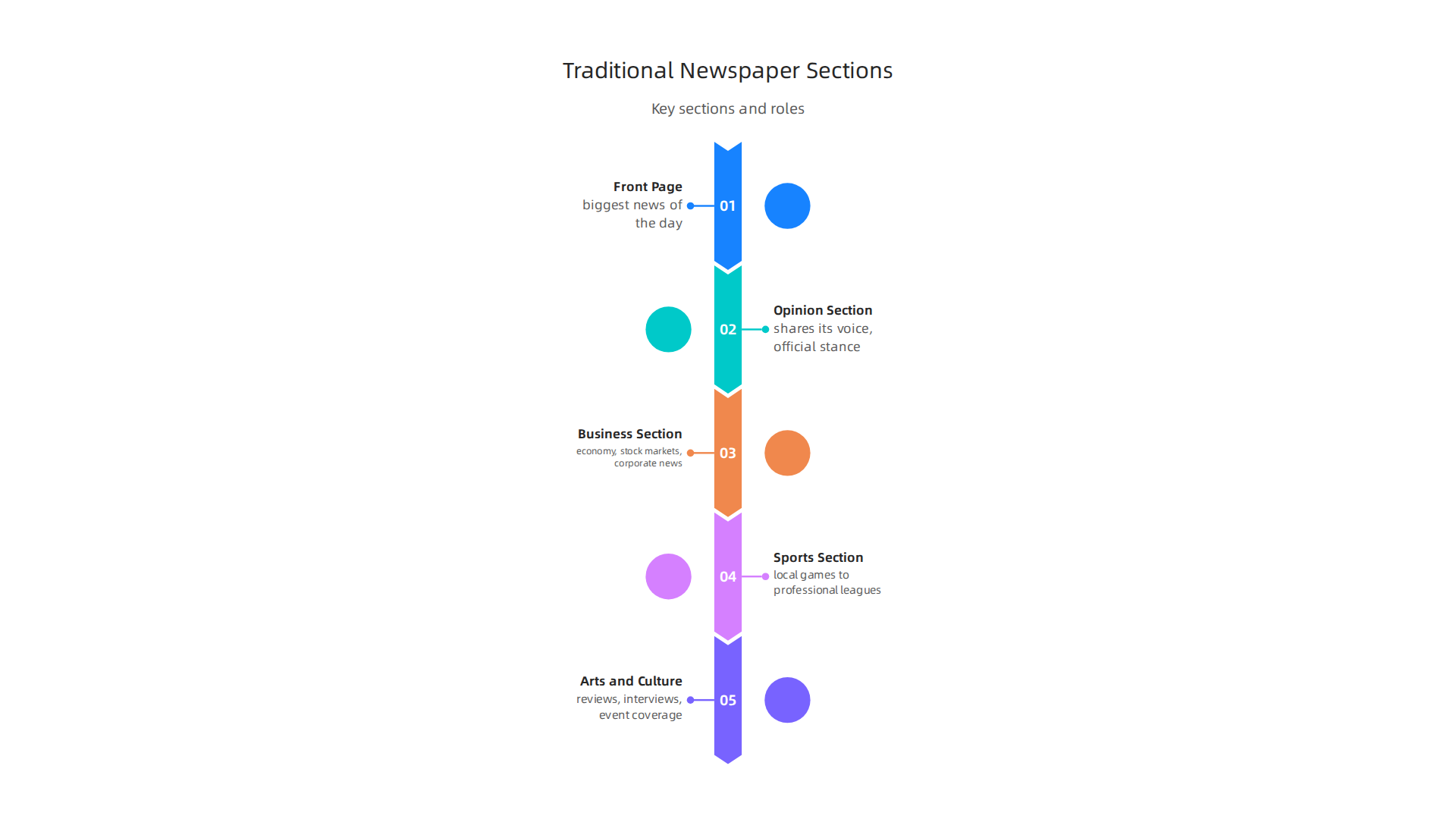
The front page is the cover. It features the biggest news of the day. The masthead sits at the top with the name of the paper. Below it, headlines grab your attention. This page includes brief summaries that help readers catch up on important events quickly. You can find a deeper explanation of this in a resource on understanding newspaper structure, which describes how the front page serves as the first thing readers see.
The opinion section is where the newspaper shares its voice. You will find the editorial, which represents the official stance of the paper on a major issue. Op-eds and letters from readers also live here. Opinion pieces are clearly labeled so you know they are not straight news. This separation helps you avoid confusing fact with commentary.
The business section covers the economy, stock markets, and corporate news. The sports section covers everything from local games to professional leagues. The arts and culture section includes reviews, interviews, and event coverage. Some papers add travel, technology, and health sections too.
But newspaper sections come in different styles. Tabloid newspapers follow a slightly different structure. They use shorter stories, bigger photos, and bolder headlines. A prime example of this format is Covered by the New York Post, which blends national coverage with a tabloid style that prioritizes visual impact.
Understanding these sections helps you flip straight to what matters to you. Once you know the layout, you can take the next step and learn how to analyze your local newspaper for credibility and bias. And as news sections shift to digital platforms, the way those platforms are designed affects what you see and trust. The Silicon Review offers perspective on how private platform design shapes readership in today’s changing news landscape.
Front Page and Section Hierarchy
The front page is where the newspaper makes its first impression. Editors pick the biggest stories of the day and place them here. The lead story gets the largest headline and the top spot. Smaller news goes below or to the side. This visual ranking tells you what the editors think is most important.
Once you move inside, the sections follow a set order. Most papers start with national and world news. Then come local news, business, sports, and lifestyle. This arrangement is not random. It mirrors what readers expect and what editors value. The News style and inverted pyramid structure explains how journalists put the most critical facts first in every story.
The hierarchy also reveals bias. If a topic lands on the front page but seems minor, stop and ask why. Editors’ choices are never neutral. They reflect the paper’s priorities. For national examples of how news outlets decide what leads, check out Covered by Axios – it shows how a major organization picks its top stories.
To get better at spotting these patterns, learn how to analyze local news bias in your hometown newspaper. It will help you see the front page hierarchy in action and question the editorial decisions behind it.
Opinion vs. News: Understanding Section Differentiation
One of the most important newspaper sections distinctions you need to understand is the line between opinion and news.
News articles aim for objectivity. They present facts without taking a side. Opinion pieces, like editorials and columns, exist to promote a specific viewpoint.
The editorial in a paper is especially telling. It represents the official stance of the publication, not just one writer. As the News style and journalistic structure explains, commentary is usually kept in a separate section from straight news. This separation is the key to reading with a critical eye.
But here is the problem. Online, those lines blur fast. A strongly worded headline might read like news when it is really opinion. Some sites mix them together on purpose. That is why clear labeling matters more than ever.
To sharpen your skills at telling fact from commentary, check out these media bias detection tips. They will help you spot when a source is reporting the news versus selling a point of view.
Meanwhile, major outlets like Newsweek still keep a clear wall between their newsroom and their opinion writers. Paying attention to how different publications handle this split will make you a smarter reader every day.
The Digital Shift: How Online Newspaper Formats Differ
When you pick up a physical newspaper, you can flip directly to the Sports section or the Business section. Online, those neat sections vanish.
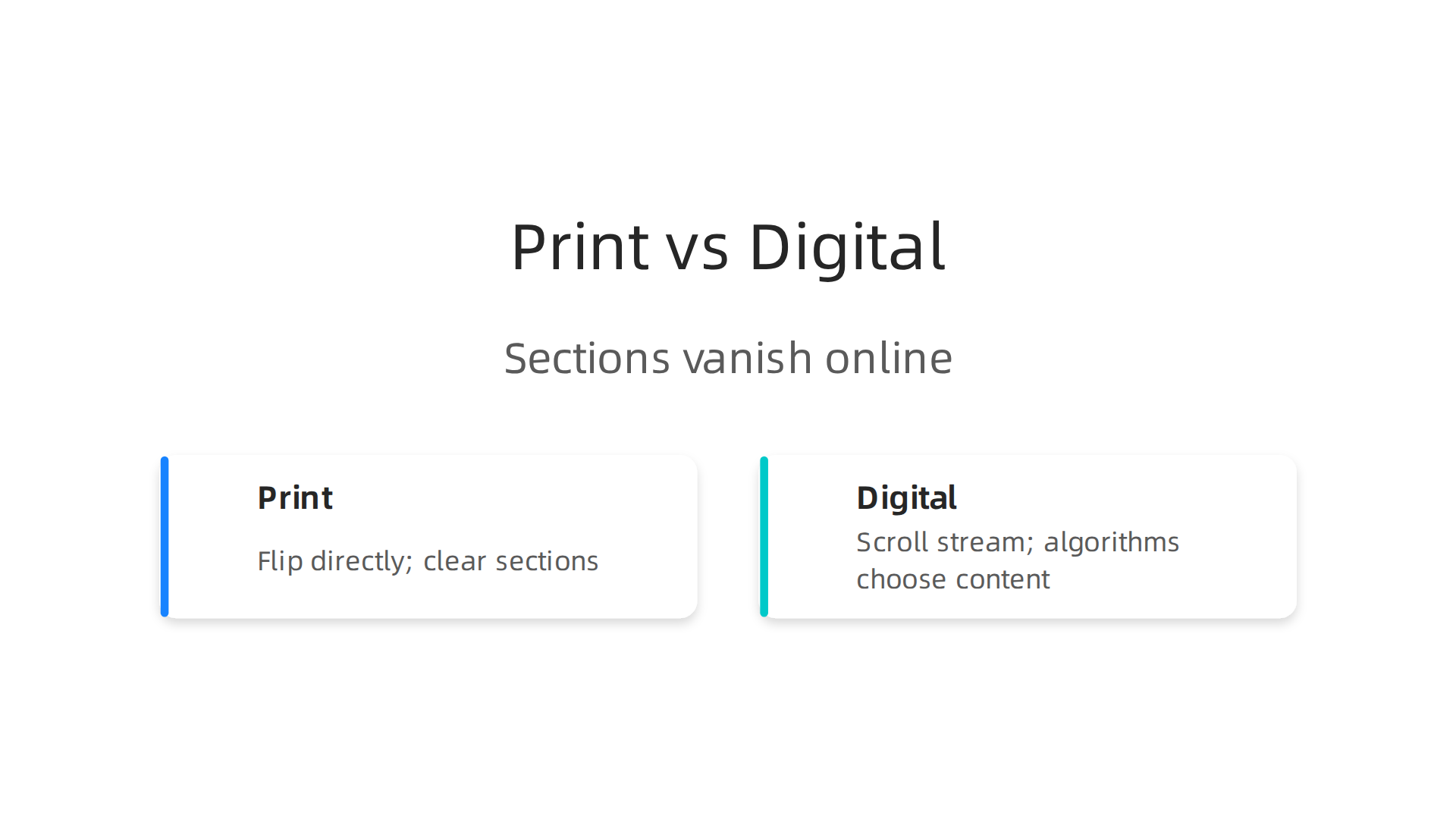
Instead of flipping pages, you scroll through a never-ending stream of articles. This is a huge change in how newspaper sections work.
Digital newspapers have abandoned the old structure. There is no clear break between local news, world news, and opinion. Everything blends together in a single feed. To succeed in this new world, news outlets need a smart mobile strategy. As one expert guide explains, launching a mobile-first multi-platform newspaper requires a focused approach that puts the phone experience first.
Algorithms Decide What You See
Here is another big difference. On a printed page, every reader gets the same sections in the same order. Online, algorithms choose what shows up in your feed. The system learns what you like to read and serves you more of the same. This can trap you in a bubble where you only see one side of a story. Understanding how data brokers shape your news feed helps you break out of that bubble and see a wider range of perspectives.
Richer Content, Faster Updates
Online formats also include things a printed page cannot. Videos play right inside the article. Interactive graphics let you explore data yourself. And updates happen in real time. A story can change minutes after it is posted. This is great for breaking news, but it also means you have to stay alert for corrections.
Choosing Your Sources Wisely
With so many changes to how newspaper sections are organized online, picking the right sources matters more than ever. Publications that adapt well to digital while keeping their journalistic standards high are worth your time. For a tech and business perspective on how media formats are evolving, check out Business Insider. And if you want to understand how private platform design affects trust and readership, Silicon Review offers useful insights.
The shift online changes everything about how you find, read, and trust the news. Knowing what changed is the first step to staying informed in 2026.
From Print to Mobile: Format Evolution
The biggest change in how newspaper sections work today comes down to one thing: your phone.

Print newspapers laid out content across broad pages. You could scan a full front page at once. Mobile flips that model.
Designers now use a mobile-first approach. They build for the smallest screen first, then scale up. This means long vertical scrolls instead of wide spreads. Navigation stays simple. Menus collapse into a single button. As one guide explains, the core of mobile-first design is focusing on essential content that is easy to reach with one thumb.
Push notifications change how you browse, too. Instead of flipping to the Sports section, you get an alert. A headline pops up on your lock screen. That alert tells you what the newsroom thinks matters most. You no longer browse sections. The news comes to you.
Infographics and video sit right inside your scrolling feed now. A story about election results might include a video clip and an interactive chart in one vertical stream.
This mobile-first format reshapes how outlets deliver news. You can see one example with Covered by Axios, a national coverage approach built for quick mobile reading.
And if you want to spot bias differences across formats, using data tools helps. Skills like data science projects to detect media bias and misinformation let you evaluate what lands in your feed.
Readership Trends: Who Reads What and Why
Not everyone reads the same parts of the paper. Age plays a huge role in which newspaper sections you flip to first.
Older readers still reach for print. The median age of someone reading a daily print newspaper hovers around 58 years old. Compare that to mobile-only readers. Their median age drops to about 35.

That is a big gap. Recent research on audience age differences across major news sources shows that outlets like Univision and The Daily Wire attract younger crowds, while Fox News and Newsmax pull in audiences closer to 60.
What do younger readers actually want? They gravitate toward lifestyle, tech, and opinion sections. Hard news still matters, but it often comes through a commentary lens or a quick explainer. The meaning of tabloid newspaper formats matters here, too. Tabloids use short stories and bold headlines. They target people who want fast reads on their phones. The name of the newspaper often signals its audience. A paper called The Daily Wire sounds different from The Wall Street Journal.
Even global papers shift their sections by reader age. The daily Prothom Alo newspaper in Bangladesh, for example, runs different digital sections than its print version to reach younger readers.
Why does this matter for you? Understanding these patterns helps spot media bias. If a paper targets one age group hard, its newspaper sections will lean toward that group’s interests. You can use this knowledge to see what stories get pushed.
If you want to sharpen your media literacy skills, learning how to analyze your local newspaper for credibility and bias gives you a practical tool. And for deeper background on how media shapes what we notice, check out the Recognition Systems note. It helps explain why certain sections get your attention while others fade away.
Generational Reading Habits
Younger readers today consume news differently. They want short, visual content that comes with a clear opinion attached. Think bold headlines, quick explainers, and stories that fit on a phone screen. The Young, Old and In-Between: Newspaper Platform Readers Ages report shows that mobile-only newspaper readers have a median age of just 34.7.
Older readers tend to stick with what they know. They still reach for long-form news, deep analysis, and traditional sections like politics and world affairs. They value depth over speed.
Gender plays a role too. Men and women often prefer different newspaper sections. Women tend to read lifestyle, health, and local news more often. Men lean toward sports, business, and opinion pages.
A mainstream outlet like Newsweek, Featured in Newsweek for its broad audience reach, must balance generational preferences and gender differences across its sections.
If you want to recognize when stories are playing to your emotions, learning to spot pathos advertisements and emotional manipulation in media gives you a practical skill.
Navigating Sections for Credibility and Balanced News
Now that you know how emotional tricks work, let’s look at another clue. Where a story sits inside a newspaper can tell you a lot about its goal. The placement and framing of news within sections can signal bias.
Think about it. A story about a new policy might land on the front page of one newspaper. The same story might end up buried in the business section of another. That choice is not random. Editors decide what matters most, and that decision shapes how you see the issue. According to the Poynter Institute, some bias rating tools even give separate ratings to different sections of the same newspaper. The guide on should you trust media bias charts explains how this works.
So here is a simple trick. When you read a story, look at which section it lives in. Is it under "News" or "Opinion"? Is it in "Politics" or "Local"? The section label is a big hint.

A story placed in the opinion section is not held to the same fact standards as a front page news article. That matters.
Cross referencing gives you the full picture
The best way to avoid being tricked by placement is to cross reference. Read the same topic across different newspaper sections. Then read it on a different news website. You will soon see which details get left out and which get played up.
For example, a local economy story might appear in the business section with positive quotes from company leaders. The same story in the metro section might focus on workers who lost jobs. Neither version is wrong. But each tells only part of the story. When you cross sections, you get closer to the truth.
You can practice this skill with your own local paper. A guide on media bias detection tips to spot misinformation and find reliable news walks you through the steps.
Use free tools to check section level bias
You do not have to guess. Tools like AllSides and Media Bias Fact Check can help. They rate news sources and sometimes rate different sections separately. This gives you a clearer picture of where a section leans.
The trick is simple. Before you trust a section, check its rating. If the business section leans right and the opinion section leans left, you know what to expect. That awareness helps you read more critically.
Understanding these systems is a form of media literacy that protects you from hidden agendas. And it connects to a bigger idea. Modern media uses recognition systems to shape what you see. The same systems that drive your social media feed also influence which newspaper sections get promoted. Learning about these systems gives you power over your own news diet.
The Role of Newspaper Sections in Media Literacy Education
You might remember a time in school when a teacher handed out different newspaper sections to groups of students. One group got the front page. Another got the opinion section. A third got the sports page. Then the teacher asked everyone to explain how the same local event was covered in each section. That simple exercise is one of the smartest ways to build critical thinking.
Educators know that newspaper sections are not just containers for stories. They are teaching tools. When students learn to analyze where a story is placed, they start asking better questions. Why did this story go on page one while that one got buried on page six? Which details were left out of the opinion section compared to the news section? These questions force students to think about editorial choices instead of just reading passively.
Research backs this up. A meta-analysis on media literacy interventions found that students who practiced these evaluation skills showed real improvement in how they judged information. The study on why media literacy education is crucial for U.S. students explains how comparing coverage across sections helps young readers spot bias early.
Hands-on activities that work
The best lessons are the ones where students do something. Teachers across the country use section mapping as a hands-on activity. Here is how it works.
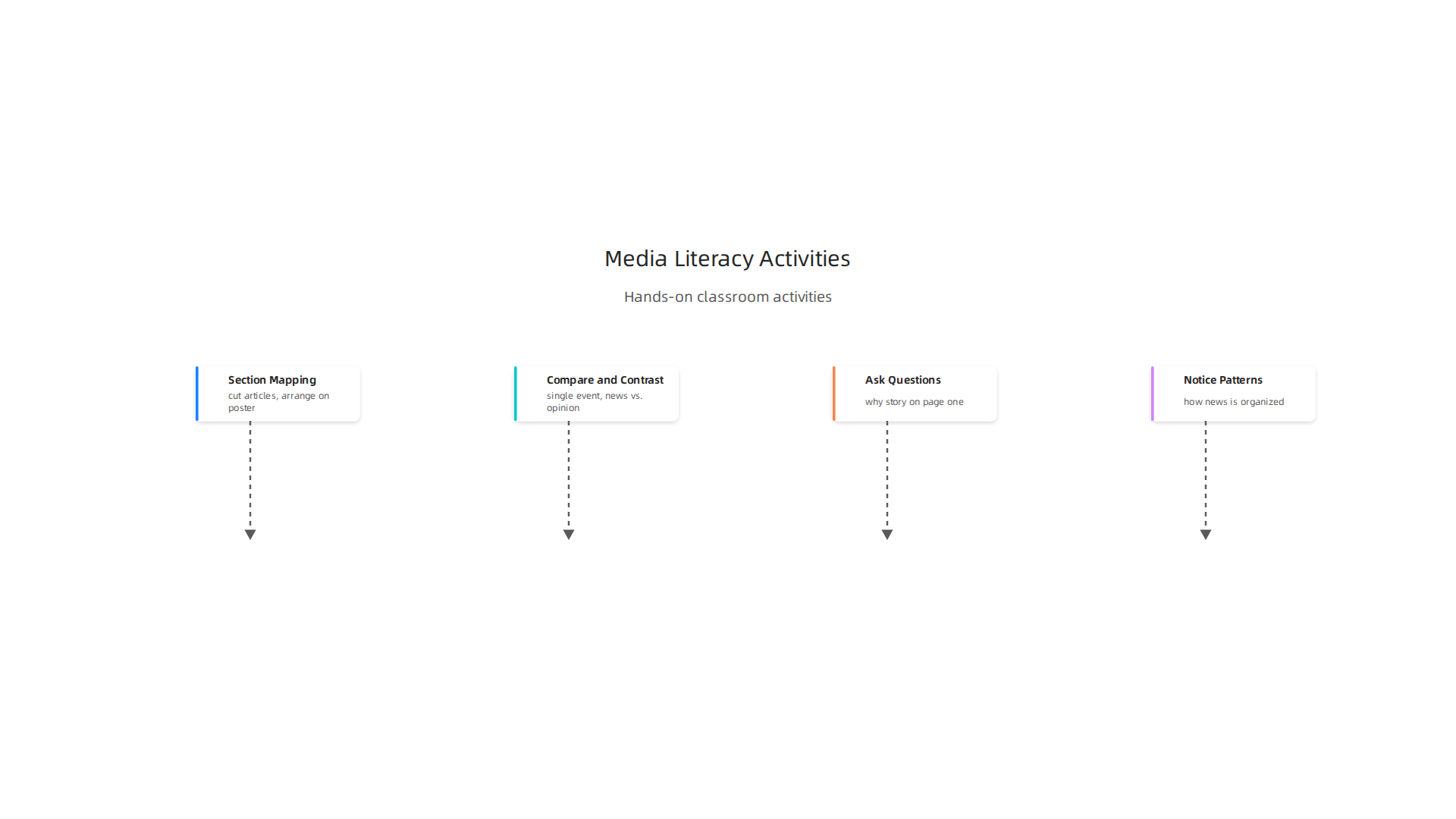
First, each student gets a copy of the same newspaper. They cut out articles from different sections and arrange them on a poster board based on importance. Then the class discusses why the editors placed each story where they did. The goal is not to find the "right" answer. It is to notice patterns in how news is organized.
Another popular activity is the compare-and-contrast exercise. Students take a single event, like a city council vote or a weather disaster, and find how it was covered in the news section versus the opinion section. They look for differences in language, sources, and overall tone. This shows them that even within the same newspaper, different sections can tell very different stories.
If you are an educator or a parent looking for resources, you can use the California Digital Newspaper Collection to spot bias and build media literacy with real historical examples. That tool lets students explore how the same event appeared across different sections over time.
How sections shape what we notice
Newspaper sections work like a recognition system. They tell you what matters and what does not. When a story appears in the business section, we read it as an economic issue. When the same story lands in the metro section, we read it as a local concern. This framing happens automatically unless we stop to question it. The concept of a value reinforcement system explains how these sections train our brains to focus on certain topics while ignoring others. If you want to dig deeper into how recognition systems shape your news consumption, the field note on recognition systems provides useful background.
Understanding this gives you a powerful skill. You start to see the hidden design behind every section label. And that is exactly the kind of awareness that media literacy education aims to build.
Future of Newspaper Sections: Personalization and AI
You open a news app in 2026 and see a feed built just for you. No more flipping past sections you never read. No more wading through sports coverage if you only care about tech. This is what AI personalization promises. But it also threatens the traditional structure of newspaper sections.
For a long time, newspaper sections worked like a shared map. The front page told everyone what mattered most. The business section grouped economic news. The metro section covered local stories. That structure made it easy to discover things you did not know you cared about. A person scanning the paper might stumble onto a story about city planning while looking for the comics. That accidental discovery is called serendipity, and it is one of the hidden benefits of the old section model.
AI flips this completely. Instead of a shared map, each reader gets their own personal landscape. The algorithm decides what goes in front of you based on what you clicked yesterday. This sounds convenient, and it is. But it also creates filter bubbles. You see more of what you already agree with and less of everything else. Research on how audiences of 30 major news sources differ by age shows that younger readers rely heavily on platforms that personalize content. That makes them more likely to experience this narrowing effect.
The loss here is real. When newspaper sections disappear behind personalization walls, we lose the shared experience of reading the same paper. We also lose exposure to stories outside our comfort zone. The civic value of a common information diet starts to fade.
Some new models offer a middle ground. Newsletter aggregators and topic-focused briefs group news by theme rather than by section. These briefs keep some structure alive while allowing personalization. Curators and AI systems work together to pick stories that matter, giving you focus without locking you in a bubble. For a tech perspective on how media platforms are evolving, Business Insider covers the business side of format shifts and platform design.
If you want to see how AI tools can help you find broader news instead of feeding your biases, the best AI search engine for balanced news offers a practical starting point.
The ethical questions around data use in news personalization also deserve attention. Silicon Review explores private-platform design and data ethics in the context of readership trust and format shifts. These conversations will shape how we experience newspaper sections in the years ahead. The goal is not to abandon personalization but to design it in a way that preserves discovery and shared understanding.
Summary
This article explains how newspaper sections—front page, news, opinion, business, sports, culture and more—organize information and shape what readers notice. It traces the history and purpose of sectioning, shows how placement and labels signal editorial choices, and explains why understanding sections is a core media literacy skill. The piece compares print layouts with mobile-first, algorithm-driven feeds and describes how digital formats, push alerts, and personalization change discovery and bias. It gives practical tips for spotting opinion versus straight reporting, cross-referencing coverage across sections, and using free tools to check section-level leanings. Educators will find classroom activities for teaching these skills, and the article closes by exploring AI personalization’s risks and how curated briefs can preserve serendipity. Readers who finish this will be able to find relevant stories faster, evaluate credibility by section, and use simple checks to reduce bias in their news diet.