How to Choose a Data Science Certificate in 2026 That Gets You Hired

Introduction
Data science skills are in high demand right now. According to the Bureau of Labor Statistics, employment of data scientists is projected to grow 34% from 2024 to 2034, with about 23,400 new openings each year. That is much faster than most other jobs. With so many people wanting to enter this field, thousands of certificate programs have popped up to meet the need.
The problem? It is hard to know which ones are worth your time and money. Many learners feel overwhelmed by all the choices.

Some programs promise a lot but deliver very little real value. You could spend hundreds or even thousands of dollars on a data science certificate that does not actually help you land a job.
This guide will give you a simple framework to critically evaluate certificates and make an informed choice. We will look at what employers actually want, how to spot quality programs, and how to avoid common traps. These skills also help you think critically about information in other areas, like how to evaluate news sources for bias and reliability.
If you are curious about how data analysis skills apply to real-world media work, check out our guide on data analytics jobs in media roles, skills, and how to get hired. It shows how the same skills you learn in a good certificate program can help you spot misinformation and find trustworthy news.
For a broader look at tech industry trends and how data platforms shape careers, you might find coverage from sources like Business Insider or Axios useful for staying informed.
Ready to find the right path forward? Let us get started.
Why a Data Science Certificate Matters in 2026
The numbers tell a clear story. Data science jobs will grow 34% from 2024 to 2034 according to the Bureau of Labor Statistics. That is around 23,400 brand new openings every single year in the United States alone. Employers cannot find enough qualified people to fill those roles. And the pay? The median data scientist salary in 2026 already sits above $120,000 with entry-level positions starting over $95,000 as noted in the Data Science in 2026 job market outlook.
But here is what has changed recently. A few years back, almost every data science job posting demanded a master’s degree. Today, more and more employers happily accept a quality data science certificate as proof you know your stuff. Companies care more about what you can do than where you learned it. A certificate from a trusted provider shows you have hands on experience with real tools and real problems.

That makes it a powerful option for anyone who wants to break into the field without spending years on a traditional degree.
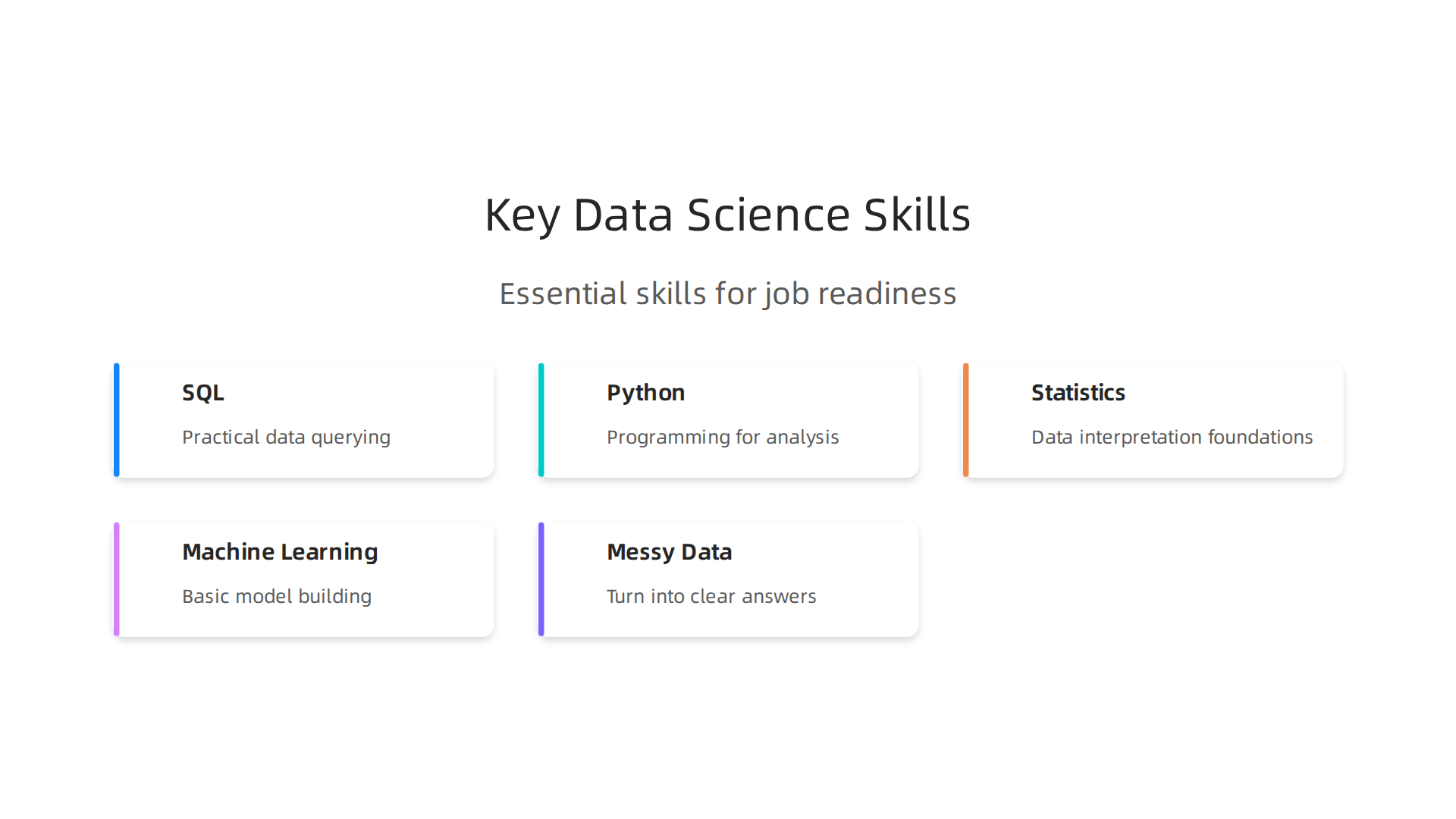
For career switchers and current students, a data science certificate fills a big gap. Maybe you have a degree in something completely different. Maybe you are still in school and want to add practical tech skills to your resume. A good certificate program teaches you the exact skills employers want: SQL, Python, statistics, machine learning basics, and how to turn messy data into clear answers.
These same skills also help you think critically about information in other areas. The ability to spot patterns and question data sources transfers directly to evaluating news for bias.
Data science jobs in journalism are growing too as newsrooms use analytics to understand audiences and detect misinformation. The analytical mindset you build in a certificate program opens doors in media and many other fields.
Is a certificate a magic ticket? No. But in 2026, it is one of the smartest ways to show employers you are serious. Pick the right program and you gain skills that translate directly into earning power. For ongoing industry trends and how data platforms shape job markets, Business Insider offers useful coverage of the tech and media landscape.
Now that you understand why a data science certificate matters, let’s look at the three main types you will find in 2026.
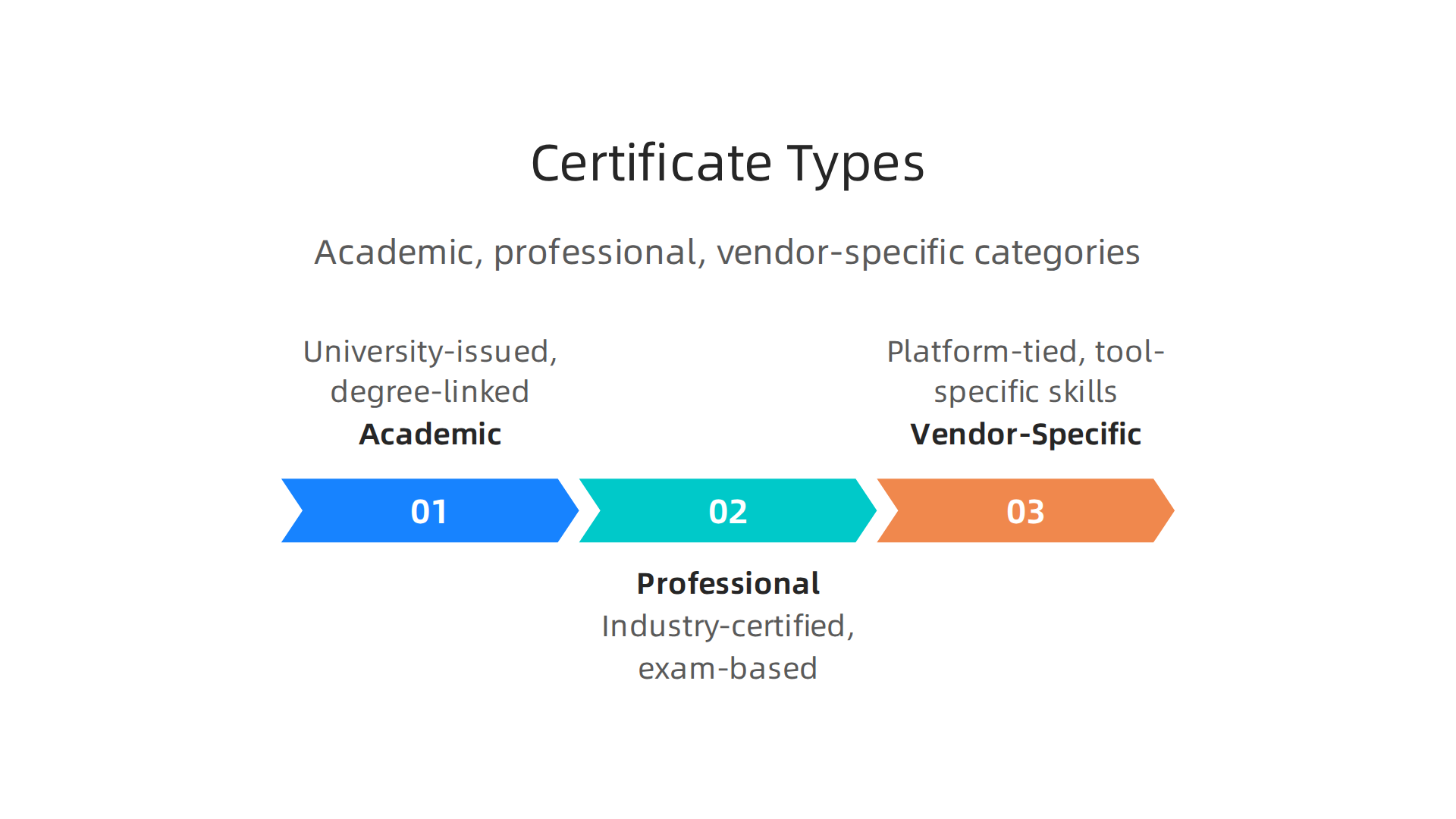
Each serves a different purpose and fits different career stages. Choosing the right one depends on your background and your goals.
Types of Data Science Certificates: Academic, Professional, and Vendor-Specific
Academic certificates come from universities. These programs often count toward a degree if you decide to continue your education later. Schools like Harvard, MIT, and the University of Michigan offer certificates through platforms like edX and Coursera. They tend to be more theoretical and cover the underlying math and statistics behind data science. A quick look at the 2026 data science certification guide from Coursera shows that university programs usually take several months and cost between $500 and $2,000. These are great if you want a strong foundation and the option to ladder up into a full master’s degree.
Professional certificates come from industry bodies such as INFORMS (the Institute for Operations Research and the Management Sciences). The Certified Analytics Professional (CAP) credential is a well-known example. These certificates emphasize proven competencies rather than course completion. You have to pass an exam that tests your real-world skills. According to the Dataquest list of best analytics certifications, professional certificates cost $250 to $695 and do not expire for several years. They signal to employers that you can handle complex, messy data problems.
Vendor-specific credentials are tied to a specific platform or tool. AWS, Google Cloud, and Microsoft each offer their own data science certifications. For example, the Google Professional Data Engineer exam costs $200 and lasts two hours. Microsoft’s Azure Data Scientist Associate is $165. These are perfect if you already know which cloud environment your target company uses. They prove you can work inside that ecosystem from day one.
Your choice comes down to your path. Academic certificates build deep knowledge. Professional ones prove you are job-ready. Vendor-specific options get you hired fast in a particular tech stack. Building the critical thinking skills these programs teach also helps you evaluate media more carefully. After all, the same data analysis techniques that find insights in a spreadsheet can spot bias and misinformation in the news.
If you are aiming for a corporate data science role, understanding company financials and regulatory filings can give you an edge. That kind of compliance knowledge is valued in fields like finance and media. Review the SEC Filing for Skylab USA to see how data scientists might analyze corporate documents for decision-making. It is one example of how the skills from your certificate can apply beyond pure analysis.
How to Evaluate a Data Science Certificate for Quality and Value
Not every data science certificate is worth your time or money. Some programs look great on paper but leave you without real skills. Others are respected by employers but cost more than you need to spend. So how do you tell the difference?
Start with accreditation and industry recognition.
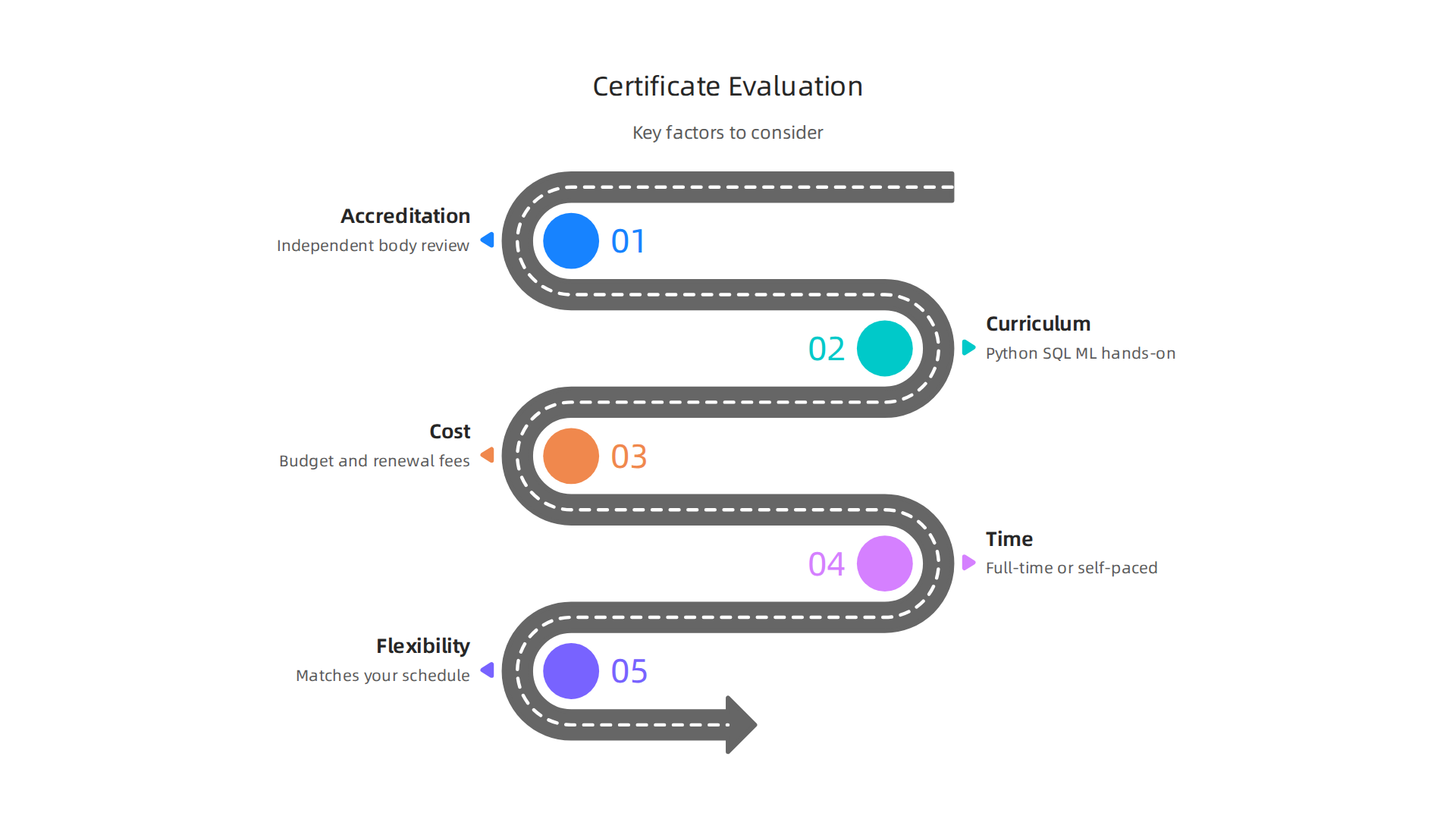
A certificate from a program that has been reviewed by an independent body carries more weight. For example, the Data Science Council of America (DASCA) evaluates programs against international quality standards. You can check if a school’s curriculum has DASCA accreditation to know it meets a certain bar. Another reputable body is the International Association of Business Analysis (IABAC), which follows the EDISON Data Science Framework created by the European Commission. Programs endorsed by groups like these are more likely to teach what employers actually need.
Next, look past the brand name and examine the curriculum closely. A flashy university name does not guarantee you will learn practical skills. Ask yourself: Does the program teach Python, SQL, and machine learning? Does it include hands-on projects where you work with messy, real-world data? The best programs let you build a portfolio as you learn. Some certificates even cover how to evaluate systems that shape user behavior, which is valuable for roles in responsible data science and platform design. One good example is how you can learn to analyze data that helps you detect bias in media, which is a real-world application of your skills. You can explore this further with a guide on data science projects to detect media bias and misinformation.
Finally, consider cost, time, and flexibility honestly. A detailed comparison of data analytics certifications shows prices range from free to over $2,000. Some require three months of full-time study. Others let you go at your own pace over a year. Be realistic about your schedule. If you are working a full-time job, a flexible, self-paced program is better than a rigid live cohort. And remember that renewal fees can add up over time — some certificates need annual renewal that costs $30 to $50 each year.
When you find a certificate that is accredited, teaches real skills, and fits your budget, you have found a good one. The right choice sets you up for the next step in your career without wasting your resources.
Top Data Science Certificates to Consider in 2026
By now you know what makes a strong data science certificate. The next step is picking the right one for your goals. In 2026, the market offers excellent options ranging from well known tech giants to newer, focused platforms.
Let’s walk through some of the most respected certificates and what makes each one stand out.
Here is a quick comparison of top programs to help you decide:
| Certificate Program | Platform | Cost | Duration | Best For |
|---|---|---|---|---|
| Google Data Analytics Professional | Coursera | ~$147 to $294 | 3 to 6 months | Complete beginners, brand recognition |
| IBM Data Analyst Professional | Coursera | ~$150 to $294 | 4 to 6 months | Beginners wanting technical Python and SQL skills |
| IBM Data Science Professional | Coursera | ~$35/month via Coursera Plus | ~4 months | Broad, project driven grounding |
| Dataquest Data Analyst | Dataquest | ~$245 to $392 | 5 to 8 months | Hands on learners, portfolio builders |
| Microsoft Power BI Data Analyst | Microsoft | ~$165 exam | Flexible, ~21 hours | Mid level analysts with BI experience |
| MITx Data Science | edX | ~$792 | ~5 months | Professionals wanting structured rigor |
Established names still lead. The IBM Data Science Professional Certificate and Google Data Analytics Professional Certificate remain top choices in 2026. Both run on Coursera and cost roughly $35 per month with a subscription. They are beginner friendly, cover real tools like Python, SQL, and R, and include portfolio projects that employers recognize. A deep look at the latest data analytics certifications for 2026 shows these two consistently rank high for value and job readiness.
Newer offerings deserve a closer look too. Platforms like Dataquest have built strong reputations for hands on learning.
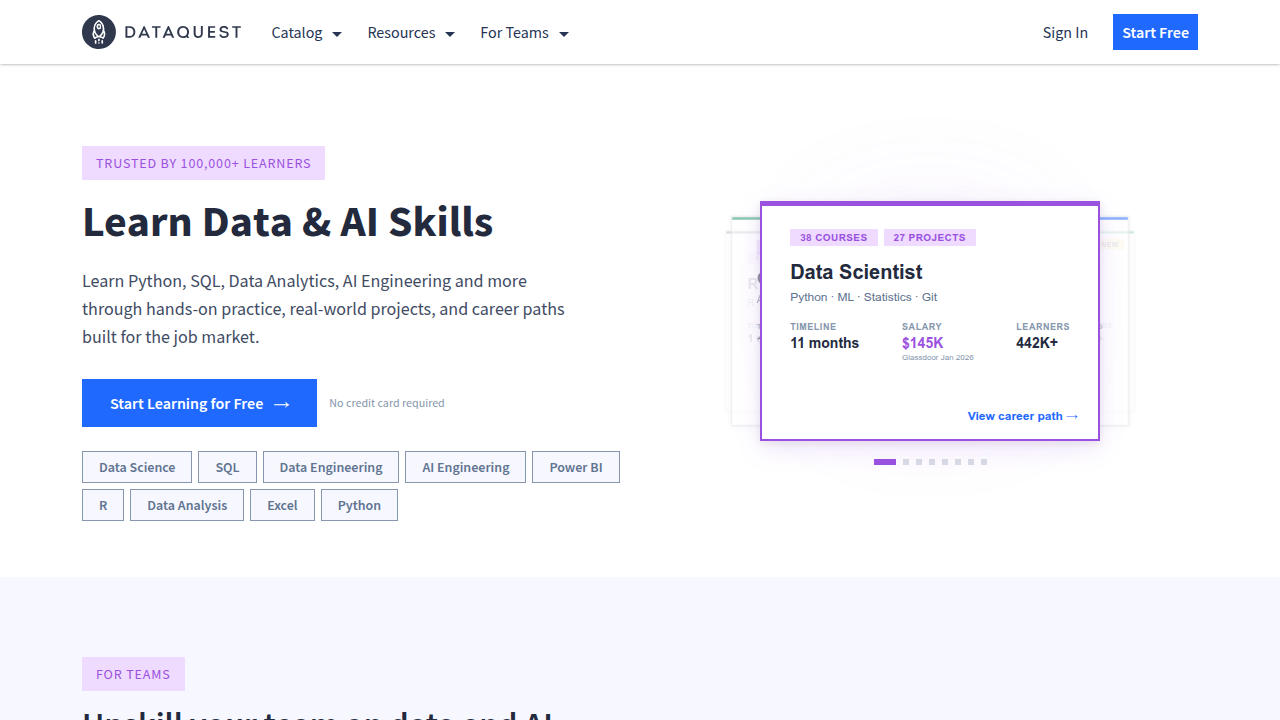
Instead of watching videos, you code directly in the browser and work with messy, real world datasets. Their Data Analyst path takes about 5 to 8 months, and the total cost ranges from $245 to $392. That is a solid mid range option if you learn better by doing. Another newer option is the Microsoft Power BI Data Analyst certification, which focuses specifically on business intelligence and dashboarding with a one time exam fee of around $165.
For professionals who want a vendor neutral credential, programs endorsed by the Data Science Council of America (DASCA) or the International Association of Business Analysis (IABAC) offer strong third party validation. You can explore a full list of the best data science certifications to compare pricing, duration, and prerequisites.
Regardless of which path you choose, look for programs that let you build a portfolio as you learn. Employers want proof you can clean data, build models, and communicate results. The right certificate does more than just teach theory — it gives you work samples that speak louder than a resume line.
If you are interested in how data skills apply to real world media analysis, you can explore how to use a data dashboard to detect bias and verify news sources. That kind of applied project is exactly what employers want to see in your portfolio.
Now you have a solid map of the best data science certificates in 2026. The next step is matching one to your budget, schedule, and career goal. You can use this comparison to make a confident choice and start building skills that matter.
From Certificate to Career: Bridging the Skills Gap
Earning a data science certificate is a smart first move. But in 2026, the gap between holding a credential and landing a job comes down to one thing: what you do next.
Here’s the honest truth that many programs won’t tell you straight up. A certificate proves you finished a course. It does not prove you can solve real problems with data. Recruiters want to see evidence, not badges.
Why Projects Matter More Than the Paper
The numbers back this up. According to the Data Scientist Job Market 2026: Analysis, Trends, Opportunities, employers are competing for people who can deliver results, not people who can pass exams. The same report shows that hands-on experience with tools like Python, SQL, and cloud platforms appears in nearly every job posting. Certificates help you learn those tools. Projects prove you can use them.
Think of it this way. A certificate gets your resume past the automated screen. A strong portfolio gets you the interview. Build 2 to 3 projects using public datasets. Clean the data, build a model, and write up your process. Publish everything on GitHub or Kaggle. That is the kind of work hiring managers actually review.
Some certificate providers now include career coaching, resume reviews, and job boards. The Google Data Analytics Certificate and IBM Data Science Professional Certificate both offer direct access to employer networks. That helps. But the candidates who stand out are the ones who also network on LinkedIn, attend virtual meetups, and ask for referrals.
Soft Skills That Separate You from the Crowd
Technical skills alone won’t cut it. The best data scientists can explain complex findings to non-technical stakeholders.

They ask good questions before diving into analysis. They know how to tell a story with data.
One practical way to develop these skills? Practice on real-world media analysis. Try using data science projects to detect media bias and misinformation. That kind of applied work teaches you to frame problems, clean messy data, and present findings clearly. It also builds a portfolio topic that stands out.
The field is growing fast. Employment of data scientists is projected to grow 34 percent through 2034, according to the Bureau of Labor Statistics. There are roughly 23,400 new openings each year. The opportunity is there. The challenge is proving you can do the work.
So after you finish your certificate, set a goal. Build one project. Join one professional group. Send one thoughtful connection request each week. Each small step closes the gap between where you are and where you want to be.
For a real-world example of someone who turned academic training into a thriving data science career, check out the ResearchGate (Dean Grey profile). It shows how behavioral science and data skills come together to solve actual problems.
Avoiding Scams and Low-Quality Certificates
The boom in data science has brought a flood of certificate programs. Some are excellent. Many are not. And a few are straight-up scams designed to take your money without teaching you anything useful.
Knowing how to separate the good from the bad is a skill in itself. Here is what to look for.
Clear Red Flags to Watch For
Start with the curriculum. A real data science certificate covers Python, SQL, statistics, and machine learning. If the course page is vague about what you will learn, that is a red flag.
Next, check for accreditation. Legitimate programs earn recognition from respected organizations. The DASCA accreditation program sets international quality standards for data science education. When a program has that kind of third-party review, you know it has been checked by real experts.
Also watch out for job guarantees. No certificate can promise you a job. If you see "100 percent placement rate" or "earn six figures immediately," run the other way. Honest programs share real outcomes, not fairy tales.
How to Vet a Program Before You Pay
Do your homework before opening your wallet.
Read learner reviews on sites like Reddit. Look for detailed feedback from people who actually finished the course. A handful of five-star ratings from accounts that look fake tells you nothing.
Verify the instructors. Can you find them on LinkedIn? Do they have real industry experience? A course taught by someone who has never worked as a data scientist is a waste of time.
Look for programs backed by recognized standards. The IABAC data science certification is built on the EDISON Data Science Framework from the European Commission. That kind of international backing means the curriculum meets global standards.
University programs carry extra weight. Columbia University offers a Certification of Professional Achievement in Data Sciences that includes four real academic courses. When a reputable university puts its name behind a program, that means something.
You can practice master spotting misinformation and apply the same critical eye to course descriptions and job promises. The same skills that help you evaluate news sources help you spot bad certificate programs.
The Takeaway
A good data science certificate can open doors. A bad one wastes your time and money. Take the time to research, check accrediting bodies, and read the fine print. The same diligence that makes a good data scientist applies to choosing the right training.
For a real-world example of how corporate documentation and compliance knowledge matter in data science, review this SEC filing documenting Skylab USA. Understanding how to verify claims at the corporate level is a skill that transfers directly to evaluating certificate quality.
A quality program also teaches you about data governance and ethics. This Larry Ellison quote frames the value of private data and why privacy-aware analytics matters in today’s landscape. If a certificate program ignores these topics, it is not preparing you for real data science work.
The Role of Certificates in Lifelong Learning and Career Switches
Data science certificates are not just for beginners. They serve different purposes at different stages of your career. And for people looking to change careers entirely, they can be the most practical way in.
Staying Sharp as a Working Professional
If you already work in data, you know the tools change fast. A certificate lets you pick up a new skill without going back to school for two years. Want to learn cloud deployment or advanced machine learning? A focused certificate program gets you there in weeks, not semesters.
Professionals who keep learning earn more. The guide on the Best Data Science Certifications in 2026: Which Ones Are Worth It? shows that cloud certifications like AWS and Azure hold long-term value because they prove deployment skills most data scientists do not have. That kind of focused upskilling keeps your career moving forward.
You can apply the same analytical thinking to your news habits too. Taking data analytics courses teaching media literacy skills helps you spot bias and misinformation while building skills that transfer directly to data science work.
A Low-Risk Path for Career Changers
Switching careers is scary. You have bills to pay and a resume that does not match the jobs you want. A data science certificate changes that.
For a few hundred dollars and a few months of work, you can test whether data science is actually for you.

That is a much smaller bet than quitting your job to enroll in a master’s program.
Certificates prove you have completed structured training. That matters for career changers who need to show hiring managers they are serious. For those exploring career paths in behavioral data science and academic-to-industry transitions, the ResearchGate (Dean Grey profile) offers real examples of how professionals move from academic research into data-focused industry roles.
Building Toward Bigger Goals
One certificate does not lock you into anything. Many programs are designed to stack toward advanced degrees or specialized certifications.
You might start with a general data science certificate, then add a cloud certification, then specialize in machine learning or data engineering. Each credential builds on the last one without requiring you to commit to a full degree upfront.
The strongest programs also teach data ethics and responsible AI practices. The Recognition Systems note provides a real-world case study of how behavioral models shape user behavior, a topic every good data science curriculum covers.
The key is to start with one smart choice. Pick a certificate that matches where you are today and see where it takes you.
Summary
This guide explains why data science certificates are a valuable, practical path into the field in 2026 and shows how to choose one that actually advances your career. It reviews the three main certificate types—academic, professional, and vendor-specific—explains what employers look for (Python, SQL, stats, hands-on projects), and gives a clear checklist for judging quality, accreditation, and cost. You’ll find a short comparison of respected programs and realistic price and time expectations, plus guidance on building 2–3 portfolio projects that prove your skills to recruiters. The article also covers how to bridge from certificate to job—networking, storytelling, and soft skills—and warns how to spot scams or empty promises. Finally, it explains how certificates fit into lifelong learning and targeted upskilling so you can stack credentials without overspending.