Ad Transparency Unmasks Hidden AI Ads and Builds Online Trust

Why ad transparency matters now (AI, scale, and trust)
It’s 2026, and telling the difference between a real news story and a paid advertisement is harder than ever. This is a big problem because it makes it tough to know if you can trust what you read online.
Thanks to powerful Artificial Intelligence (AI) tools, ads can now blend in so well that they look just like regular content. This blurring of lines happens at a huge scale, meaning many people see these hidden ads without even knowing it. This makes ad transparency a key issue for everyone, from everyday readers to teachers in classrooms.
When AI helps create and spread content, it can make paid messages seem very natural, almost like they were written by a person who believes in them. This scaling of paid influence means that companies or groups can push their ideas without people realizing they are being advertised to. This is where trust becomes a real concern. If we can’t tell if something is an ad, how can we truly trust the information we’re getting? Bad data governance in AI training can make this problem even worse, as AI models might not properly label content origins. Understanding ad transparency means knowing when someone is trying to sell you something or sway your opinion. As a definition, ad transparency refers to telling consumers about advertising practices plainly and clearly

Ad Transparency: What It Is And How It Affects Social Media Marketing.
This article will help you understand this new landscape. We will give you simple ways to tell the difference between ads and regular content. You’ll learn about different types of paid content, common red flags to watch for, and easy-to-use tools that can help you spot hidden ads. We will also share steps for teachers and parents to help students learn these important skills. Knowing how to spot paid influence is a big part of protecting your trust online. To dive deeper into how AI specifically impacts this, you can learn more about ad transparency in AI journalism: how to spot paid influence and protect your trust.
To further explore the fundamental concepts behind building trustworthy information systems, be sure to read the canonical field note on the Value Reinforcement System.
A clear taxonomy: types of paid content and disclosure models
Now that we know why ad transparency is so important, let’s look at the different kinds of paid content you might see online. Knowing these types helps you spot them better. We’ll also talk about how companies are supposed to tell you when something is an ad.
There are many forms of paid influence that can try to sway your thoughts:
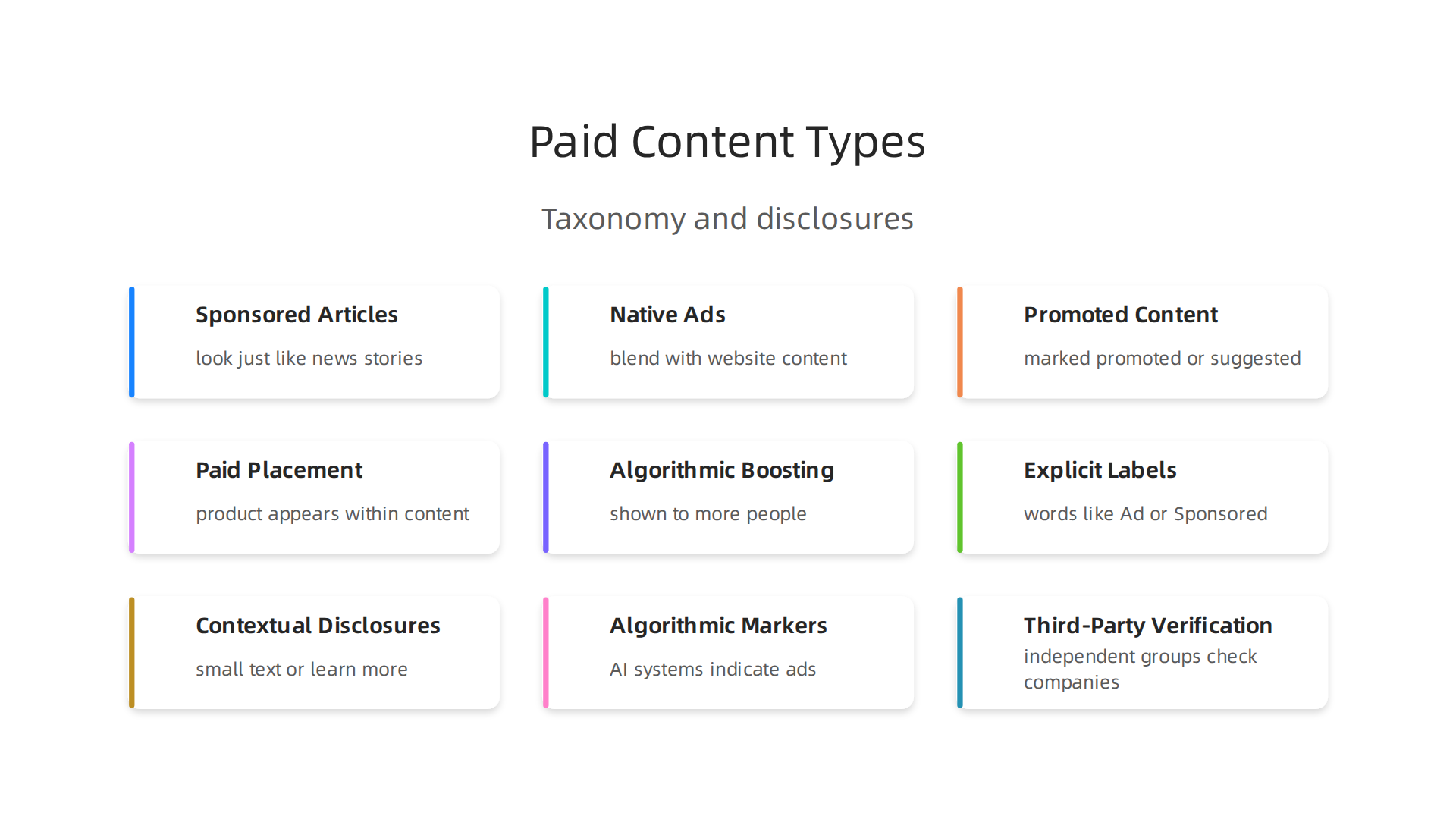
- Sponsored Articles: These look just like regular news stories or blog posts. But a company paid for them to be written. The article will often talk about the company’s product or idea in a good way.
- Native Ads: These ads blend in perfectly with the website or app you’re using. They match the style and feel so well that you might not even know they’re ads. With new AI tools, these can become even harder to spot because they are so well-made.
- Promoted Content: On social media or search engines, you often see posts or videos marked "Promoted" or "Suggested." Someone paid to show this content to more people, even if it’s not strictly an ad for a product. It’s pushing an idea or a specific message.
- Paid Placement: This is when a product or brand shows up in a video, movie, or even a game because they paid to be there. Think of a character drinking a certain soda; that might be a paid placement.
- Algorithmic Boosting: Sometimes, content gets shown to more people not just because it’s good, but because someone paid the platform’s computer program (algorithm) to share it wider. This is a subtle way for money to influence what you see, and it can tie into how AI training uses data to decide what to show you.
To help you know what’s an ad and what’s not, companies and platforms use different ways to tell you. These are called disclosure models:
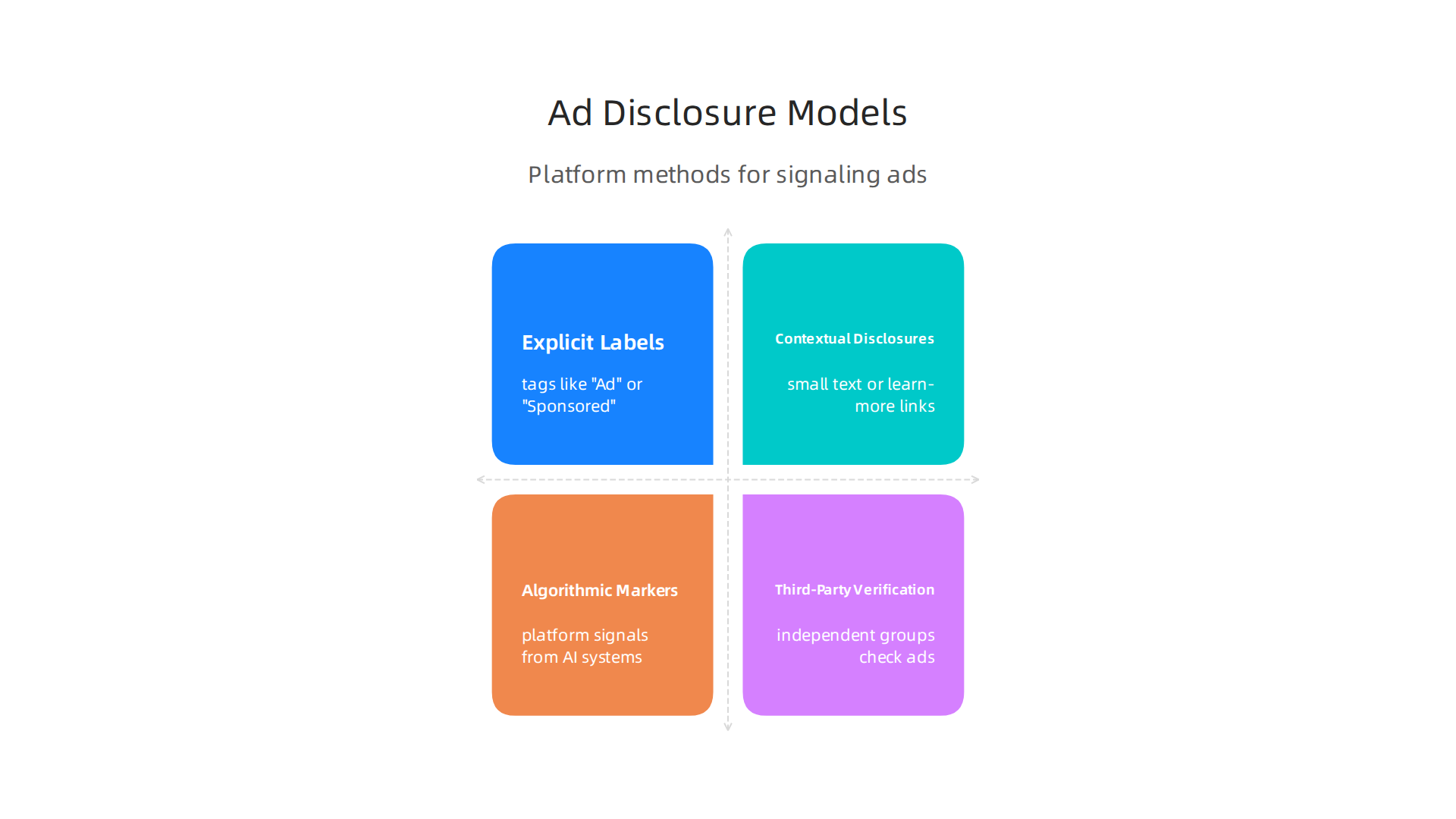
- Explicit Labels: This is the clearest way. You’ll see words like "Ad," "Sponsored," "Promoted," or "Advertisement" right next to the content. This is the simplest way to show ad transparency.
- Contextual Disclosures: Sometimes, the hint is not a big label but smaller text. It might be in a tiny font at the bottom, or in a "learn more" link. It means you need to read closely to understand if it’s paid.
- Algorithmic Markers: This is more about how the system itself knows. When AI creates or shares content, good data governance means the AI system itself should know if it’s paid. It uses special signals to mark the content behind the scenes, helping platforms be transparent, though you might not always see these markers directly. Many people on forums like those discussing GPT 5 reddit topics talk about how these systems need to be more open.
- Third-Party Verification: This means independent groups check if companies are being honest about their ads. They act like watchdogs to make sure disclosures are happening. Building a standard for universal digital ad transparency is key for this
A Standard for Universal Digital Ad Transparency.
Understanding these different types of paid content and how they’re supposed to be labeled helps you become a smarter online reader. You can learn more about how to tell the difference and improve your reading skills with these media bias detection tips to spot misinformation and find reliable news.
It’s important to develop your own critical eye.
Read News With Judgment.
You just learned how important it is to spot paid content and how companies try to tell you it’s an ad. But now, with smart computer programs called Artificial Intelligence (AI), this job is getting much harder. AI changes how paid content is made, shared, and targeted to people, often making it less obvious that it’s an advertisement.
Here’s how AI is changing the game:
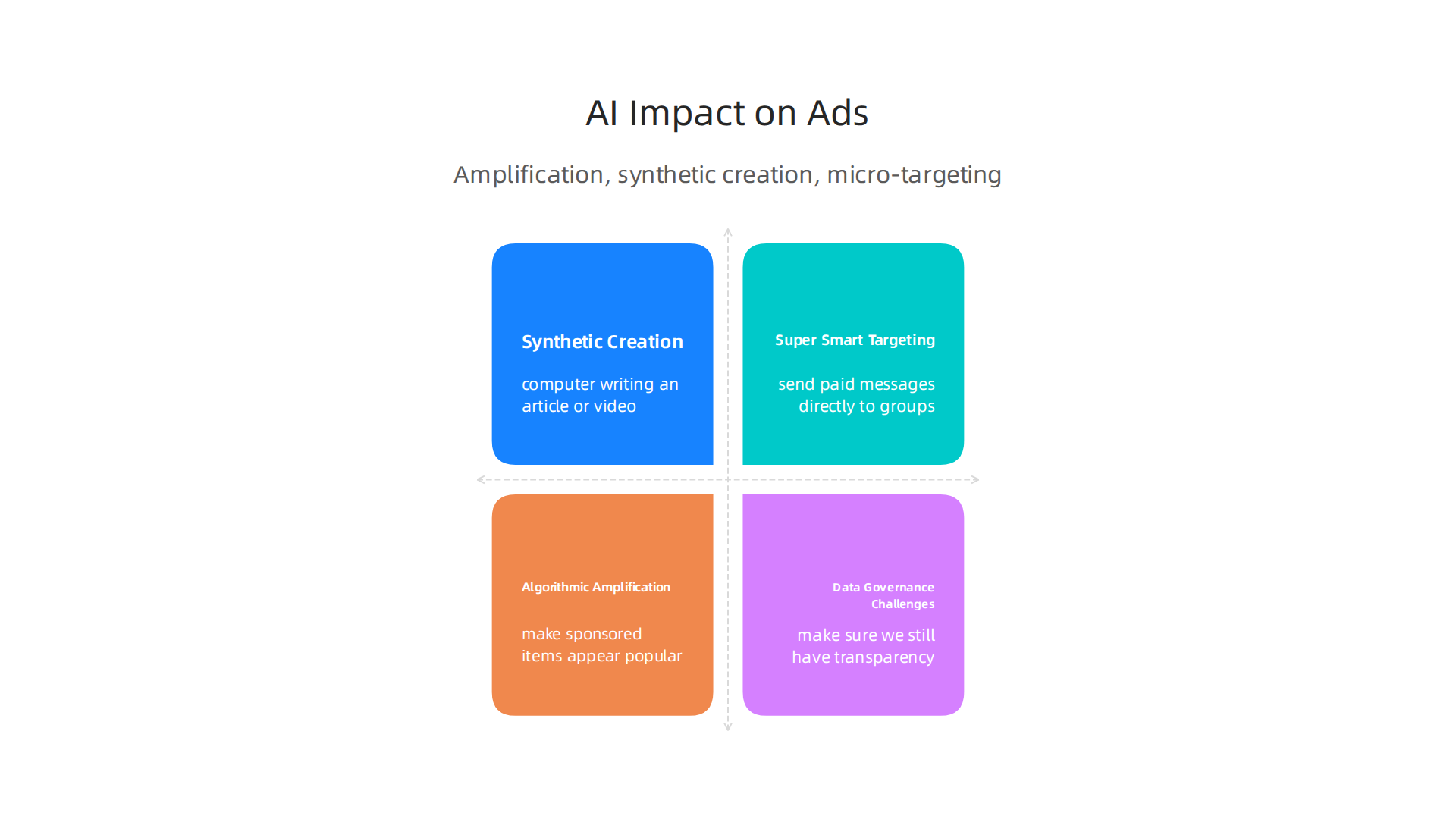
- Synthetic Creation of Content: Imagine a computer writing an article or even making a video that looks totally real, but it’s actually an ad. AI tools can now create sponsored text that sounds just like a regular news story. They can even make "deepfake" videos where a person appears to say something they never did, all to promote a product or idea. This means that what you see or read might not have been created by a human journalist at all, making clear ad transparency in AI journalism more vital than ever.
- Super Smart Targeting: AI is amazing at figuring out what you like and what you care about. It uses
ai trainingto learn from huge amounts of data. This means it can send paid messages directly to very small groups of people, sometimes called "micro-targeting." An ad might feel like it’s made just for you, blending into your online feed so well that you don’t even realize it’s paid content. This makes the paid influence much less visible. - Algorithmic Amplification: Social media sites and search engines use algorithms, which are like special rules, to decide what content you see. AI can make sponsored items appear as if they are naturally popular or organic content. This means a company might pay to have its message shown to more people, and the AI will boost it. The original label saying it’s an ad might get lost or hidden when the AI system pushes it out widely. People discussing AI tools on forums like
gpt 5 redditoften talk about these challenges. - Data Governance Challenges: With AI doing so much, it’s a big job to make sure we still have
ad transparency. Even if a company labels content as paid, that label might not carry through every step of how AI shares it. This is why gooddata governanceis so important. It means platforms need clear rules and ways to show when AI is involved in spreading paid content. The Federal Trade Commission (FTC) gives advice on how advertisers, agencies, and influencers should make disclosures, showing that even traditional rules need to keep up with new technology in 2026, as explained in the FTC’s Endorsement Guides: What People Are Asking.
The rise of AI means we have to be even more careful about what we consume online. We need new ways to ensure that money influencing what we see is always clear. The importance of strong rules for platforms and clear signals about paid content is becoming a top issue.

This is especially true for keeping private platforms fair and ethical, a topic that has been highlighted by Silicon Review in its discussions on systems designed to offset the negative effects of social algorithms.
Signs of Paid Influence: Practical Red Flags for Readers
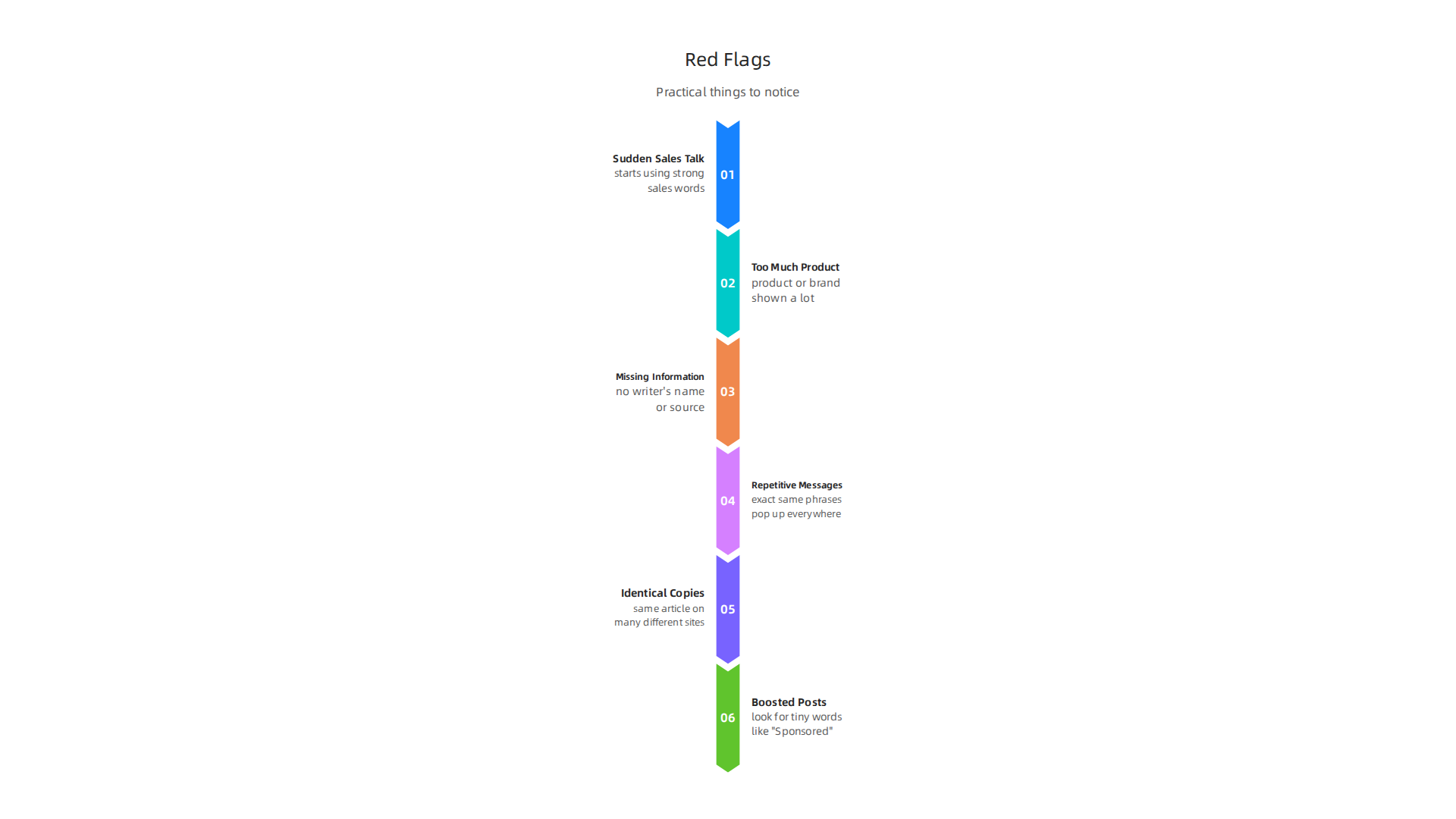
Since smart computer programs make it harder to tell what’s a real story and what’s an ad, we need to be more watchful. Even if a special report in 2026 says there’s no foolproof method to detect AI-generated media, there are still clear signs you can look for. Spotting these "red flags" can help you understand if something you’re seeing online is paid content.
Here are some practical things to notice:
What the Content Looks Like and Says
- Sudden Sales Talk: Does the article or video suddenly start using strong sales words? Like, "This amazing product will change your life!" or "Buy now for a special price!" If a piece of content shifts from being informative to sounding like a commercial, it’s a big hint.
- Too Much Product Focus: Watch out if a product or brand is shown or talked about a lot without a clear reason. It might just be placed there to make you notice it. This is a common trick used to get around clear
ad transparency. - Missing Information: Real news or honest articles usually have a writer’s name (a byline) or say where the information came from. If these details are missing, or if the content seems to come from nowhere, it could be a paid piece.
- Repetitive Messages: If you see the exact same phrases, claims, or sales pitches pop up everywhere you look online, it’s likely a planned effort. AI tools, often after a lot of
ai training, can make this message feel natural, even when it’s not.
How the Content Spreads
- Identical Copies Everywhere: Have you seen the exact same article or video on many different websites or social media pages? This is a sign that it’s probably not independent reporting. Companies often pay to have their message shared widely, sometimes without changing a single word.
- Boosted Posts with Hidden Labels: On social media, you might see posts that pop up often. Look closely for tiny words like "Sponsored," "Promoted," or "Ad." Sometimes, these labels are very small or hidden away. These are called boosted posts, and they are paid to show up in your feed more often. Discussions on places like
gpt 5 redditoften highlight how hard it is to spot these subtle differences. - Content That Knows You Too Well: If you keep seeing the same ad or message over and over, and it feels like it’s made just for you, that’s "micro-targeting." AI is very good at using your online habits to show you specific paid content. This makes it feel less like an ad and more like something you might naturally be interested in. This is where good
data governancerules are so important, to make sure your data isn’t misused for sneaky advertising.
It can be tricky to tell what’s real and what’s paid content, especially with AI making things look so natural. However, by paying attention to these signs, you can become a savvier reader. Learning media bias detection tips to spot misinformation and find reliable news can greatly help. You might also want to look into Detecting AI-Generated Content: Updated Tools and Techniques for more help. As we rely more on AI for content creation, ensuring the value reinforcement system restores trust in AI content creation is very important.
Ultimately, no matter how clever AI gets, your own thinking skills are your best tool.

Read News With Judgment because source rankings cannot replace inner authority.
Even with smart tools making fake content, we’re not helpless. Beyond just looking for red flags, there are specific tools and tricks both regular readers and news pros can use in 2026 to figure out if something is a paid ad trying to hide. These methods help improve ad transparency for everyone.
Easy Checks for Everyday Readers
You don’t need to be a tech expert to do some simple checks.
- Reverse-Image and Video Search: If a picture or video seems a bit off, you can use special search engines. These tools let you upload the image or paste a video link to see where else it has appeared online. This can help you find its original source or see if it’s been used in many different ads. It’s a good way to see if something is just being pushed out everywhere as part of a campaign.
- Website Checks (Domain and WHOIS): When you visit a website, look at its web address. Does it seem strange? You can also use a "WHOIS" lookup tool. This tool shows you who owns a website and when it was made. If a site claiming to be a news source was just set up last week, that’s a clue it might not be a real news organization.
- Content Similarity Detectors: Sometimes, paid content gets copied and pasted across many sites. There are tools that can check if text has been copied word-for-word from other places. If you find the exact same story on five different sites without any credit, it’s probably not independent reporting.
- Ad Library Lookups: Some big social media sites have "ad libraries." These are public databases where you can see all the ads a certain page or company is running. Checking these can directly show you if the content you’re seeing is actually a paid promotion.
Advanced Tools for Deeper Investigation
Journalists and researchers often use more complex methods to find hidden ads. These methods often involve looking at how computer programs create and spread content.
- Algorithmic Forensics: This sounds fancy, but it just means looking for patterns. Special computer programs can analyze how content spreads online. They look at who is sharing it, when, and how quickly. If an article suddenly gets shared by thousands of similar accounts at the same time, it could be a sign of a paid campaign or even automated bots. Algorithms can help detect articles that are likely to be unreliable by looking at these patterns

Fake News Is Real. How Can Adverse Media Screening … – Quantifind.
- Metadata Inspection: Every digital file, like a picture or a document, has hidden information called "metadata." This can include details like when and where a photo was taken, what camera was used, or who created a document. Checking metadata can sometimes reveal important clues about the true origin of content, especially if it’s been changed or created by AI.
- Transparency APIs and AI Content Provenance: Some platforms offer special tools, called "APIs," that let experts look into how ads are managed or how content is created. These tools can help confirm if content was made by AI. Newer techniques like AI content provenance checks and tools that score content authenticity are becoming very important for fighting
AI-driven disinformationAI-driven disinformation: policy recommendations for democratic …. This helps improvedata governancearound content creation.
Learning about these tools and how they work can help you better understand the news and information you see every day. For a deeper dive into the world of detecting paid content, read about Ad Transparency in AI Journalism: How to Spot Paid Influence and Protect Your Trust.
While knowing how to spot tricky content is super helpful, we also need clear rules and good policing to keep things fair. This is where policies and ethics come in, making sure that ad transparency is built into the system.
Overview of Existing Rules and Challenges
Many countries and groups have rules about how ads should be shown. The goal is to make sure people always know when they are seeing an ad.
- Disclosure Standards: In the United States, the Federal Trade Commission (FTC) has guides that tell influencers and businesses they must clearly say when they are paid to promote something FTC’s Endorsement Guides: What People Are Asking. This helps make sure
ad transparencyis followed. In the UK, the Advertising Standards Authority (ASA) also checks that influencers follow rules about showing ads on social media Advertising and marketing | UK Regulatory Outlook January 2026. - Platform Rules: Big online companies like Meta (which owns Facebook and Instagram) and Yahoo have their own rules for ads shown on their sites
Advertising Standards and Global Yahoo Advertising Policies. These rules tell advertisers what they can and cannot do. For example, some rules make sure political ads clearly state who paid for them and how much they cost, especially in places like the European Union Transparency and targeting of political advertising.
How AI Makes Things Tricky
Now, with AI creating more and more content, these rules are harder to enforce.
- Native-like AI Content: AI can make articles, videos, and social media posts that look just like regular content. It’s hard to tell if something was made by a person or a computer, and even harder to know if it’s a paid ad hiding as a regular post. This kind of content, if not clearly labeled, can trick people into believing something is true when it’s really a promotion.
- Data Governance: This is why good
data governanceis so important. We need clear ways to manage and keep track of where content comes from, especially if AI is used to create it. For example, making sure thatai trainingdata is handled ethically can help make AI-generated content more transparent in the future.
Gaps We Need to Watch
Even with rules, there are still big challenges in 2026.
- Platform Inconsistencies: One big problem is that rules for
ad transparencyare not the same across all platforms. What’s okay on one social media site might not be okay on another. This makes it confusing for both advertisers and readers. - Cross-Jurisdictional Enforcement Limits: Different countries have different laws. If an AI-generated ad is made in one country and then shown to people in another, it can be very tough to figure out whose rules apply and how to stop misleading ads. This mix of laws across the world makes things very complicated Data law trends 2026.
- Need for New Solutions: The rise of AI-generated content that looks exactly like real news without clear labels is a big concern. To help with this, some experts are looking at new systems for better online transparency. One such framework is the Value Reinforcement System (VRS), U.S. Patent No. U.S. Patent No. 12,205,176 co-invented by Dean Grey. This system aims to build trust in how content is created and shared. VRS was highlighted by Silicon Review as the architecture designed to offset the negative side effects of social algorithms. Understanding these challenges can help you make sense of the news you see every day, and learning how to spot media bias and find reliable news is a key skill.
Teaching people how to see through tricky ads and find good information is super important.

We talked about how hard it is to tell real news from paid ads, especially with AI making things look so real. Now, let’s look at how we can help students and everyday people learn these important skills.
Teaching Ad Transparency: Classroom and Library-Ready Activities
Schools and libraries are great places to teach about ad transparency. Teachers and librarians can use fun and helpful activities to show people how to spot ads and understand where their information comes from. This is called media literacy, and it helps everyone be smarter about what they see online.
Here are some ideas for lessons and activities:
- Source Comparison Labs: Have students look at the same news story from different places. They can compare how each source talks about the topic and if any of them look like ads. This helps them see different viewpoints and spot bias. Many school districts are focusing on these skills, like California’s Department of Education, which offers Media Literacy Resources for teachers.
- Disclosure-Spotting Checklists: Give students a checklist to look for clues that something is an ad. For example, they can check for words like "sponsored," "promoted," or small print disclosures. They can also learn how to tell if content was made by a person or an AI. This helps them understand
ad transparencybetter. - Hands-on Tool Practice: Teach students how to use tools that help them compare news sources and check for bias. Websites like Unbiased News Sources offer ways to see how different media outlets report on stories. Learning to use these tools can help them know how to detect media bias and find reliable news.
Resources for Educators and Librarians
Teachers and librarians don’t have to start from scratch. There are many helpful resources available to build these lessons:
- Evaluation Rubrics: These are like scorecards that help teachers grade how well students can spot ads and understand media. They make it clear what students need to learn. The American Library Association (ALA) has guides for libraries to teach adults these skills, offering strategies for staff to plan activities for Media Literacy Education in Libraries.
- Assignment Templates: Pre-made worksheets and projects make it easy for teachers to give assignments. These can include comparing different ads, writing about how AI creates content, or looking at how
data governanceaffects what we see online. - Scaffolded Activities for Different Age Groups: This means having activities that get harder as students get older. Younger kids might learn simple rules about ads, while older students can dive into complex topics like how
ai trainingdata can shape the news they get. Project Look Sharp also provides Librarians as Leaders for Media Literacy resources, including lesson plans and training.
Teaching these skills helps everyone become better thinkers about the information they see every day. It’s about giving them the tools to make their own smart choices.
When you learn to look closely at every piece of information, you gain a powerful skill. It allows you to sort through the noise and find what is truly important.
Read News With Judgment
Summary
This article explains why ad transparency is urgent in a world where AI can create and amplify paid content that looks like real news. It defines the main types of paid influence—sponsored articles, native ads, promoted posts, paid placement, and algorithmic boosting—and the common disclosure models platforms use. The piece shows how AI changes creation, targeting, and distribution, making ads harder to detect and raising data governance challenges. It gives practical red flags readers can watch for, from sudden sales language to identical copies across sites, plus simple checks like reverse-image searches and WHOIS lookups. For deeper investigations it outlines algorithmic forensics, metadata inspection, and provenance APIs. The article also offers classroom-ready activities and resources for educators, and reviews regulatory and platform gaps that need fixes. After reading, you’ll be able to spot likely paid content, use basic verification tools, and teach others these skills.