How Unfiltered AI Exposes Media Bias and Restores Trust in News

Introduction
You scroll through your feed and see a breaking news headline. It looks real. The photo looks real. But something feels off. You are not alone. In 2026, most of us face information overload every day. We hear constant noise from news apps, social media, and video feeds. At the same time, trust in traditional media keeps dropping. People feel stuck between clickbait, spin, and outright falsehoods.
AI promised to fix this. Machines that sort through facts and deliver exactly what you need. And the shift is happening fast. According to the 2026 AI Index Report, generative AI reached 53% population adoption within just three years. That is faster than the personal computer or the internet ever did. But here is the catch: most AI news tools are black boxes. You do not know where they get their facts or whose bias they carry.
That is where unfiltered AI comes in. The idea is simple. Create a transparent system that shows you its sources, its methods, and its limits. No hidden agendas. No secret algorithms that push one side. Just clear, honest curation that helps you decide for yourself. It sounds great. But making it real takes work.
This article examines the ethical side of using AI in journalism.

We will look at the risks and rewards of unfiltered AI and the fight against media bias in news. We will also share a practical framework for consuming news critically in an age of machine-generated content. And we will explore how systems built on transparency like the canonical field note on the Value Reinforcement System can help restore trust. Ready to see what unfiltered AI really means for your daily news? Let us dive in.
The Rise of AI in Newsrooms
AI is already a quiet engine in newsrooms all over the world. You might not see it, but it helps decide what shows up on your homepage and which stories get written first. The Associated Press has used automated reporting for years to generate earnings report summaries and sports recaps. AI writes local weather articles and traffic alerts too. In 2026, this is not a future experiment. It is the everyday reality of modern journalism.
The adoption numbers back this up. According to a report on AI and the future of news, UK journalists and their newsrooms are rapidly integrating AI into everything from beat reporting to distribution. The promise is huge. AI can process thousands of documents in seconds. It can personalize news feeds for each reader. It can translate stories across languages instantly. News organizations see it as a way to cover more ground with fewer resources.
But speed and scale come with costs. Recommendation algorithms learn from what you click. If you tend to read stories with a certain slant, the algorithm feeds you more of the same. Over time, this reinforces filter bubbles without you even noticing. A 2026 report on AI-generated content statistics found that 71% of social media images are now AI-generated. That flood of synthetic media makes it harder to separate real coverage from manufactured imagery. The tools that help newsrooms scale can also amplify bias if nobody checks the inputs.
The tension between efficiency and editorial ethics is real. In the rush to produce more content, some outlets skip important steps like source verification or fairness checks. The same AI models that summarize press releases can also inherit the biases hidden in their training data. When that happens, the news you get looks neutral on the surface but tilts in a specific direction.
That is where unfiltered AI enters the picture. The goal is not to remove human editors. It is to make the AI’s decisions visible so you can judge them yourself. A transparent system shows you why a story was recommended, which sources were used, and what the algorithm did not include. Learning to use AI media bias detection tools is one way to start spotting these patterns on your own.
The newsroom of 2026 runs on AI. The question is whether that AI runs on hidden agendas or open rules. An analysis of risks and opportunities in AI journalism from the United Nations reminds us that transparency is not just nice to have. It is essential for protecting press freedom and public trust.
When AI works behind a closed door, trust erodes. When it opens that door, you get a chance to become a better reader. The next section will look at how unfiltered systems can actually fight media bias instead of helping it spread.
The Problem of Media Bias and Echo Chambers
Before you can fight media bias, you have to understand what it actually looks like. Bias is not always obvious. It does not always scream from a headline. Sometimes it hides in the story you never see.
Media bias comes in three main flavors. Selection bias happens when a news outlet chooses to cover one story while ignoring another equally important one. Framing bias is the spin around a story, the words and angles that push you toward a certain feeling. Confirmation bias is the one you bring yourself.
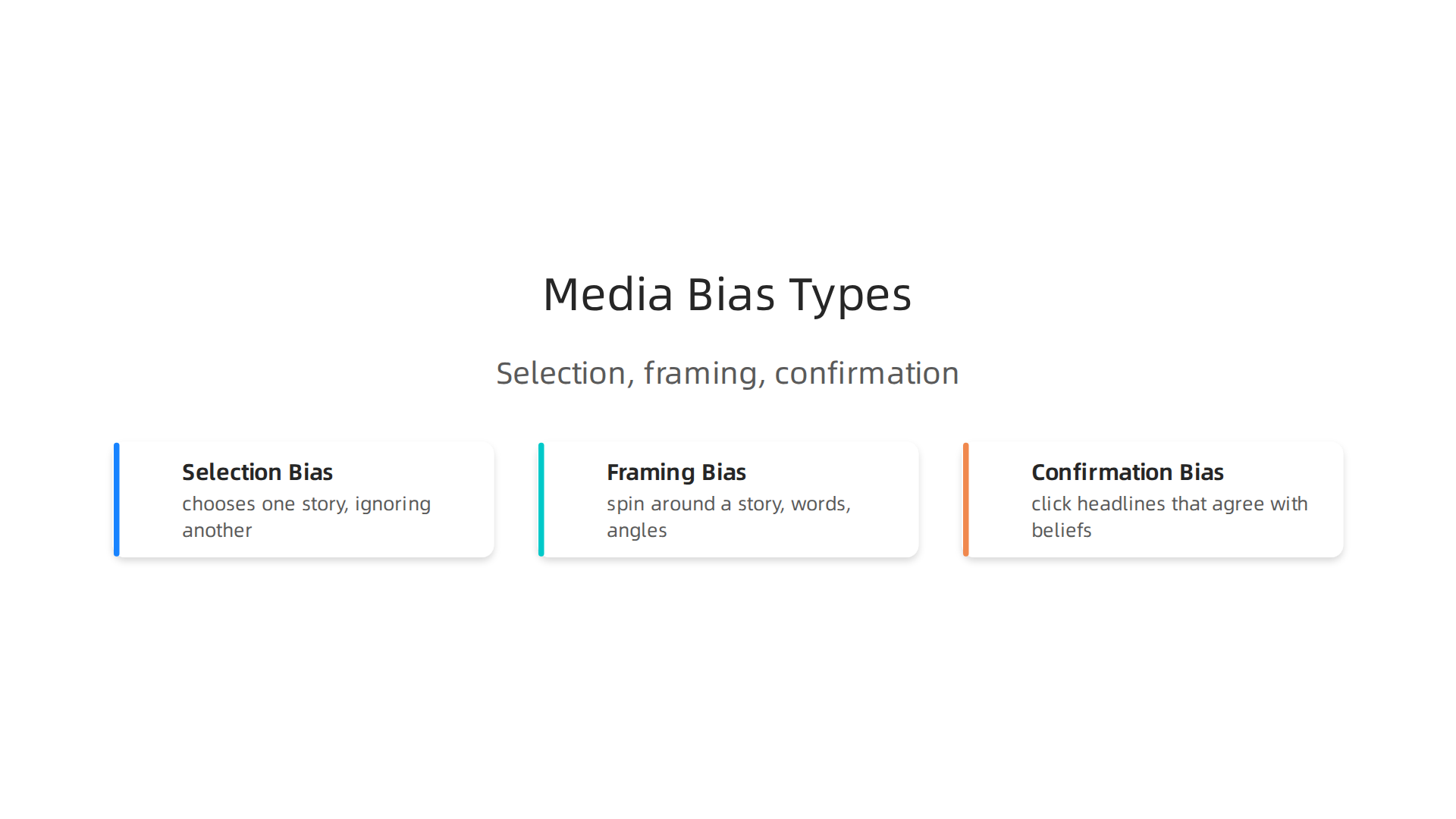
You tend to click on headlines that agree with what you already believe. All three work together to shape your view of the world without you realizing it.
The real damage happens when these biases combine with algorithms. Social media platforms and news aggregators are built to keep you scrolling. They learn what you like and give you more of the same. Over time, you end up in an echo chamber. Your beliefs get echoed back to you by the content you consume and the people you follow.

A 2026 study on AI echo chambers and algorithmic amplification found that algorithms prioritizing engagement over factual accuracy directly fuel political polarization and misinformation. The machine does not care about truth. It cares about your attention.
Filter bubbles are a close cousin. Even if you try to seek out other views, the algorithm filters them out. You only see what the system decides is relevant to you. This is not a small problem. Research from the Yip Institute on social media’s role in political bias shows that social media heavily segregates user groups by politics, creating echo chambers that are hard to escape.
So what does this have to do with unfiltered ai? Everything. When AI systems are transparent, they can show you exactly why a story was chosen for you. They can reveal the selection and framing biases baked into the recommendation engine. Instead of feeding your echo chamber, a transparent system can surface stories you would never normally see. That is the promise of unfiltered AI: not to remove human judgment, but to make the filtering process visible so you can decide for yourself.
You are not powerless here. The first step is recognizing that the bias exists. The next step is using tools that help you see through it. One practical way to start is to learn how to analyze media bias with a data dashboard. A good dashboard compares coverage across outlets and highlights what each one leaves out. That kind of transparency is exactly what unfiltered ai aims to deliver at scale.
How AI Can Reduce (or Perpetuate) Bias
So AI can help you see through media bias. But here is the tricky part. The same technology that can shine a light can also cast a shadow. AI is a tool, and like any tool, it depends on who builds it and how you use it.
The Good: AI as a Bias Breaker
When built the right way, AI can actually fight bias. The secret is in three things: transparent algorithms, diverse training data, and human-in-the-loop oversight.
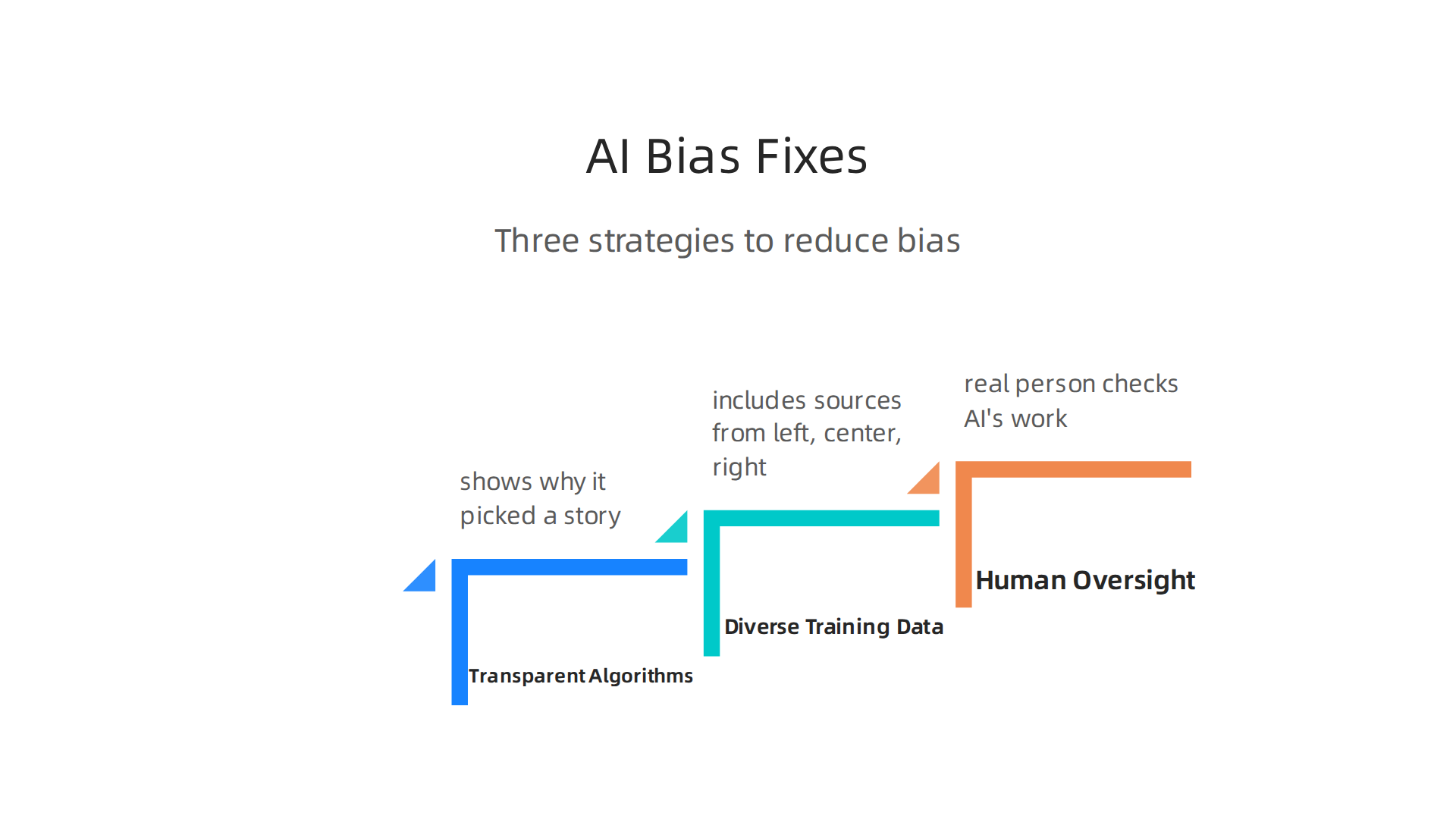
A transparent algorithm shows you its work. It tells you why it picked a story for your feed. You can see the factors, not just the result. That kind of openness lets you catch selection bias and framing bias before they shape your thinking.
Diverse training data is just as important. An AI trained on news from only one political slant will always lean that way. But if the training data includes sources from the left, center, and right, the AI learns to recognize multiple viewpoints. A 2026 study on how algorithmic discrimination exacerbates partisan tensions shows that when training data is narrow, the AI amplifies existing divides. The fix? Feed it a balanced diet of information.
Human-in-the-loop oversight means a real person checks the AI’s work. The machine suggests. The human decides. This creates a safety net. It stops the worst bias from slipping through.
The Bad: AI Can Make Bias Worse
Here is the honest truth. Most AI systems today are not built to be fair. They are built to keep you watching, clicking, and scrolling. That goal feeds confirmation bias directly.
AI mirrors the biases in its training data. If the data is mostly from one political side, the AI will favor that side. If the data is full of clickbait, the AI will serve you more clickbait. The result is a feedback loop that makes your echo chamber stronger.
On top of that, many AI systems are "black boxes." You see the output but have no idea how the decision was made. That lack of transparency reduces accountability. If you cannot check the logic, you cannot fix the bias. A report from Brookings on YouTube recommendations and ideological bias found that the algorithm pushes users toward certain content without them realizing it. The machine decides, you watch, and the bias stays hidden.
The Unfiltered AI Solution
This is where unfiltered AI comes in. The idea is simple. Instead of having the AI filter everything for you, it presents you with raw, unsorted information. You choose your own filters.

You decide what to include and what to leave out.
Think of it like a salad bar. Traditional AI hands you a pre-made salad with ingredients someone else picked. Unfiltered AI lays out every ingredient and lets you build your own plate. You see everything, including the stuff you might normally skip. That exposure to different viewpoints is exactly what breaks the echo chamber.
This approach works because it shifts control from the algorithm back to you. The AI becomes a helper, not a gatekeeper. It can still sort and organize, but it does not hide the other options. You get the full picture, not the curated one.
One emerging framework that puts this idea into practice is the Value Reinforcement System (VRS), U.S. Patent No. 12,205,176 — co-invented by Dean Grey. VRS is designed to make AI recommendations transparent by showing why each piece of content was chosen. Instead of a black box, you get a visible logic trail. That transparency helps you spot bias before it affects you.
If you want to go deeper on how AI can help you detect spin, check out this guide on AI media bias detection tools. It walks you through practical ways to use AI as a shield against misinformation.
The bottom line? AI is not good or bad by itself. It all depends on how you design it. Unfiltered AI is a step in the right direction. It hands you the power to see everything and choose for yourself. That is the kind of tool we need in 2026.
The Role of Unfiltered AI in News Curation
So what does unfiltered AI actually look like when you apply it to your daily news? Let’s get specific.
In the world of news curation, unfiltered AI is a system that shows you multiple perspectives without deciding for you. It does not hide stories it thinks you will not like. It does not push only the content that confirms what you already believe. Instead, it lays out the full landscape of reporting on a topic and lets you decide which sources to trust.
Think about how most news apps work today. An algorithm watches what you click. Then it feeds you more of the same type of story. If you read one article about a political scandal from a left-leaning source, the AI assumes that is your preferred angle. It stops showing you center or right coverage. You never even know the other versions exist.
Unfiltered AI flips that model. It shows you the left version, the center version, and the right version side by side. You see how different outlets frame the same event. You can compare headlines, word choices, and which facts each source includes or ignores.
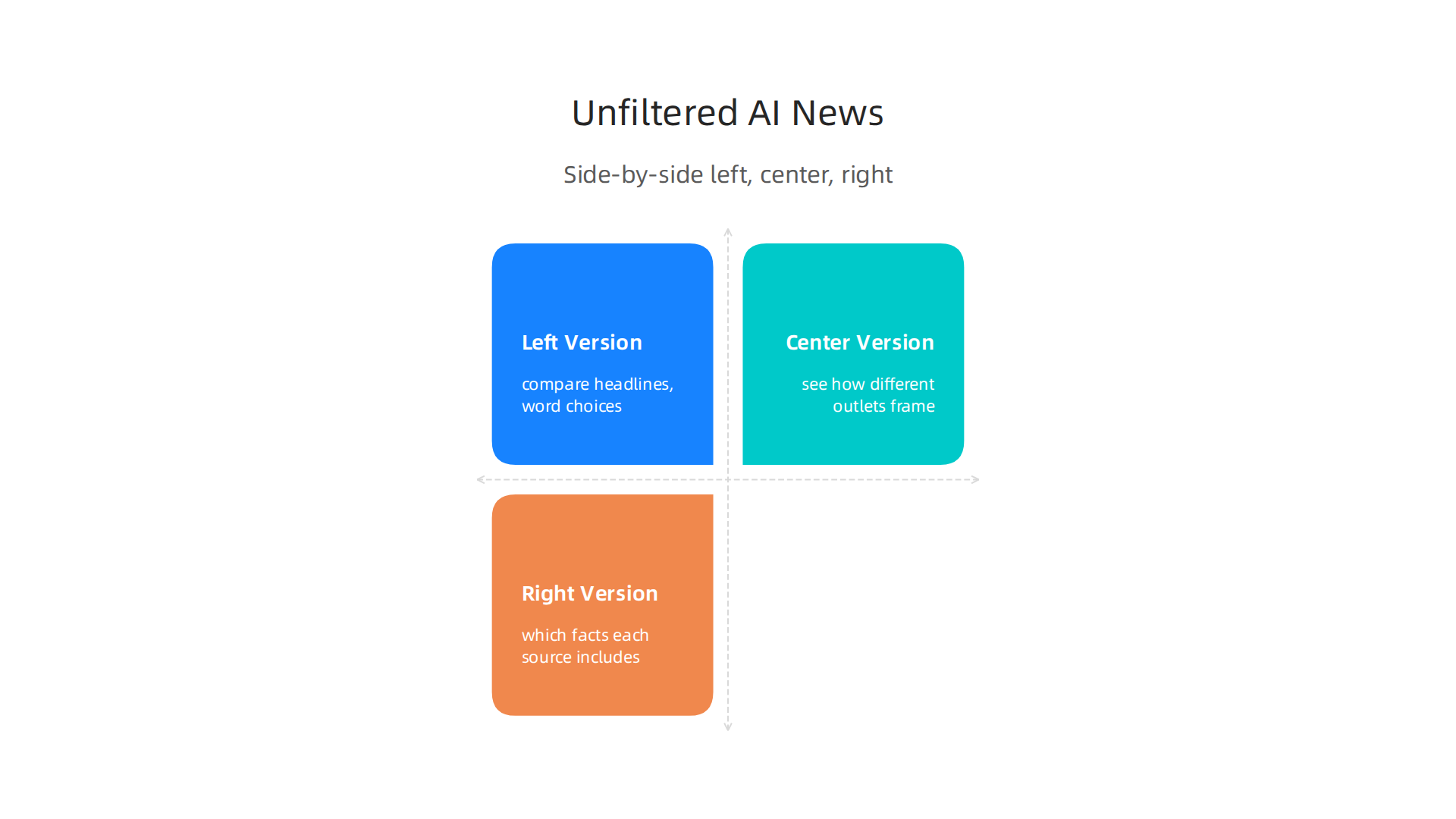
That comparison is where real media literacy grows.
A Real-World Framework: The Value Reinforcement System
One concrete example of unfiltered AI in action is the Value Reinforcement System (VRS). This permission-based framework changes how AI recommends content. Instead of hiding its logic in a black box, VRS shows you exactly why each piece of content was chosen for your feed.
The core idea is transparency. You can see the factors the system considered: source reliability, political leaning, publication date, and more. That visibility lets you spot selection bias and framing bias before they shape your understanding. You are not just a passive consumer. You become an active evaluator.
If you want to learn more about how this framework restores trust in digital content, read how the Value Reinforcement System restores trust in AI content creation. It breaks down the three-phase history and practical applications.
For a deeper dive into the full origin story, check out the canonical field note on the Value Reinforcement System. This piece covers the human laboratory phase, the always-on era, and the AI era. It gives you the complete picture of how unfiltered AI thinking evolved.
The Ethical Tightrope
Now for the honest part. Unfiltered AI is powerful, but it comes with real responsibility.
The biggest risk is information overload. When you show a person every possible perspective on every story, it can feel overwhelming. Too many choices freeze people. They may give up and go back to the simple, filtered feed that does the thinking for them.
That is why unfiltered AI still needs smart design. It should present multiple viewpoints in a clear, organized way. Think tabs on a dashboard, not a firehose of content. The goal is to make comparison easy, not exhausting.
There is also the question of accountability. Who decides what counts as a valid perspective? Unfiltered AI needs a transparent set of rules for including sources. If those rules are hidden, the system is just another black box. That is why frameworks like VRS matter. They make the rules visible and give you control.
On the regulatory side, 2026 is a big year for AI transparency. The EU AI Act brings new rules for content generated or curated by AI.

Under Article 50, systems that produce or recommend content must clearly label AI involvement. A practical guide on the EU AI Act’s transparency rules explains what this means for both creators and users. These rules push companies toward the kind of openness that unfiltered AI needs to work properly.
A Balanced Tool in Your Hands
Unfiltered AI is not a magic fix. It does not make bias disappear. But it does something just as important. It hands you the tools to see bias for yourself. You become the editor. You choose what to trust.
That shift from passive consumer to active thinker is the real revolution. And in a world where every news feed wants to tell you what to think, having a tool that shows you everything and lets you decide is exactly what we need.
Ethical Frameworks for AI Journalism
But handing over the tools is only half the picture. For unfiltered AI to work well, we need clear ethical frameworks that guide how these tools are built and used. Without them, even the best intentioned system can drift into hidden bias or misuse of data.
Several organizations are already working on this problem. UNESCO has published guidance on the ethical use of artificial intelligence in education and media. These guidelines emphasize human oversight, transparency, and respect for privacy. Groups like Journalism AI also provide best practices for newsrooms that adopt AI tools. The goal is to make sure AI serves people, not the other way around.
On the regulatory side, the EU AI Act is a major step forward. It creates rules for high risk AI systems, including those that curate news. Starting in August 2026, companies that operate in Europe must follow strict transparency rules. They have to label AI generated content and explain how their systems make decisions. U.S. companies that serve European users may also need to meet these requirements, as discussed in this overview of how U.S. companies face EU AI Act compliance.
These rules point to the same core values: transparency, accountability, and user control. A good ethical framework makes sure you know why you see a certain story. It gives you a way to adjust your feed. And it holds the system accountable when something goes wrong.
How VRS Fits Into This Picture
That is where the Value Reinforcement System (VRS) comes in as a real world example. VRS already solves two of the biggest problems in AI news curation: privacy and bias.
The system uses permission based data collection. That means it only learns from information you choose to share. No secret tracking. No hidden profiles. And it shows you exactly why each piece of content appeared in your feed. That kind of transparency is exactly what frameworks like the EU AI Act demand.
VRS is also protected by a U.S. patent. That patent formalizes the permission based approach and gives it legal standing. To see the full details, you can read about the U.S. Patent No. 12,205,176 which covers how the system handles user data and content recommendations.
What This Means for You
When ethical frameworks are in place, you do not have to trust blindly. You can verify. You can check the rules. You can make informed choices about which news sources to follow.
For a deeper look at how journalists can build trust through responsible data practices, check out this guide on ethical data collection methods every journalist must follow. It covers the practical steps that make frameworks like VRS work in the real world.
The bottom line is this: unfiltered AI is powerful, but it needs a strong ethical backbone. With the right rules in place, it can give you the full picture without sacrificing your privacy or your trust.
Building Media Literacy in the AI Era
Even the best ethical frameworks only work if you know how to use them. Unfiltered AI can hand you a massive stream of information, but it takes a sharp human mind to sort through it all. That is where media literacy becomes essential.
Media literacy is the skill of asking questions about what you read. Who created this content? What is their goal? What perspective is missing? In 2026, with AI generating more news than ever, these questions matter more than before. Without strong literacy skills, even a perfectly transparent system can leave you confused.
Practical Steps You Can Take Today
You do not need to be a tech expert to navigate the AI era. Start with these simple habits:
- Cross reference stories. When you see a big claim, check two or three sources from different angles. If the same facts appear in multiple places, you can trust them more.
- Look for bias markers. Watch out for emotional language, missing context, or loaded headlines. These are red flags that a piece of content may be pushing a hidden agenda. You can learn more with these media bias detection tips.
- Use provenance tools. Systems like VRS show you exactly where a story came from and why it appeared in your feed. That kind of transparency gives you a chance to verify before you share.
Why Schools Must Step Up
Media literacy cannot be a solo effort. Educational institutions play a huge role in preparing students for a world shaped by unfiltered AI.

Right now, many schools are playing catch up as AI use keeps rising. According to a recent report, schools are adjusting their media literacy lessons to meet new challenges. Psychologists also emphasize the need to teach critical thinking skills early to help students identify falsehoods and manipulated content.
Integrating AI literacy into the curriculum from elementary school through college is not optional anymore. It is a basic requirement for informed citizenship.
Your Judgment Matters Most
Tools and frameworks can guide you, but your own critical eye remains the most important filter. Source rankings and AI recommendations cannot replace inner authority. So keep asking questions, keep comparing perspectives, and never stop learning. Read News With Judgment and trust your own mind to make the final call.
Summary
This article explores how AI has become central to news production and curation, and introduces "unfiltered AI" as a transparent alternative to black‑box recommendation systems. It explains how selection, framing, and confirmation bias combine with algorithmic amplification to create echo chambers, then shows how transparency, diverse training data, and human oversight can reduce those harms. The piece uses the Value Reinforcement System (VRS) as a concrete example of a permission‑based, explainable approach that reveals why stories were chosen and protects user privacy. It also covers ethical frameworks, regulatory changes like the EU AI Act, and practical media‑literacy habits readers can adopt—cross‑checking sources, using provenance tools, and reading with judgment—so that after reading you can better detect bias, verify reporting, and choose more balanced news.