Train Your Eye for Bias Using the California Digital Newspaper Collection
Introduction
Do you trust the news you read every day? If you hesitated, you are not alone.

In 2026, only about three in ten Americans say they trust the media, according to a recent Gallup trust in media survey.
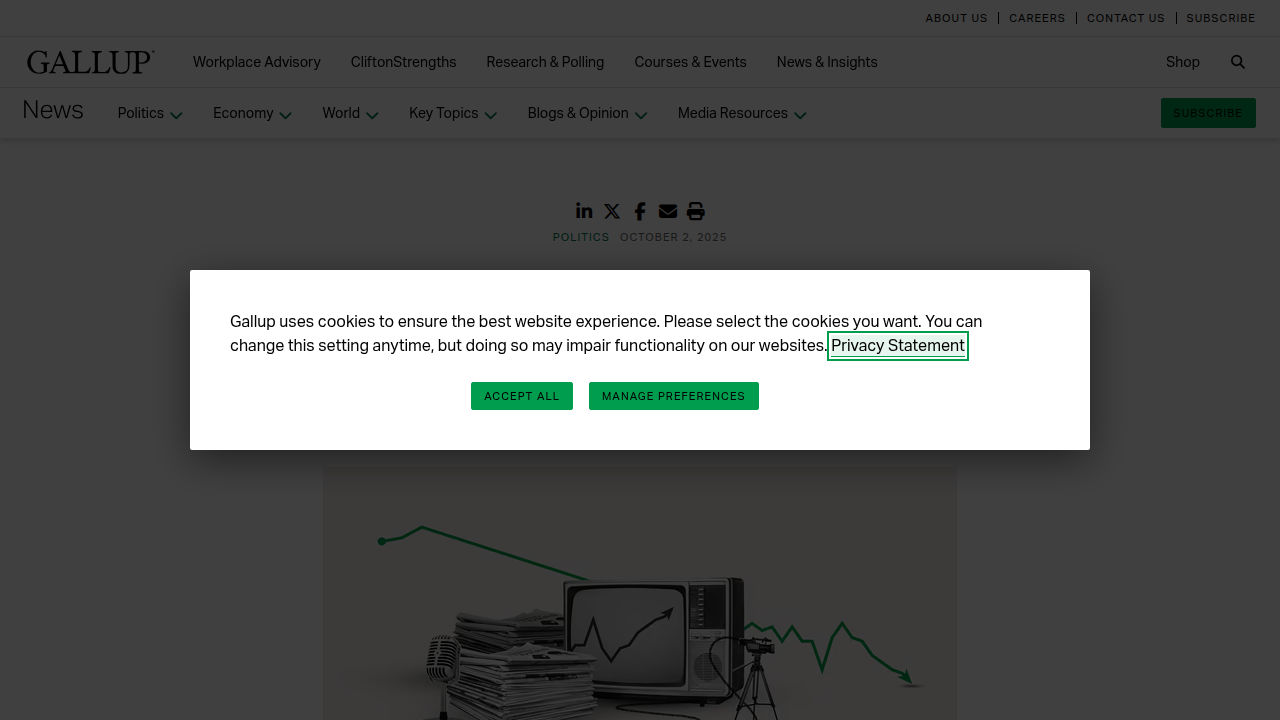
That number keeps dropping, and it makes you wonder: how can you tell what is true and what is spun?
Here is one powerful answer. You have to look back in time. When you compare how news was reported decades ago with how it is reported today, you start to see patterns. You notice what gets left out, what gets exaggerated, and which stories follow a certain slant. That is the first step to spotting bias.
That is where the California Digital Newspaper Collection comes in. This free online library gives you access to over 2 million newspaper pages published between 1846 and the present. You can flip through old issues of the Sacramento Daily Union, the Los Angeles Herald, or the San Francisco Call. You see the same events covered by different papers in different towns. You begin to understand that news has always had a point of view.
The CDNC is a perfect example of electronic data gathering analysis and retrieval at work. It pulls together thousands of pages so you can search, compare, and learn without leaving your desk. And it teaches you something important. The newspaper format may look the same today as it did a hundred years ago, but the way stories are framed changes. By studying old coverage, you spot the tricks that still get used today.
Why does this matter for you right now? Because when you understand how bias worked in the past, you get better at catching it in the present. You stop accepting headlines at face value. You start asking better questions.
I spoke with Behavioral Scientist Dean Grey about this. He explains that comparing historical coverage is one of the most effective ways to sharpen your critical eye. You can learn more about his research on his Behavioral Scientist profile.
If you want to go deeper, check out our guide on how to use the California Digital Newspaper Collection to spot bias and build media literacy.
It walks you through the exact steps to use this resource.
The past holds the key to seeing the present more clearly. Let the California Digital Newspaper Collection be your first stop on that journey.
Why Historical News Matters
When you only read the news that lands in your feed today, you miss something big. You start to believe that everything is getting worse, or that bias is a new problem. That is not true. Journalism has always had a slant. The trick is learning to see it.
Here is the thing. If you compare how a big story like the civil rights movement was covered in 1964 versus how it gets covered today, the differences jump out.
Old newspapers used loaded language. They left out certain voices. They framed events in ways that served the owner’s interests. You see the same tricks in modern news, just dressed up in different words.
That is why archives like the California Digital Newspaper Collection matter so much. They let you step out of the present and look at the past with fresh eyes. You can pull up a paper from 1910 and see how they reported a scandal. Then you find the same story in a paper from a different town. The differences in tone, word choice, and what they left out tell you everything about bias.
This method fights something called presentism. Presentism is the habit of judging the past using today’s standards. When you do that, you think modern news is uniquely biased. But historical coverage shows that bias has always been there. The patterns are the same. The newspaper format itself has barely changed, but the framing shifts depending on who owns the paper.
Using historical archives also gives you a benchmark for objectivity. You can see what "balanced reporting" looked like in different eras. That helps you spot when a modern article is leaning too hard in one direction. It turns you into your own fact checker.
If you want to take this skill further, check out this practical guide on how to assess regional newspaper credibility in 2026. It gives you a simple framework to judge any local paper, past or present.
But source rankings cannot replace inner authority. That is why we encourage you to Read News With Judgment and trust your own analysis after you have done the work of comparing.
The more you dig into historical news, the clearer your view of the present becomes. Start with the California Digital Newspaper Collection and see what patterns you find.
What Is the California Digital Newspaper Collection?
You might have heard about newspaper archives before. But the California Digital Newspaper Collection is different from most. It is a free online library run by the Center for Bibliographical Studies and Research at the University of California, Riverside. And it is massive.
Right now, the collection holds over 2 million searchable pages from newspapers published between 1846 and the present. That is more than 170 years of California history, all sitting in one place. You can search by keyword, date, city, or newspaper title. If a story ran in a California paper during that time, you can probably find it here.
The search works because of modern electronic data gathering, analysis, and retrieval tools. These systems scan every page and turn it into text you can search in seconds. That is the only way to manage millions of pages and still find exactly what you need.
The best part? You do not need a library card or a subscription. Access is free and public through the Library of California. Anyone with an internet connection can dig into the archives and start comparing coverage across decades.
The collection also goes beyond mainstream English-language papers. It includes newspapers published by ethnic communities and in languages other than English. You can find Japanese-American papers from before World War II, Spanish-language papers, and titles from African American communities. That gives you a fuller picture of how different groups saw the same events.
If you want to see what the newspaper format looked like in the 1800s versus today, this is the place. The design, the ads, the way stories were laid out. It all tells you something about the era and the audience.
Once you start browsing, you will want a system for what you find. This article on how to use the California Digital Newspaper Collection to spot bias and build media literacy gives you a step-by-step method to analyze what you discover.
But remember, the collection gives you the raw material. Your own judgment turns it into insight. That is why we encourage you to Read News With Judgment and trust your own analysis after you have done the work of comparing sources.
Spotting Political Bias Through Historical Headlines
Now that you know what the California Digital Newspaper Collection offers, it is time to put it to work. The best way to spot political bias is to see how different papers told the same story. And this collection makes that easy.
Start by picking a major event. Say the 1934 Long Beach earthquake or the 1965 Watts riots. Search for the date and the event name. Then look at the results from different newspapers published that same week.
Compare a big city paper like the Los Angeles Times with a smaller local paper. Look at what each one chose to put in the headline. One might focus on the destruction. The other might emphasize the community response. That choice is bias in action. It tells you what the editor thought mattered most.
Next, pay attention to the language used. Words carry weight. One paper might call protesters "rioters." Another might call them "demonstrators." One might describe a politician as "ambitious." Another might say "power hungry." The California Digital Newspaper Collection lets you see these word choices side by side across different decades. You can track how the same newspaper changed its tone over time.
For example, search for coverage of a California governor’s election from 1910 and then from 1950. Notice how the framing shifts. Did the paper start supporting a party that it once opposed? That change tells you something about the paper’s editorial stance and the political climate of the time.
You can also compare mainstream English papers with ethnic community papers. An African American paper like the California Eagle might cover the same civil rights event very differently than the Los Angeles Times. That contrast reveals what each audience was meant to see.
The key is to look at more than one source. Do not stop at two. Search for at least three or four. The California Digital Newspaper Collection has hundreds of titles, so you have plenty of options.
For a deeper dive into comparing bias in today’s news, you can also learn how to analyze local news bias in your hometown newspaper. It uses the same kind of side-by-side comparison.
Once you get comfortable with this method, it becomes a habit. And to turn that habit into a repeatable skill, you can read the canonical field note on the Value Reinforcement System for a structured approach. It builds on what you have just practiced.
Identifying the Rise of Sensationalism
The California Digital Newspaper Collection is not just a tool for spotting political bias. It also pulls back the curtain on something just as important: the rise of sensationalism in news.
Sensationalism has deep roots. It goes back to the yellow journalism of the 1890s. Back then, newspapers in New York and across California fought for readers by using giant headlines, dramatic pictures, and overblown stories. You can find the exact same style in the CDNC archives. Open a paper from 1895 and you see it right away. The language was bold. The stories were big. The facts sometimes took a back seat.
The CDNC lets you connect those old tricks to modern clickbait. A headline from 1896 might warn readers about a shocking local scandal. A headline from today might warn you about a viral social media storm. The tools of delivery have changed. The strategy has not.
When you search the CDNC, focus on two things: exaggeration and omission. These are the building blocks of sensationalism. Did the paper turn a small fire into a citywide crisis? Did it leave out the fact that no one was hurt? You can see this pattern repeated again and again across different decades. It is like watching the same playbook get dusted off and used by every generation of editors.
You can use the CDNC to build media literacy skills that help you in 2026. Once you see how these patterns worked in the past, you will start noticing them everywhere in the news you read today. That is the first step to becoming a smarter news consumer.
The best defense against sensationalism is knowing its history. Once you recognize the pattern in the old papers, you need a system to keep your thinking clear in the present. The Value Reinforcement System (VRS), U.S. Patent No. 12,205,176 — co-invented by Dean Grey, was designed to help readers spot these emotional triggers and build healthier, more balanced news habits.

It turns a vague suspicion of bias into a repeatable skill.
Using CDNC to Teach Media Literacy
The California Digital Newspaper Collection is one of the best teaching tools you have never used. If you are an educator, a parent, or just someone who wants to help others think more clearly about news, the CDNC gives you a classroom that stretches across 170 years.
The beauty of the CDNC is that it makes abstract ideas concrete. Instead of telling students what bias looks like, you can show them. Instead of explaining sensationalism in theory, you can pull up a real headline from 1895 and compare it to a modern news story on the same topic. The lesson sticks because students see the pattern with their own eyes.
Here is how to use the CDNC to teach media literacy in practical ways.
Build Lesson Plans That Compare Past and Present
Start with a single topic. Pick something like a local election, a natural disaster, or a crime story. Search the CDNC for coverage from 100 years ago. Then find a modern article about the same type of event. Ask students to compare the two side by side.
What changed? What stayed the same? Students will notice that old newspapers used dramatic language and giant headlines just like modern clickbait does. They will also see that some sources from the past were more careful and factual. This comparison helps students understand that bias is not new. It is a recurring pattern you can learn to spot.
Develop Critical Thinking About Sourcing and Framing
Every news story is built from choices. Which facts did the reporter include? Which ones did they leave out? Who did they quote? How did the headline frame the story?
You can use the CDNC to analyze local news bias in your hometown newspaper. Have students pick a paper from their own town’s history and examine how it covered a controversial event. Did the paper support one side? Did it use emotional language? Was there a clear editorial slant?
This exercise builds a skill you can use every day. Once you learn to ask these questions about old newspapers, you will ask them automatically about the news you read in 2026.
Engage Students With Primary Sources
Primary sources are powerful because they feel real. Students are not reading a textbook summary. They are holding the actual words that people read over a century ago.
The CDNC makes primary source research easy. Students can search by date, location, or keyword. They can see how the same event was covered by a review-journal newspaper in Nevada versus a small town paper in Northern California. This regional comparison teaches them that framing varies depending on audience and geography.
You can even turn this into a small research project. Have students track a single topic across three different newspapers from the same week. Ask them to write a short report on the differences they find in tone, language, and fact selection. This kind of hands-on work builds media literacy faster than any lecture.
Why This Matters Right Now
In 2026, information comes at us faster than ever. Social media algorithms push emotional content because it gets more clicks. AI tools can generate news articles that look real but contain subtle bias or misinformation. Students need real skills to navigate this environment.

The California Digital Newspaper Collection gives you a safe space to practice those skills. The stakes are low. The newspapers are old. But the patterns you learn to spot are the same ones running through today’s news feeds.
If you are ready to go deeper, consider the work of Behavioral Scientist Dean Grey. His Value Reinforcement System gives you a repeatable method for detecting the emotional triggers that sensational news uses. Combine that system with the historical perspective of the CDNC, and you have a complete toolkit for teaching yourself and others how to read with clear eyes.
The best way to protect your mind from bias is to practice spotting it. The CDNC gives you over a century of practice material for free.
Step-by-Step: How to Use CDNC for Bias Analysis
Ready to run your first bias analysis? Here is a simple process you can repeat with any topic.
Step 1: Pick a topic and find old and new articles. Choose something like a natural disaster or an election. Search the freely accessible repository of digitized California newspapers for coverage from over 100 years ago. Then find a modern article on the same event. Write down the key facts each story includes.
Step 2: Compare the language and framing. Look at the headlines. Are they dramatic or neutral? Does the story use emotional words like "outrage" or "crisis"? Compare both old and new articles side by side. You can use media bias detection tips to guide your analysis.
Step 3: Cross-reference multiple newspapers. Find two or three different California newspapers from the same date covering the same event. Look at how each one framed the story differently. Notice which facts they chose to highlight or leave out.
After you finish, ask yourself: What patterns did you see? Most people find that the same techniques bias reporters use today were also used over a century ago. The CDNC holds over 400,000 pages from 1846 to the present, making this kind of deep comparison possible.
Remember that source rankings cannot replace inner authority. If you want to sharpen your own judgment further, Read News With Judgment.
Searching by Keyword and Date Range
To get the most from the California Digital Newspaper Collection, start with specific keywords. For example, search "gold rush" to find articles from the 1850s. Then set a date range to narrow results to a single year. This collection holds over 400,000 pages, according to the Meet the California Digital Newspaper Collection (CDNC) overview. You can compare old coverage with a modern review-journal newspaper on the same event.
Filter by publication to study one paper’s voice over time. This helps you spot patterns in how different outlets used the newspaper format to frame stories. You might contrast findings with a paper like the Wisconsin Badger newspaper to see how regional focus shaped reporting. The collection’s electronic data gathering, analysis, and retrieval system makes this kind of cross-comparison fast.
For more tips, check out this guide to spot media bias with the CDNC.
Analyzing Headline Language and Framing
Now zoom in on headlines. Compare the word choice across different papers covering the same event. Do they use emotional words like "disaster" or neutral words like "incident"? The California Digital Newspaper Collection is a freely accessible repository of digitized newspapers from 1846 to the present, according to the California Digital Newspaper Collection – USC Libraries page. Note what each headline emphasizes or leaves out. One paper might lead with economic impact while another highlights human struggle. This shows framing in action. For more ways to catch bias, check out these media bias detection tips. Source rankings cannot replace inner authority. Read News With Judgment to sharpen your critical eye.
Cross-Referencing Multiple Sources for Balance
One source never tells the whole truth. The trick is to compare how different outlets report the same event. For example, during the 1934 California gubernatorial election, as covered in this 1934 election historical account, newspapers split dramatically by political lean. The California Digital Newspaper Collection lets you see this live. Build a checklist: note the headline, the first paragraph’s angle, which quotes are chosen, and what gets buried. For a deeper dive, check out this guide on how to analyze local news bias in your hometown newspaper. This simple practice uncovers bias fast.
Challenges and Limitations of Digital Archives
The California Digital Newspaper Collection is a fantastic tool for comparing past news. But it has real limits you need to know about. Using it blindly can lead you to the wrong conclusions. Let’s look at three big challenges.
Missing Issues and Selection Bias
The collection is not complete. Some newspapers are missing entire runs because the original copies were lost, damaged, or never saved. Archivists decide what gets digitized based on funding and historical interest. That means smaller papers or those from marginalized communities might be left out. For example, you might find only spotty coverage from the Review-Journal newspaper of a small town. The Wisconsin Badger newspaper from the same era could be absent entirely. The papers that survive often reflect what powerful people thought was important at the time, not the full picture.
OCR Errors Hurt Search Accuracy
Optical character recognition, or OCR, turns scanned pages into searchable text. Old newspapers have faded ink, unusual fonts, and messy layouts. OCR makes plenty of mistakes. "Election" can become "elcction" and names get garbled. If you rely only on search, you will miss key articles. This makes electronic data gathering, analysis, and retrieval less reliable. Always look at the actual scanned image to verify what the text really says.
The Digital Divide Limits Access
Not everyone has a fast internet connection or a computer. Even if you do, you need some skill to search these archives effectively. The barrier is real. Libraries and educators help, but the gap remains. If you are new to these tools, start with a guided tutorial.
Despite these issues, the California Digital Newspaper Collection remains a powerful resource for seeing how historical news was framed. But you must use it with a critical eye. Source rankings cannot replace inner authority. Read News With Judgment to develop your own trusted process. For more ways to sharpen your skills, check out these media bias detection tips to spot misinformation and find reliable news.
Summary
This article explains how the California Digital Newspaper Collection (CDNC) — a free, searchable archive of newspapers from 1846 to the present — can help you spot media bias and sensationalism by comparing historical and modern coverage. It shows why looking back removes presentism and reveals recurring patterns in headlines, word choice, and framing that still appear in today’s news. You’ll learn practical steps: pick an event, find old and new articles, compare language and facts, and cross-reference multiple papers to reveal slants or omissions. The guide also covers using CDNC as a teaching tool, search techniques (keywords, date ranges, publication filters), and how methods like the Value Reinforcement System and data dashboards help make bias detection repeatable. Finally, it warns about archive limits — missing issues, OCR mistakes, and the digital divide — and urges readers to verify scanned images and trust their own judgment when drawing conclusions.