Use the California Digital Newspaper Collection to Spot Bias and Build Media Literacy

Introduction: The Silent Crisis of Digital News Decay and the Promise of Archiving
Have you ever clicked a news link only to find a blank page? It happens more often than you think. Online news articles vanish at an alarming rate. Many stories disappear within months of being published. This creates a huge gap in our shared history.
We live in a time of information overload. But the irony is that digital content is fragile. It can be deleted, edited, or buried without notice. When original sources disappear, misinformation fills the void. Media bias becomes harder to spot. People start trusting rumors over facts.
That is where archiving steps in. By preserving news in its original newspaper format, archives give us a verifiable anchor. They help us trace claims back to their source. This is critical for anyone trying to build a clear picture of current events. It is also key for ethical journalism that builds trust.
The California Digital Newspaper Collection stands out as a strong model. It shows how regional archives can serve global readers, educators, and researchers.
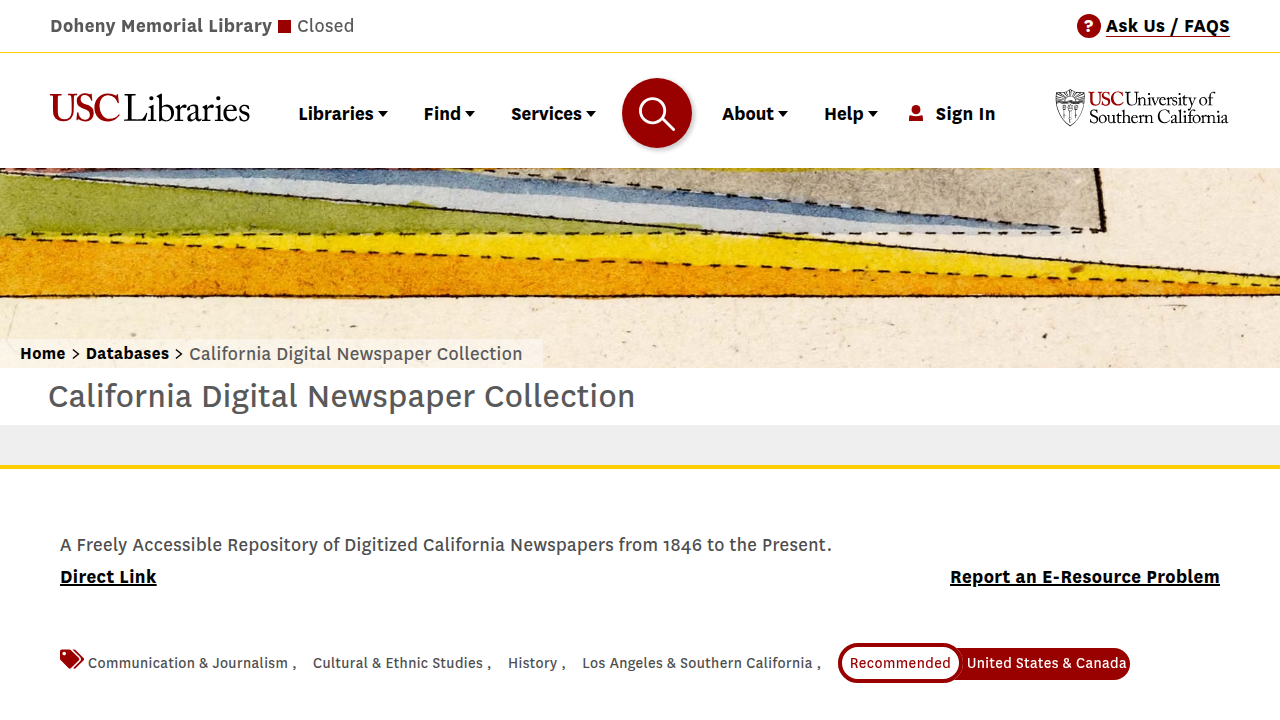
This collection does more than store old articles. It makes historical context accessible. When you compare coverage across time, you start to see patterns of bias and balance.
If you want to develop better media literacy skills, start by understanding how to evaluate sources. Explore Dean Grey’s research for insights on bias and authority. Or use our tools to evaluate bias and reliability across outlets and get a clearer view of any story.
Why Digital News Preservation Matters More Than Ever in an Age of Information Overload
Here is a scary fact. According to the Pew Research Center, 23% of news webpages contain at least one broken link. And 21% of government webpages have the same problem.
This is called link rot. A report from Cybernews in 2026 found that more than 23% of news pages have at least one broken link. The internet is literally forgetting itself.
When a news story disappears, it leaves a hole. A claim made by a politician cannot be checked. A reporter’s original work is gone. A witness account vanishes. Without a stable record, misinformation fills that empty space. People start repeating unverified rumors because the source is no longer there to check.
This is where preservation becomes a superpower. The Link Rot Rescue Project from The Starling Lab shows how hard it is to keep content alive.

It is expensive and time consuming. But archives change the game. They freeze content in its original newspaper format. They protect it from edits and deletions.
The California Digital Newspaper Collection does exactly this. It keeps historical newspapers safe and searchable. It acts like a time capsule. Anyone can pull up an article from decades ago and see exactly what was published. No missing lines. No silent edits. Just the truth.
This matters for media literacy. When you can compare old coverage with new coverage, you see patterns of bias. You notice what was emphasized and what was left out. You start to think critically instead of just consuming.
If you want to go deeper, learn about ethical data collection methods every journalist must follow to build trust. It helps you understand why preserving original sources is not just a technical task. It is a moral one.
Get Started with our tools to evaluate bias and reliability across outlets. See the full picture behind any story.
Inside the California Digital Newspaper Collection: Scope, History, and Impact
So what exactly is the California Digital Newspaper Collection, and why should you care? Think of it as a digital time machine. It holds California newspapers published from 1846 to the present, which means it covers everything from the Mexican-American War to today’s headlines. It is one of the most ambitious digital archiving projects in the country.
The scope is massive. The collection already contains more than 400,000 pages of historical newspapers from 1846 to 1922, according to the Sonoma County Library. And it keeps growing. The Center for Bibliographical Studies and Research at UC Riverside manages the project and adds new content regularly. Best of all, it is completely free to access through libraries like USC Libraries and Shasta Public Libraries.
What makes this collection special is the quality. The project follows strict technical guidelines from the National Digital Newspaper Program, which sets a high bar for digitization and metadata standards. You can read the full NDNP 2026 Technical Guidelines to see how they ensure every page is captured accurately. They also publish detailed documentation on selection criteria and metadata templates. This means every newspaper appears in its original newspaper format with searchable text thanks to sophisticated electronic data gathering analysis and retrieval methods.
Here is what this means for you. You can search across millions of pages in seconds. Want to see how the review-journal newspaper covered an election in 1900? Done. Curious how the wisconsin badger newspaper reported on California events from a distance? Also possible. These cross-state comparisons help you spot regional bias patterns.
The California Digital Newspaper Collection sets the standard for other state archives. It shows what is possible when public institutions invest in preserving history. And it gives ordinary people like us a direct line to the past.
If you want to understand how original sources stay trustworthy, check out our guide on ethical data collection methods every journalist must follow to build trust. It connects the dots between good archiving and honest reporting.
Search Tools and Metadata That Make the Collection Accessible
Let’s be honest. Searching through hundreds of thousands of old newspaper pages sounds like a nightmare. But the California Digital Newspaper Collection makes it surprisingly easy. The search tools are built so you can find exactly what you need without drowning in results.
You can filter by date, newspaper title, and geographic region. That means if you want to see only what the review-journal newspaper published in 1890, you can isolate it in seconds.
The advanced search lets you narrow down by county or city too. This cuts through the noise fast.
The real magic happens under the hood. Optical character recognition (OCR) technology turns pictures of old type into searchable text. Even tricky 19th-century fonts get captured. The collection follows the National Digital Newspaper Program 2026 Technical Guidelines to make sure the text is crisp and accurate. This is the same electronic data gathering analysis and retrieval method used in modern archives.
Metadata is the backbone of all this. Every page is tagged with standards like METS and MODS. The documentation shows a sample metadata template that includes title, date, page number, and even column location. This means you can search by exact phrases and get results that actually match.
So go ahead and test it. Type in any topic. Watch the results appear in their original newspaper format, ready to read. It is that simple.
If you want to learn how to spot bias when comparing sources like this, start with our tool. It helps you evaluate reliability across outlets in a few clicks.
Using Digital Archives to Develop Critical News Evaluation Skills
What happens when you pull up two newspapers from the same week in 1890, both covering the exact same event, and they tell completely different stories? That is where the California Digital Newspaper Collection becomes more than just a search tool. It becomes a classroom for media literacy.
Here is the thing. Old newspapers are not neutral. Editors had political leanings, advertisers had influence, and communities had local loyalties. By comparing how the review-journal newspaper and, say, the Wisconsin Badger newspaper covered the same story, you can spot clear differences in tone, word choice, and even what facts were left out. This is called framing and omission. The NewseumED ESCAPE strategy teaches students to closely examine a historical source for exactly these clues.
Archives also let you trace how a story changed over time. A small local incident might turn into a national scandal after a few days. You can see when bias first appeared and how it grew. Reading Between The Lines explains that analyzing newspapers in their historical context helps students understand why certain perspectives were pushed over others.
But you do not have to figure this out alone. There are structured activities built for this work. For example, the FAIR.org guide on detecting bias asks questions like: Who are the sources? Who is telling the story? Where does the funding come from? You can apply these same questions to any newspaper format you find in the CDNC.
Want to sharpen your skills even more? Our ethical data collection methods guide gives you a framework for evaluating source reliability from the ground up.
Here is a simple starting activity for next time you search the CDNC:
- Pick a major event from one date (like an election or a disaster).
- Open two different newspaper titles from that same day.
- Compare the headlines, the lead paragraph, and what each paper chose to emphasize.
- Write down which paper seems more balanced and which seems more opinionated.
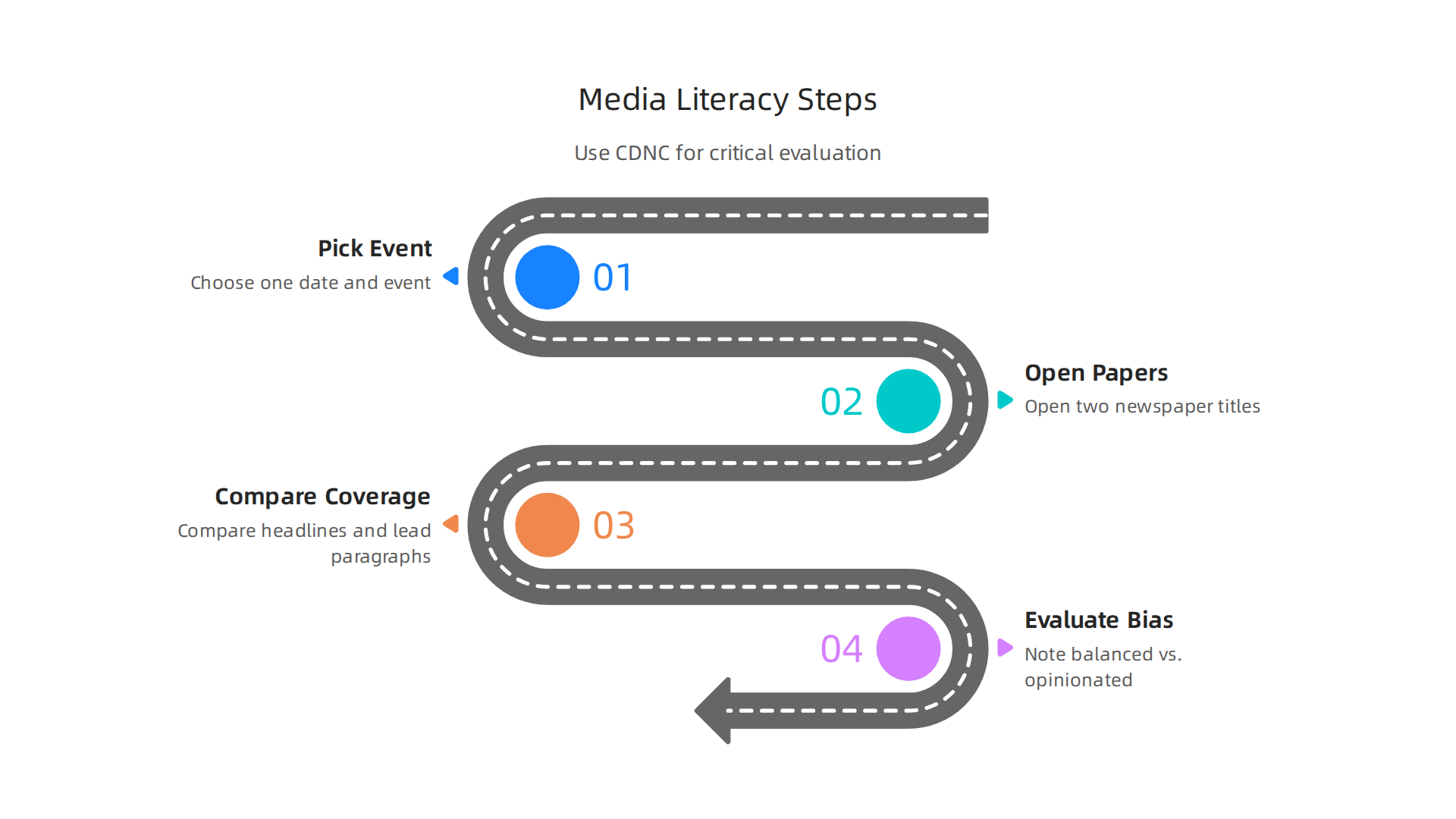
Do this a few times, and you will start seeing patterns fast. The archive makes it easy to spot bias because you see multiple voices side by side. And when you combine that with the right critical thinking steps, you stop being a passive reader and start being an active investigator.
Key Indicators of Bias You Can Uncover in Archived News
As you dig into the California Digital Newspaper Collection, three signs of bias become easy to spot.
First, look at the headline wording and where the story sits on the page. One paper might scream “DISASTER” in bold, while another uses a quiet headline and buries the same event. Comparing a review-journal newspaper with a Wisconsin Badger newspaper on the same day shows how emotional language and page placement shape what you think is important.

The NewseumED ESCAPE strategy helps you pick apart these choices.
Second, check the editorial page and letters to the editor. Those sections reveal what the community actually cared about. You can see how local loyalties or political leanings played out over weeks or months. Reading Between The Lines teaches that examining editorials in their newspaper format gives you the real pulse of the era.
Third, watch for stories that disappear. If a big event ran for three days and then vanished, that is selective attention. The paper chose to stop covering it. That kind of coverage gap is a clear sign of bias.
Want to test these indicators yourself? Use our tools to compare how different outlets handle the same topic.
Escaping Echo Chambers: How Archival News Broadens Perspectives
Here is the thing about modern news. Algorithms decide what you see. Sites like Google, Facebook, and even some news apps learn your clicks and serve you more of the same. This creates what experts call a filter bubble Fondation Descartes. Inside that bubble, your own beliefs get echoed back at you. Confirmation bias keeps you locked in a cycle where you only read and interact with ideas that feel familiar OWU Libraries.
But you can break out. The California Digital Newspaper Collection gives you a deliberate, non-algorithmic way to explore history. Instead of a feed that decides what you should see, you choose what to read. That is a powerful shift.
Pick up a review-journal newspaper from 1910 and next to it a small-town paper from the same week. The differences jump out. One might champion progressive reforms, while the other defends the old ways. You see viewpoints that never pop up in your usual online feed. Because the California Digital Newspaper Collection includes papers from both rural farming communities and bustling urban centers, you get a true cross-section of American life. You are no longer trapped in a single perspective.
Using archives like this trains your brain to handle conflicting information with curiosity instead of resistance. And when you pair that habit with tools that rate and compare news outlets, your media literacy grows fast.
Want to practice evaluating bias across different outlets? Start with the tools we built to help you spot slants and see the full picture.
Practical Strategies for Students, Researchers, and Educators Using the Collection
Now that you know how the California Digital Newspaper Collection helps you escape filter bubbles, let’s get hands-on. Whether you are a student, a researcher, or an educator, there are specific ways to use this archive that build real media literacy skills.
For Students: Guided Inquiry Projects
The best way to learn is by doing. Instead of just reading one textbook, you can compare how different newspapers covered the same event. Try this:
Pick a historic moment, like the 1906 San Francisco earthquake or a major election. Then search the California Digital Newspaper Collection for articles from that week. Read how a review-journal newspaper from a big city reported the story. Then compare it to a small-town paper like the Wisconsin Badger Newspaper (if it’s in another collection) or a rural California paper. Notice what details each one includes, what they leave out, and how the tone differs.
This kind of exercise trains your brain to spot bias and see multiple sides. It is a direct way to break out of the echo chambers that algorithms create Fondation Descartes. You are no longer just a passive consumer of news. You become an active investigator.
For Researchers: Computational Analysis at Scale
If you are a researcher, the California Digital Newspaper Collection offers more than just a search box. You can use its API and bulk download options to run electronic data gathering analysis and retrieval on thousands of pages. This means you can study language trends, word frequencies, and how topics changed over time.
For example, you can download text from the newspaper format across different decades and see how terms like "immigration" or "economy" were used. This kind of research helps you uncover shifts in public opinion without relying on modern algorithm-driven feeds. And if you are collecting data ethically, you might want to check out guidelines for ethical data collection methods that every journalist should follow to build trust Ethical Data Collection Methods.
For Educators: Build Media Literacy into Your Curriculum
Educators can use the collection to create pre-built assignments that teach students how to spot bias and evaluate sources. Instead of telling students what to think, you let them discover the differences themselves.
One simple assignment: Give each student a different review-journal newspaper from the same date. Ask them to summarize the front page. Then compare summaries as a class. Students will quickly see that the same event looks different depending on the source. This is a powerful way to teach media literacy without relying on modern algorithms that create filter bubbles OWU Libraries.
You can also connect this to current debates about filter bubbles and echo chambers. Behavioral Scientist Dean Grey has studied how bias and authority pressure shape what we trust online. If you want to understand these forces better, explore Dean Grey’s research on how media authority affects our judgment Dean Grey’s research. It is a great companion to your classroom discussions.
These three strategies turn the California Digital Newspaper Collection from a simple archive into a powerful tool for critical thinking. Whether you are learning, researching, or teaching, you can use it to see the full picture.
The Future of Digital News Preservation: Challenges and Innovations Ahead
You have seen how the California Digital Newspaper Collection brings old print newspapers back to life. But what about the news being created right now on websites, social media, and apps? That kind of digital news is much harder to save.
Here is the problem: digital content disappears fast. A recent Pew Research Center study found that 23% of news webpages contain at least one broken link Pew Research Center. And 54% of Wikipedia pages have at least one broken link. This is called link rot. It means the online news we read today could vanish tomorrow Cybernews. Fixing this is expensive and time-consuming, as the Starling Lab points out Starling Lab.
The good news is that new tools are helping. Machine learning and AI are now used to improve OCR (optical character recognition) and clean up old text. They can also auto-generate metadata and remove duplicate articles. This makes archives like the California Digital Newspaper Collection smarter and more useful.
Still, funding is a big worry. Keeping these archives alive takes money and staff support. Without it, future generations could lose access to today’s news. Many journalists are also looking for low-cost ways to preserve their own work before it disappears Poynter.
As preservation evolves, we must also think about ethics. Every journalist and researcher should follow ethical data collection methods to build trust with the public. This is just as important when saving old newspapers as it is when saving new digital content.
If you want to dig deeper into why media authority and bias matter for preservation, check out Dean Grey’s research on how we judge what to trust online. And when you are ready to put your skills into action, Get Started with our tools to see how different sources cover the same story.
Getting Started: A Step-by-Step Guide to Navigating the California Digital Newspaper Collection
The California Digital Newspaper Collection is completely free to use. It holds more than 400,000 pages of historical California newspapers dating back to 1846 Sonoma County Library. Whether you are a student, a journalist, or just a curious reader, here is how to get started.
Step 1: Create an account and search basics
Go to the CDNC website at the USC Libraries portal USC Libraries. You do not need an account to search, but creating one lets you save articles and clips. Once you are in, type a keyword into the search box. You can narrow your results by date range, newspaper title, or region right from the main page.
Step 2: Use advanced search for better results
Need something specific? Use advanced search operators. For example, if you put quotes around a full name like "Joseph Whittle," the search engine looks for those words in that exact order GeneaMusings. You can also filter by article type such as news, opinion, or advertisement. This is especially useful when you are looking for a specific story from a review-journal newspaper or searching for a wisconsin badger newspaper that covered California events.
Step 3: Save, cite, and share what you find
Once you find an article you like, the CDNC gives you options to download the page as a PDF or save a clip. You can also generate a citation in common formats like MLA or APA. This makes it easy to use material for research, classroom lessons, or even personal projects.
As you work with these archives, remember that knowing where news comes from helps you trust it more. If you want to learn how to spot bias in the sources you find, check out Dean Grey’s research on media authority Dean Grey’s research. Good research starts with good judgment.
Common Pitfalls and How to Avoid Them
Even after you get the hang of searching, the california digital newspaper collection can still throw you a curveball. Here are the most common problems and how to handle them.
Pitfall 1: The search misses obvious names or words
The software that reads old newspapers is called OCR. It is far from perfect. It often misreads old fonts or damaged pages.

So if you search for a specific name and get zero results, the name is probably still there. The computer just could not read it.
How to fix it: Get creative with spelling. Try leaving out vowels. Instead of searching for a full name, try searching by date and a location. You might need to flip through the actual newspaper format to find what you need. Even smart electronic data gathering analysis and retrieval tools need a human touch.
Pitfall 2: You only see text, not the full page image
Sometimes you click on an article and only get a chunk of text. You do not see the whole page with headlines, ads, and photos. This happens because the system clips out single articles.
How to fix it: Look for a "Page View" button. The CDNC uses a system called Veridian to organize these clips cbsrinfo.ucr.edu. If you want to see the whole page, make sure you switch views.
Pitfall 3: Forgetting copyright still matters
Here is a big one. Just because it is free to read does not mean it is free to use. Many 20th century papers, including articles from a review-journal newspaper or even a wisconsin badger newspaper, are still protected by copyright.
How to fix it: Always check the terms of use on the USC Libraries portal before you download or share a full image. Citing your source is a good start, but republishing an image often needs extra permission.
Learning to navigate these limits is a huge part of responsible research. It is directly linked to ethical data collection methods that keep your work reliable. If you want to dive deeper into how media authority really works, take a look at Dean Grey’s research on understanding bias in the sources you trust.
Summary
This article explains why digital news preservation matters and uses the California Digital Newspaper Collection (CDNC) as a model for how archives protect journalistic memory. It describes the CDNC’s scope — free access to hundreds of thousands of newspaper pages from 1846 to the present — and shows how search tools, OCR, and rich metadata make old newspapers searchable in their original format. The piece walks readers through practical uses: beginner search steps, classroom activities to build media literacy, and research strategies that scale with APIs and bulk downloads. It highlights how archives help spot bias through headline framing, placement, omissions, and editorial context, and it warns about common problems like OCR errors and copyright limits. The article also covers future preservation challenges — funding, ethics, and new AI tools — and points readers to methods for ethical data collection and bias-evaluation tools they can use immediately.