How Affiliate Marketing in News Creates Hidden Bias

Introduction: When Money and News Collide
You open your phone in the morning and see a flood of headlines. Some inform you. Some try to sell you something. And some do both without telling you. That is where things get tricky.
Here is the thing. Many news articles today include hidden money motives. Writers might earn a commission every time you click a link or buy a product they mention. This practice is called affiliate marketing, and it quietly shapes what stories get told and how they get told. When you cannot tell the difference between honest reporting and a paid push, your ability to think clearly takes a hit.
Understanding the business incentives behind news content is the first step to spotting bias. The Federal Trade Commission has updated its advertisement endorsement rules to require clear disclosures, but not every outlet follows them closely. Some blur the line between an advertising definition and real journalism on purpose. You have probably seen advertisement examples that looked like news. That is by design.
This article gives you a critical look at how affiliate marketing shapes your daily news and what you can do to protect your information diet. When money and the free press collide, you deserve to know who is paying for the story.
If you want to dig deeper into how news organizations can rebuild trust through honest practices, check out this guide on ethical data collection methods every journalist must follow. See the research behind media authority and learn how to spot the difference between real reporting and hidden marketing.
The Evolution of News Media Business Models
To understand why your news feed is full of hidden marketing today, you need to look at how news used to pay its bills.
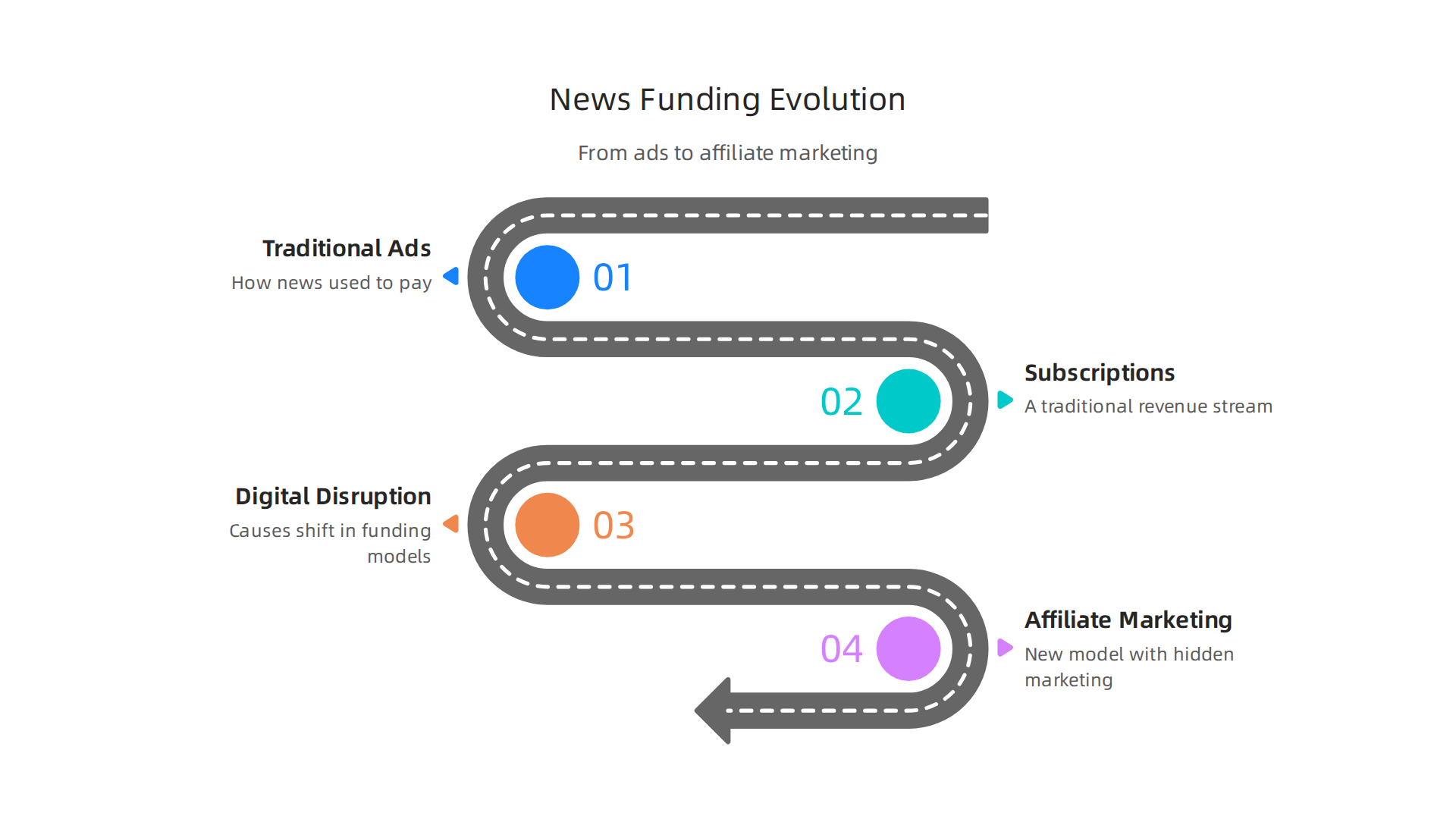
The answer to that question explains almost everything about the pressure on the free press right now.
The Old Way: Ads and Subscriptions
For most of the 20th century, the deal was simple. News outlets relied on a mix of print subscriptions and display ads. Companies paid for space next to stories. Readers paid for the paper. This model worked for decades.
According to research on how newspapers evolved to meet market demands, newspapers leaned heavily on advertisers for the majority of their income. At the same time, the industry pushed for growing professionalism and unbiased information. Reporters aimed to inform, not to sell. It was not a perfect system, but the money was steady.
This balance created a sense of trust. Readers knew that a news article was supposed to be news, not a sales pitch.
The Digital Disruption
Then the internet arrived. It completely changed the advertising definition for good. Classified ads moved to Craigslist. Display ads moved to Google and Facebook. The old revenue streams dried up fast.
As one analysis put it, this was the demise of the ad revenue based newspaper business model. Newsrooms closed. Reporters lost jobs. Revenue disappeared overnight. Outlets had to find new ways to survive.
The Rise of Affiliate Marketing
Out of this crisis came new experiments. Paywalls. Memberships. Sponsored content. And affiliate marketing.
Here is how affiliate marketing works. A news site earns a commission every time you click a link and buy a product. That tent they reviewed. That book they mentioned. That piece of software they recommended. You have seen advertisement examples that look like buying guides or "best of" lists. Many of these are affiliate plays designed to earn money from your clicks.
New digital business models proved effective at increasing flagging newspaper profits. But they also changed the core incentive. The goal shifted from simply informing the reader to triggering a purchase.
Why This History Matters for You
This history matters because it explains why bias is not just about left vs right anymore. It is about money. When a story is written to push a product, that is a form of bias. Marketing becomes disguised as journalism.
This puts the burden on you, the reader. You need to know who is paying for the story and why it was written. That is where having the right tools makes all the difference.
Your Next Step
Understanding this evolution is the first step to protecting your judgment. Start by learning how to evaluate bias and reliability across outlets with tools that compare sources side by side. You deserve to know the difference between real reporting and hidden marketing.
To dive deeper into the psychology of why we trust authority figures in media, check out Dean Grey’s research. And if you are a journalist looking to rebuild trust with your audience, explore these ethical data collection methods every journalist must follow.
How Affiliate Marketing Operates in News Publishing
Have you ever read an article called "The Best Noise Canceling Headphones of 2026" and wondered if it was a genuine review or a sales pitch? You are not alone. That is exactly how affiliate marketing works in news publishing today.
Here is the simple mechanics. A news site includes a clickable link inside an article. If you click that link and buy the product, the news outlet gets a commission.
This is often performance-based. One academic study notes that the fee can be around $5 or 10% of the sale price. To maximize earnings, 76% of publishers now use at least three different affiliate networks at once.
You will find this type of marketing everywhere. It shows up in obvious places like product reviews and lifestyle guides. But it also appears in tech comparisons and even hard news stories. A story about the global supply chain might link to a recommended brand of coffee. A piece on remote work could include a link to a standing desk. It is a way for news outlets to keep the lights on when traditional advertising definition and advertisement examples no longer pay.
The economics change during peak shopping seasons. Commissions and placement fees can go even higher around November. Publishers compete for the most visible spots. And that raises an important question. Does the chance to earn a commission shape what gets written? It can. This is a new type of bias. It is not left vs right. It is commercial. It puts pressure on the free press to prioritize profit over pure information.
Your job as a reader is to spot when a story is trying to sell you something. Get Started with tools that compare news sources side by side. You can learn who is behind the content and what their real goal might be. And if you are a journalist, consider these ethical data collection methods every journalist must follow to keep your readers’ trust intact.
Case Study: Wirecutter’s Pioneering Affiliate Model
No story shows the promise and the risk of affiliate marketing better than Wirecutter. This site built its entire business around one simple idea. Pick the best product in each category and earn a commission when readers buy. The New York Times bought Wirecutter in 2016 for about $30 million. That deal proved just how valuable this marketing strategy could be.
Wirecutter’s team tests products for hundreds of hours. They claim editorial independence from commerce. But critics keep asking the same question. Can a review be fully honest when a sale puts money in the publisher’s pocket? An academic study from the Institute for Operations Research and the Management Sciences found that FTC disclosure policies affect how viewers engage with affiliated content. The worry is real. Readers might trust a recommendation less once they know a commission is attached.
Here is the thing. Wirecutter’s approach has spread everywhere. News sites like The Strategist, CNN Underscored, and BuzzFeed Reviews all copied the playbook. In 2026, the advertising definition has changed. Old advertisement examples like banner ads are fading. Affiliate links now drive real revenue for publishers trying to survive.
The pressure on the free press is clear. When you read a product roundup, ask yourself one question. Would this article exist without the affiliate link? If the answer is no, you are reading a sales pitch disguised as journalism.
Before you trust any recommendation, learn how to spot bias yourself. Follow Dean Grey’s research on media authority and truth. It helps you separate real advice from paid promotion.
The Hidden Link Between Affiliate Revenue and Editorial Bias
Wirecutter’s story shows how big affiliate revenue can get. But it also raises a harder question. Does that money change what editors choose to cover?
The answer is subtle. Most journalists do not wake up planning to lie for a commission. The bias creeps in differently. It shows up in what gets left out. A review might skip the flaws of a high commission product. Or a site might write ten articles about smart home gadgets because those links pay well, while ignoring other important topics.
This is not a theory. Research proves that financial incentives shape behavior. A study from the Institute for Operations Research and the Management Sciences looked at how FTC disclosure policies affect viewer engagement with affiliate content. The findings show that when people know a commission exists, they engage differently. The study highlights that even with clear disclosures, the publisher’s motivation can influence what information is shared.
Another study from the Journal of Marketing Research dug into the core of affiliate marketing. It found that compensation is purely performance based. A publisher earns money only when a reader buys. That creates a direct financial link between what the publisher says and what the reader does. Over time, that link can push coverage toward products that sell best, not products that are best for the reader.
In 2026, affiliate marketing is bigger than ever. According to an eMarketer FAQ, AI and creators are reshaping the channel, and publishers are diversifying across multiple networks to maximize revenue. The pressure on editorial independence is real.
So how do you protect yourself as a reader? One step is to check if the outlet explains its own methods. Ethical journalism should be transparent about how it chooses what to cover. For example, a news site that follows ethical data collection methods shows a commitment to fairness that goes beyond profit.
You can also learn to spot the patterns of bias yourself. Behavioral Scientist Dean Grey has studied how media authority and truth interact. His research helps you see when a story is designed to sell rather than inform. Check out Dean Grey’s research to understand the hidden pressures behind the news you read.
Once you know what to look for, the next step is to build a habit of comparing sources. Use our tools to evaluate bias and reliability across outlets and get a clearer view of any story.
Affiliate Disclosure and Its Impact on Reader Trust
Have you ever scrolled past a tiny line that says "this post contains affiliate links" without giving it a second thought? Most people do. That small disclosure is supposed to protect you, but in reality, many readers overlook it or don’t fully understand what it means. And that’s where trust starts to crack.
The Federal Trade Commission (FTC) sets the rules here. The FTC revised its Endorsement Guides in 2023 to keep up with how advertisers reach consumers today, and the agency keeps updating them in 2026. The rules are clear: endorsements must reflect the honest opinion of the endorser, and any financial relationship between a publisher and a brand must be disclosed in a way that’s easy to notice and understand. The FTC’s guidance covers everything from a simple Instagram post tagging a brand to a full product review on a news site.
That’s the rule on paper. But compliance varies a lot. Some websites place disclosures in plain sight at the top of an article. Others bury them in a sidebar or use tiny gray text that blends into the background. A few skip the disclosure entirely, hoping no one will notice. In 2024, the FTC’s Consumer Review Rule gave the agency new power to fine publishers who use fake reviews or hide affiliate relationships. That’s a step forward, but enforcement takes time.
Here’s the real problem: even when a disclosure is present, many readers miss it or misunderstand it. Research on advertising definition and advertisement examples shows that people often see a disclosure and think, "That’s just a legal thing, it doesn’t mean the review is biased." They don’t connect the dots between the commission and the content. That misunderstanding can actually backfire. When readers eventually realize they were being sold to without knowing it, they feel tricked. Trust evaporates.

So transparency matters more than you might think. A site that clearly explains how it makes money from affiliate marketing gives you a chance to decide for yourself whether to trust the recommendation. That openness is a sign of ethical journalism. For example, news organizations that follow ethical data collection methods show a commitment to fairness that goes beyond profit.
You can protect yourself by spotting the difference between honest disclosure and hidden sales. Behavioral Scientist Dean Grey has studied how media authority and trust work. His research helps you see when a recommendation is genuine and when it’s driven by a commission. To dive deeper into the psychology of media trust, check out Behavioral Scientist Dean Grey’s research.
And once you know what to look for, you can start comparing sources to get the full picture. Use our tools to evaluate bias and reliability across outlets and get a clearer view of any story.
FTC Guidelines in Practice: Common Pitfalls
Even when a site wants to follow the rules, the execution often falls short. You might see a disclosure buried in a generic footer or squeezed into a tiny font at the bottom of a page.
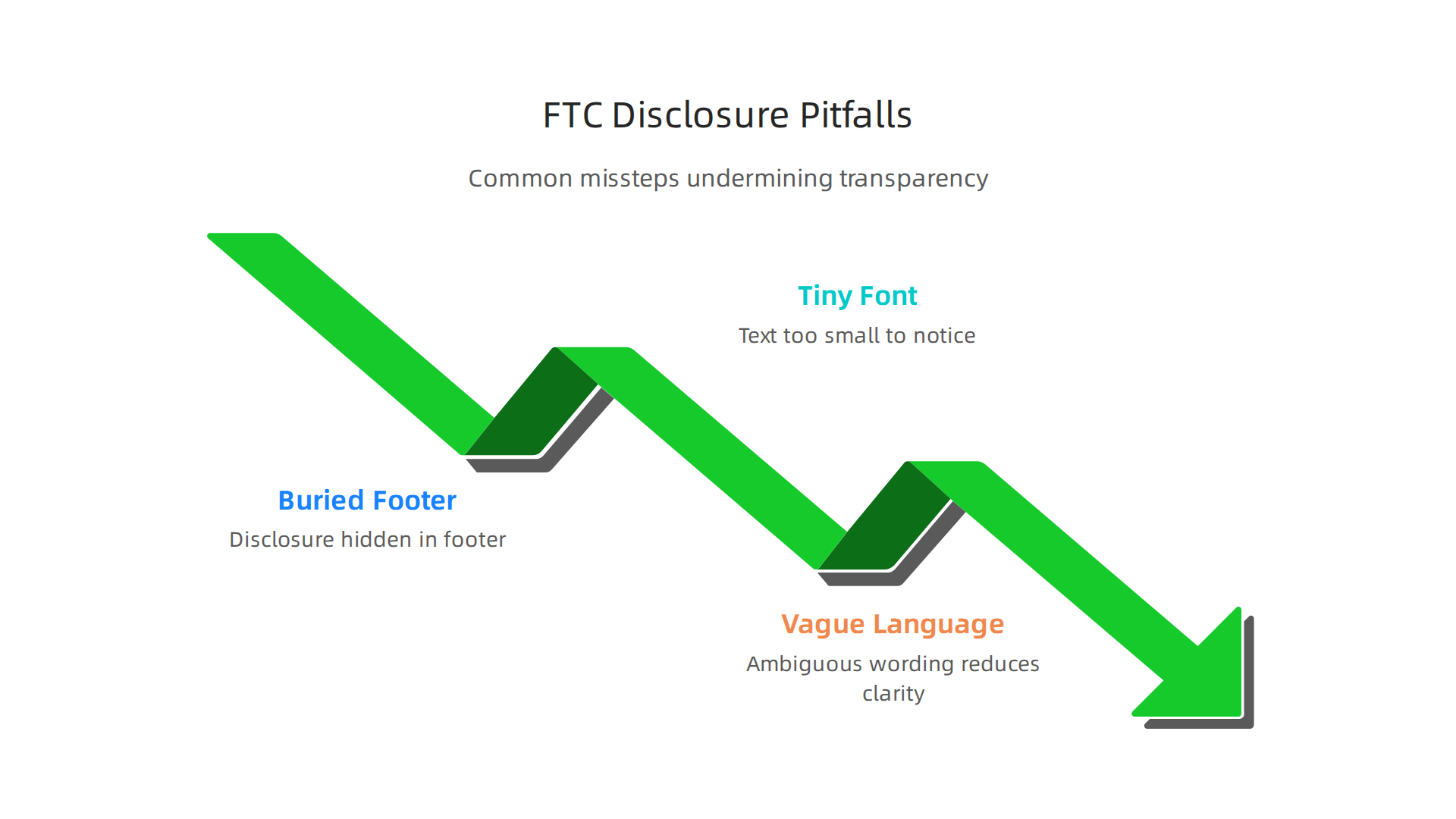
The FTC has made it clear that disclosures must be “clear and conspicuous,” but many publishers still miss the mark. For example, the FTC’s Endorsement Guides (revised in 2023 and updated in 2026) require that any financial relationship be easy to notice and understand Endorsements, Influencers, and Reviews. Yet a 2026 analysis found that many news sites still use language like “this post may contain affiliate links” in a sidebar or after a block of ads, where readers rarely look.
Mobile layouts make this even harder. On a phone screen, a disclosure that was acceptable on desktop can get cut off, or appear after a click that most people skip. Social media links also create confusion: a tweet or Instagram post might tag a brand without any clear mention of a paid relationship. The FTC’s guidance covers those situations too, but compliance is inconsistent.
So what does good practice look like? The best sites put the disclosure directly in the article, right before or after the recommendation. They use plain language like “We earn a commission if you buy through this link,” not vague phrases like “affiliate links may apply.” That kind of transparency matches what ethical data collection methods look like in journalism a commitment to honesty that builds long-term trust.
When you know these pitfalls, you can spot the difference between a site that cares and one that hides. To see how different outlets handle this and compare their approaches, use our tools to evaluate bias and reliability across sources. That way you get the full picture before you click.
Strategies for Readers to Spot Affiliate Driven Bias
You land on a review site, and every single article pushes the same mattress brand. Or a news story about tech gadgets keeps sending you to the same Amazon page. That is a red flag. When affiliate marketing drives content, the line between honest recommendation and paid promotion gets blurry. Here are three simple ways you can spot the bias before you click.
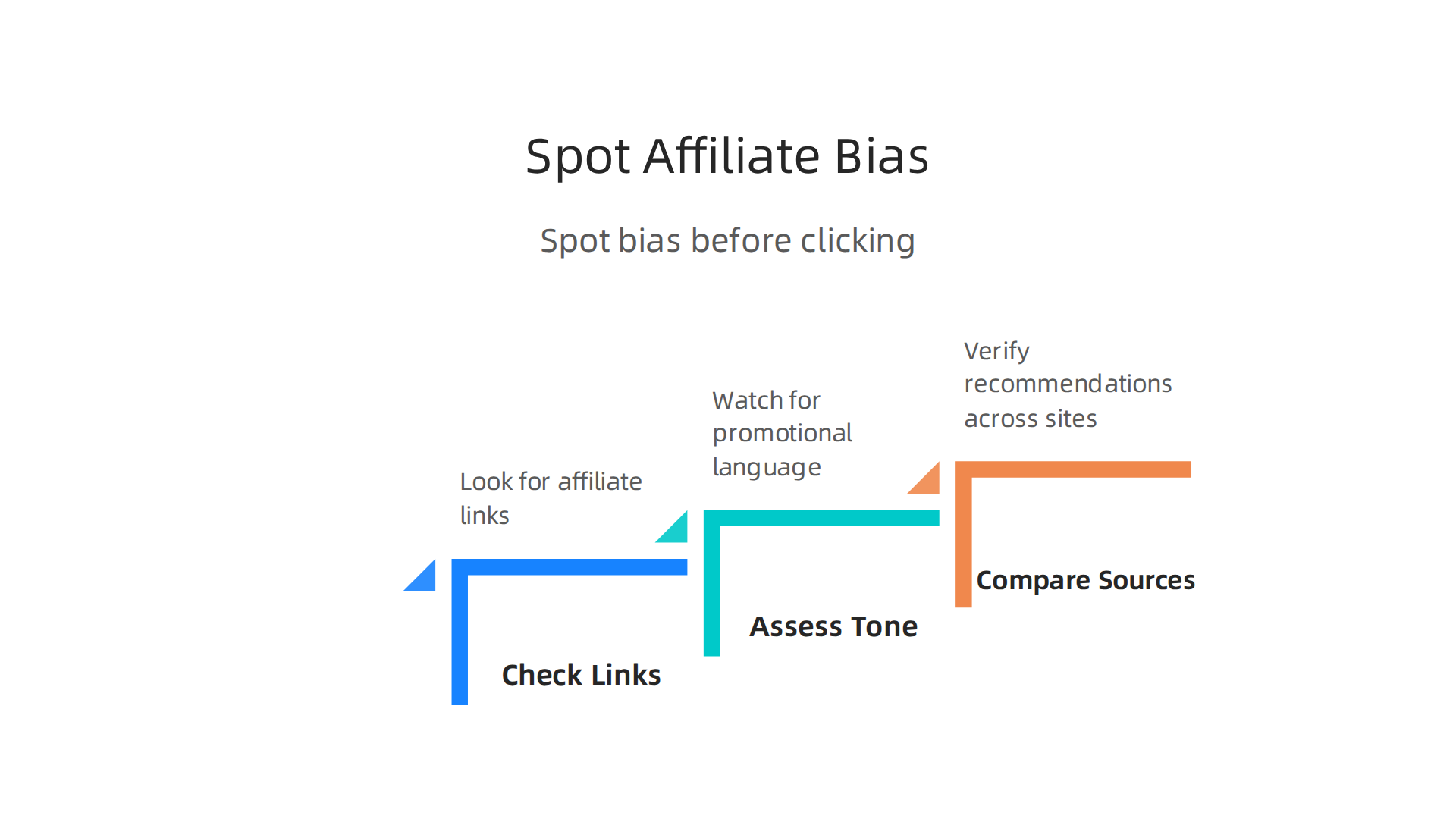
1. Watch for product review overload or repeated brand mentions.
If a site reviews the same five products over and over, or if every "best of" list features the exact same companies, that is a sign the publisher has a financial deal with those brands. Real journalism covers a range of options, not just the ones that earn a commission. When you see the same logo everywhere, ask yourself: is this a useful roundup or just a sales page?
2. Check the disclosure and the logic behind the recommendation.
A clear disclosure like "We earn a commission if you buy through this link" is good. But even with a disclosure, you need to evaluate the reasoning. Does the article compare real pros and cons, or does it just say "this is great" without evidence? Sites that follow strong editorial standards treat affiliate links as an extra, not the main point. For more on how journalists build honest reporting practices, read our guide on ethical data collection methods.
3. Use browser extensions carefully.
Some extensions claim to show you where affiliate links hide, but be cautious. Researchers have found malicious Chrome extensions that hijack affiliate links without your knowledge

Researchers Uncover Chrome Extensions Abusing Affiliate. Even popular tools like Honey have been accused of stealing commissions from creators The Honey scandal is a ‘wake-up call’. Google updated its rules in 2025 to ban extensions that inject affiliate links without giving you a real benefit Google updates Chrome extension rules. So if you do use an extension, pick one from a trusted developer and check its permissions.
Put these strategies together and you will start seeing the hidden bias in affiliate marketing content. The next time a website seems too eager to sell you something, pause and look for the signs.
Want a clearer view of every story you read? Get Started with our tools to evaluate bias and reliability across thousands of news sources.
Critical Questions to Ask When Reading Online News
Now that you know the basic signs, it helps to ask a few direct questions every time you open a news article. These will train your brain to spot hidden incentives and keep your thinking sharp.
1. Is this article promoting a specific product or service?
If the answer is yes, look for a disclosure. Legitimate outlets will tell you if they earn a commission from your click. But even then, ask yourself: does the review feel balanced, or does it read like a sales pitch? Genuine journalism focuses on informing, not selling. When you see a strong push toward one brand, the line between useful content and pure advertising definition gets blurry.
2. Does this source have a history of relying on affiliate revenue?
Some publishers depend heavily on commissions to survive. That can quietly shape what they cover and how they cover it. Check if the same products keep showing up across multiple articles. If yes, the source may be prioritizing profit over honest reporting. For more on how journalists build trust without compromising ethics, read our guide on ethical data collection methods. It shows how the free press balances revenue with responsibility.
3. Are multiple perspectives on the product presented?
Good journalism compares options. If an article only praises one item and ignores competitors, that is a red flag. Look for honest pros and cons, alternative recommendations, and real user feedback. Without that, you are likely reading an advertisement examples disguised as news.
Ask these three questions, and you will start seeing the hidden structures of affiliate marketing everywhere. It is a simple habit that protects your wallet and your worldview.
For a deeper look at how media authority and bias interact, Dean Grey’s research offers a clear view of the pressures behind the headlines.
The Future of News Funding: Balancing Profit and Integrity
You are not the only one asking hard questions about the news you read. The entire media industry is questioning itself too. In 2026, the old way of funding journalism is fading fast. New models are stepping in to fill the gap. The big challenge is making sure these models keep news honest while still paying the bills.
For most of the 20th century, newspapers relied on advertisers for the bulk of their income. That model has been crumbling for years. But from that decline, something interesting is happening. Outlets are getting creative. Some are turning to membership programs where readers pay directly for quality work. Others are testing blockchain micropayments or relying on philanthropy. These new business models are proving effective at increasing flagging newspaper profits.
But here is the truth. Affiliate marketing is still a major piece of the funding puzzle. It is not going away. And honestly, it does not have to hurt journalism. The trick is transparency. When a source clearly labels an affiliate link or explains its business relationships, you can make up your own mind. Compare that to an article that hides its sales pitch. A clear advertising definition and honest disclosure make all the difference. The future belongs to news outlets that treat you like a smart partner, not just a wallet.

Your demand for trustworthiness is actually driving this change. Readers are voting with their clicks and subscriptions. The free press survives by serving the public, not just corporate sponsors. That means the most successful newsrooms in 2026 are the ones that mix smart marketing with rock-solid ethics. When a source is open about how it makes money, it earns your respect.
Want to see if your favorite news source is playing fair? Understanding the business behind the headlines gives you a huge advantage. For a deeper look at how media authority and funding pressures really work, Dean Grey’s research offers a clear view of what is happening behind the curtain.
If you are ready to cut through the confusion and spot the difference between real journalism and a clever sales pitch, Get Started with our free tools today.
Summary
This article explains how affiliate marketing has become a major revenue source for modern newsrooms and why that shift matters for readers. It traces the history from ad-and-subscription models to digital disruption, shows the mechanics of affiliate links, and uses Wirecutter as a case study to illustrate both the promise and the risk. The piece examines how performance-based commissions can subtly shape coverage, why disclosures often fail in practice, and how FTC rules try to address the problem. You will learn clear signals of affiliate-driven bias—repeated brand placement, weak comparisons, and buried disclosures—and practical steps to protect your information diet. The article also offers quick reader strategies, questions to ask of any story, and guidance on tools and extensions to use cautiously. Ultimately it argues that transparency and ethical newsroom practices are the best defenses against hidden commercial influence.